


/file/publisher-c1a3f893382d2b2f8a9aa22a654d9c97/2023/08/490f0d63177f3ce66f067428fc7c3283.jpg)

Ex-Bersatu leader: Royal addendum could cause constitutional crisis
Summary
Muhammad Faiz Na'aman says enforcing the royal addendum could cause a constitutional crisis.
This was because it would set a precedent for pardon orders to be issued by rulers without going through the Pardons Board.
The former Bersatu man says it would also create a perception that local laws are lopsided.
A former Bersatu supreme council member has warned that enforcing the royal addendum granting former premier Najib Abdul Razak house arrest could lead to a constitutional crisis.
In a statement today, Muhammad Faiz Na'aman - who joined PKR last year - said this was because an addendum issued outside of the Pardons Board raises several issues.
Faiz (above) said if enforced, the addendum would set a precedent that an elite or favoured prisoner is given special treatment in reducing their sentences - by which a decree can be issued by the palace without involving the Pardons Board and constitutional provisions that govern it.
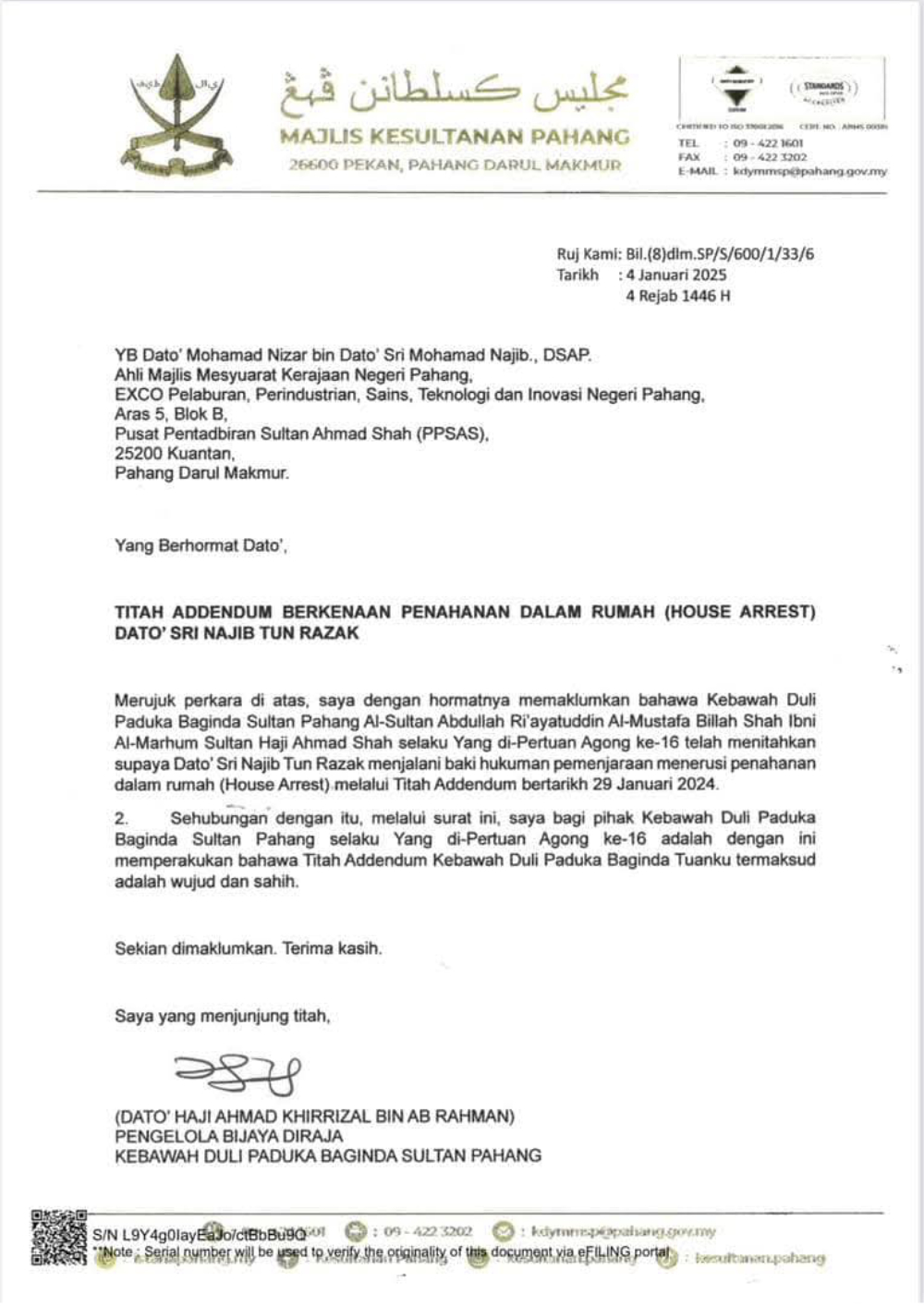
Previously, a senior federal counsel told the Court of Appeal that the addendum - issued by the previous Yang di-Pertuan Agong, Sultan Abdullah Sultan Ahmad Shah - was not discussed in the Jan 29, 2024, Pardons Board meeting.
Home Minister Saifuddin Nasution Ismail later said the addendum was also not sent to his ministry or the Prisons Department to be enforced.
Perception of preferential treatment
Secondly, Faiz said it could also make house arrest a preferred option for elite prisoners despite the severity of their crimes, leading to a perception that local laws are lopsided.
"The conclusion is that the implementation of the royal addendum could cause a new constitutional crisis in our country, especially if its implementation involves an elite prisoner who has certain political and personal interests for stakeholders," he mentioned.
On Monday, the Court of Appeal ruled 2-1 to allow Najib's appeal for leave to commence a judicial review at the High Court.

The review is to compel the home minister and the government to enforce the alleged decree by the previous Agong for him to undergo house arrest.
A letter from the Pahang palace was submitted to the court affirming that the addendum existed.
On the matter of house arrest, Faiz said guidelines must be drawn up, such as whether police need to guard the inmate's house round the clock.
He also asked whether those under house arrest would have to wear ankle monitors.
"And which house should they live in? Because elitist prisoners would have several homes," Faiz asked.
/file/publisher-c1a3f893382d2b2f8a9aa22a654d9c97/2024/12/8451c67b07ebe6d897ec6656d0476043.jpg)
/file/publisher-c1a3f893382d2b2f8a9aa22a654d9c97/2024/11/84488ab856c5333dddcc88ad3e08c039.jpg)
/file/publisher-c1a3f893382d2b2f8a9aa22a654d9c97/2024/08/ad8e3de07b75cda535839046b2bee393.jpg)
/file/publisher-c1a3f893382d2b2f8a9aa22a654d9c97/2024/08/4852517293e0f3de4fa77729869870db.jpg)
/file/publisher-c1a3f893382d2b2f8a9aa22a654d9c97/2024/10/5e377a5e4e379ab129ca8fd79979b7f9.jpg)
/file/publisher-c1a3f893382d2b2f8a9aa22a654d9c97/2024/02/494ba5cd8589e946385c75612bf37500.jpg)


Are you sure you want to delete this comment?
This action cannot be undone.