


Kg Sg Baru elders wish to live out life in only home they've known
Elders born and raised in Kampung Sungai Baru have expressed their desire to remain in the village as it has been their home all their lives.
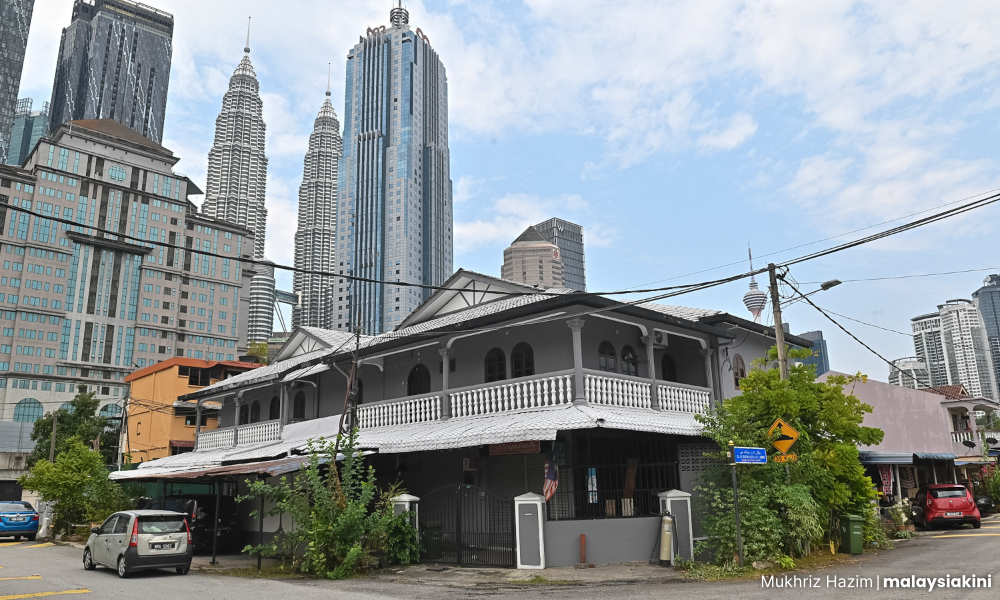
They are among the residents left in the area who have refused to move to make way for redevelopment, sharing that it was not about the compensation but a matter of home and heritage.
Reminiscing on their memories of growing up in the urban village, a septuagenarian only known as Kak Mai and her neighbour Rugayah Said recalled a time before the area was known as...
Summary
Elderly Kampung Sungai Baru residents’ refusal to move is not about compensation but their desire to stay in their homes for the remainder of their lives.
Two seniors, born and raised there, reminisce about their time growing up and watching the changes around them.
Another resident laments the URA, saying it’s not about race but landowner's rights.
Elders born and raised in Kampung Sungai Baru have expressed their desire to remain in the village as it has been their home all their lives.
They are among the residents left in the area who have refused to move to make way for redevelopment, sharing that it was not about the compensation but a matter of home and heritage.
Reminiscing on their memories of growing up in the urban village, a septuagenarian only known as Kak Mai and her neighbour Rugayah Said recalled a time before the area was known as Kampung Sungai Baru.
When met at the village, they told Malaysiakini it used to be known as Tanah Emas before the diversion of a river in the early 1960s saw it renamed to what it’s known today.
"There was a river here," Kak Mai (above, left) said, pointing down the road from the porch of the house she and Rugayah were sitting on.
"Then the river was diverted there," the retired government servant said, gesturing in the opposite direction.
"After that, the place was renamed to Kampung Sungai Baru."
Before the river was diverted, villagers would cross over it using a bridge.
The pair recalled how the bridge was placed at such a high angle that they were unable to cross it without their parents’ help. Now there is no bridge - just a narrow street and houses.
"I want to live here, it's already been 76 years," Rugayah, a housewife, said longingly.
For years, residents like Kak Mai and Rugayah have been urged to move as flats are being developed in the area. Both of their houses face the construction site.

According to The Vibes, development began in 2016 with the approval of 260 residents but was halted as 37 villagers opposed it.
The developer then went on to use the Land Acquisition Act 1960 to acquire the land.
Sentimental value, legacy
To Kak Mai, living in the village is a matter of sentimental value. It is a place where she knows her neighbours by name and also a matter of legacy.
"My grandmother told me, don't you sell your land in this village or you'll live your life homeless," she said.
Besides that, she wishes to pass her property down to her descendants.
Another resident, Rafidah Ibrahim, also said her place in the village is one of heritage.
"We want to maintain the original residents here," the 39-year-old self-employed told Malaysiakini.
Rafidah also grew up in the village after her parents bought a unit in one of the flats.

But she said the residents of the flats were ordered to remove their belongings by March 26 - a challenge considering that the date falls within the holy month of Ramadan and close to Aidilfitri.
Along with her young children, they are temporarily living at a neighbour's terrace house. The neighbour had opened their house to Rafidah out of compassion due to her circumstances.
Not about race
The government had recently pushed for the Urban Renewal Act (URA) which has received backlash, including from politicians who claim that it would alter the urban demographic and force the urban poor, including the Malays and Indians, out of the city.
Kampung Sungai Baru resident Siti Khadijah Ibrahim told Malaysiakini that the issue was not one revolving around race.
This is despite Kampung Sungai Baru being the only Malay village within the Kuala Lumpur city centre.
"It is a matter of landowner's rights," the 41-year-old business owner said.
She lamented the proposed URA, saying that it would only worsen the villagers' battle with the government.
Government leaders, however, insisted that the Act is intended to improve or redevelop dilapidated and abandoned housing in major cities and denied that it would displace residents as they would retain ownership.
Among others, the bill would reduce the consent threshold for redeveloping old housing from 100 percent of unit owners to 80 percent or as low as 51 percent, depending on the age and condition of the housing.
But Siti Khadijah disagreed with the lowered consent threshold.
"This is not an election with a majority and a minority," she said.
Any disagreement must lead to a rejection of the project, she asserted.
In July last year, it was reported that a total of 219 house owners fully agreed with the planned development and the deal offered by the developer.
It is understood that the 109 house owners who disagreed with the project have already been given compensation worth between RM190,000 and RM3 million depending on the type of residence.


Report this comment
Are you sure you want to delete this comment?
This action cannot be undone.