


/file/publisher-c1a3f893382d2b2f8a9aa22a654d9c97/2025/05/43c356b02c89c83d7ce604f40401f4a6.jpg)

Govt backpedals on Huawei AI rollout amid US-China tensions
Malaysia appears to have walked back an announcement establishing it as the first nation to deploy a large-scale artificial intelligence (AI) system powered by Huawei Technologies Co chips.
This is amid the country’s precarious position in the intensifying United States-China tech rivalry.
Earlier on Monday, Deputy Communications Minister Teo Nie Ching said Malaysia would be the first to...
Summary
Malaysia retracts without explanation its announcement on plans to build a landmark AI system powered by Huawei Technologies Co chips.
The project was set to deploy 3,000 units of Huawei’s primary AI offering by 2026, with Chinese startup DeekSeek also making one of its AI models available to Malaysia.
Malaysia appears to have walked back an announcement establishing it as the first nation to deploy a large-scale artificial intelligence (AI) system powered by Huawei Technologies Co chips.
This is amid the country’s precarious position in the intensifying United States-China tech rivalry.
On Monday, Deputy Communications Minister Teo Nie Ching said Malaysia would be the first to roll out Huawei’s Ascend GPU-powered AI servers at the national level, with 3,000 units to be deployed by 2026.
The deputy minister added that Chinese AI firm DeepSeek would provide one of its models for local use.
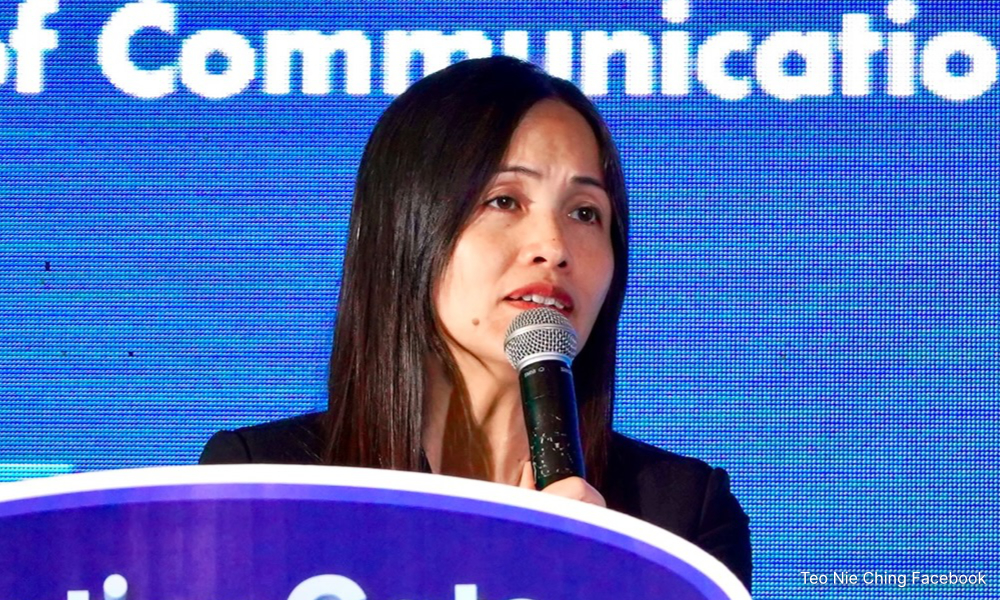
However, Bloomberg News reported yesterday that Teo’s office said it is retracting her remarks on Huawei “without explanation”. It remains uncertain whether the initiative will proceed as planned.
While Huawei was reportedly unable to provide an immediate comment on the matter, a representative from the firm said it has not sold Ascend chips in Malaysia, nor has the Malaysian government made any purchases.
US reactions
Prior to the supposed U-turn, Teo’s announcement, which was first reported by Malaysia-China Insight, had quickly drawn attention from Washington, where policymakers are growing increasingly wary of China expanding its influence in global AI infrastructure.
“As I’ve been warning, the full Chinese stack is here,” David Sacks, an AI and cryptocurrency adviser to US President Donald Trump, said in an X post responding to a news report on Teo’s remarks.
Sacks also claimed that the Trump administration's reversal of the Joe Biden-era chip export restrictions to Malaysia had come “just in time”.
Malaysia’s abrupt reversal on deploying Huawei’s AI servers also came in the wake of shifting guidance from the US Commerce Department, which had initially warned that using Huawei’s Ascend chips “anywhere in the world” could breach US export controls.
However, it later seemingly softened its position by removing the global scope of the warning amid ongoing tensions with Beijing.
According to Bloomberg News, Malaysia now finds itself a test case in the Trump administration’s reworked AI diplomacy.
The approach is understood to be aimed at flooding international markets with American AI hardware while imposing safeguards to prevent countries in regions like Southeast Asia and the Middle East from relying on Chinese technology.
On the back of Sack’s argument that the US must act quickly to secure its position before Huawei closes the gap with American industry leader Nvidia Corp, Washington is also stepping up efforts to stop high-end Nvidia chips from reaching China via third-party countries.
On this measure, Malaysia had earlier been flagged as a particular area of concern.
Intense competition
With Nvidia CEO Jensen Huang recently describing Huawei as one of the most formidable players in global tech, saying China is “right behind” the US in the AI race, the urgency in Washington likely stems from Huawei’s growing capabilities and its positioning as China’s flagship semiconductor player.
The competition also intensified last week during Trump’s high-profile visit to the Middle East, during which his administration announced agreements to supply tens of thousands - potentially over a million - advanced Nvidia and AMD chips to the United Arab Emirates and Saudi Arabia.
The proposed shipments, however, which will still require export licences, have sparked internal debate in Washington and drawn bipartisan scrutiny, with critics expressing concern that the deals could inadvertently benefit China.

As the Middle East deals are being finalised by Trump officials, a replacement for his predecessor Biden’s AI diffusion policy is also said to be in the works.
The policy had significantly tightened chip export rules, targeting not only China but also enforcing new licensing hurdles for countries like Malaysia.
Chip on your shoulder
Malaysia was directly affected by the Biden framework, which introduced national caps on data centre capacity that could be hosted outside the US and its closest allies - a move that complicated expansion plans for American tech giants.
Oracle Corp, for example, reportedly has plans to develop large-scale data centre clusters in Malaysia and is seeking to import large volumes of Nvidia chips - volumes that would have exceeded Biden-era thresholds.
Bloomberg reported that Trump’s revised policy will include tighter controls on chip exports to countries suspected of funnelling advanced US tech into China - with Malaysia expected to be on the list.
US authorities have since pressed Malaysia to address concerns over unauthorised re-export of sensitive semiconductors to China.
Malaysia is also linked to an ongoing legal case in Singapore, where three individuals are facing fraud charges for allegedly concealing the true destination of AI servers containing high-end Nvidia components.
Malaysian officials are said to be investigating the matter.
/file/publisher-c1a3f893382d2b2f8a9aa22a654d9c97/2024/04/33056fcfd50628707032d666c2674039.jpg)
/file/publisher-c1a3f893382d2b2f8a9aa22a654d9c97/2025/03/c11d01625c9febc551f90764be3aba17.jpg)
/file/publisher-c1a3f893382d2b2f8a9aa22a654d9c97/2025/03/90442cc01c7a056772721e790dafee56.jpg)
/file/publisher-c1a3f893382d2b2f8a9aa22a654d9c97/2023/03/aa0f9fd89e1faaf141ad0b098987e295.jpg)
/file/publisher-c1a3f893382d2b2f8a9aa22a654d9c97/2023/12/5ba1d518eef72a57aa1e9f994a46efb1.jpg)
/file/publisher-c1a3f893382d2b2f8a9aa22a654d9c97/2024/08/296d6738895d770fe072b6251fc832fc.jpg)


Can’t trust China with anything these days … they are encroaching into South China Sea illegally , trying to steal oil off our shores , their dishonesty stretches even further with the Wuhan virus, putting malotonin into their infant formula, asbestos into their cars and bankrupting third world countries like Sri Lanka and Maldives with their one sided deals … about time this nation wakes up … and by the looks of it , trump is the right guy to keep them at check
Are you sure you want to delete this comment?
This action cannot be undone.