


/file/publisher-c1a3f893382d2b2f8a9aa22a654d9c97/2023/12/5ba1d518eef72a57aa1e9f994a46efb1.jpg)

Stricter US regulations expected to hinder M'sia's AI ambitions
The United States’ plan to tighten restrictions on artificial intelligence (AI) and technology exports is expected to significantly impact Malaysia.
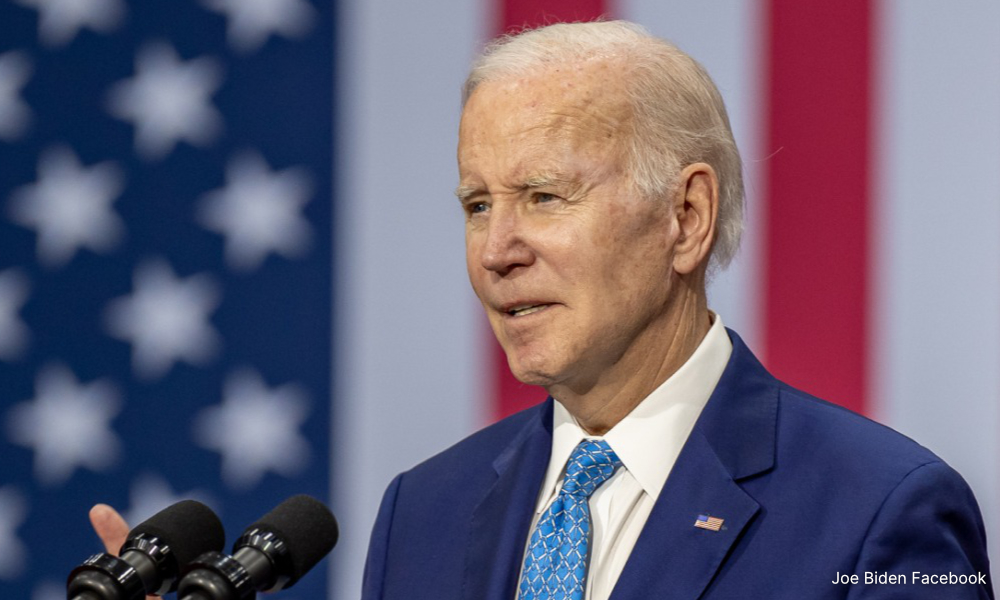
According to media reports, new regulations have been introduced under the outgoing Joe Biden administration to control access to US-designed AI chips and technology in foreign markets.
These measures were reported to ensure unrestricted access for...
Summary
New US regulations restrict AI chip exports, placing Malaysia in Tier 2 with capped access, while adversary nations face stricter bans.
Malaysia’s AI ambitions could be hindered, despite RM60 million allocated in Budget 2025 for AI development and education.
Critics, including Nvidia and local industry leaders, warn the rules may cause confusion and disrupt global technology access.
The United States’ plan to tighten restrictions on artificial intelligence (AI) and technology exports is expected to significantly impact Malaysia.
According to media reports, new regulations have been introduced under the outgoing Joe Biden administration to control access to US-designed AI chips and technology in foreign markets.
These measures were reported to ensure unrestricted access for America’s closest allies while continuing to block exports to nations such as China, Russia, Iran, and North Korea.
Reuters reported that the regulations categorise countries into three tiers.
Tier 1 includes 18 countries, such as Australia, Belgium, Britain, Canada, Japan, and the US, exempt from the restrictions.
Malaysia, meanwhile, is subjected to US export caps.
Tier 3 encompasses nations considered adversaries by the US, including China, Russia, and Iran.
Malaysia’s Tier 2 status presents challenges, particularly as the country seeks to expand its AI capabilities.
Limiting GPU exports
The measures are particularly focused on limiting exports of graphic processing units (GPUs), which are a vital component in the training and running of AI models.
Reuters reported that to regulate global AI access, the US is broadening its restrictions on advanced GPUs, which are essential for building clusters used to train complex AI models.
The new rules impose GPU limits on most countries based on compute power, accounting for chip performance variations.
Total Processing Performance (TPP), a metric for measuring computational capacity, sets these limits. Under the regulation, countries with caps will be restricted to a cumulative total of 790 million TPP through 2027 - roughly the equivalent of 50,000 Nvidia H100 GPUs.
AI expert Divyansh Kaushik noted that this power is sufficient to support large-scale AI applications, such as global chatbot services or advanced systems for fraud detection and personalised recommendations for companies like Amazon and Netflix.
On Jan 13, Science, Technology, and Innovation Minister Chang Lih Kang voiced concerns about the potential impact of these restrictions.
“Without AI chips, we will have a problem,” he said, as quoted by The Star.
Malaysia Semiconductor Industry Association (MSIA) president Wong Siew Hai also expressed concerns over the complexities of the new regulations, describing them as potentially confusing.
“It is like two requirements that are not jiving. One statement is based on one assumption, and the other is based on another assumption,” Wong said in an interview with The Edge.
‘Sweeping overreach’
Nvidia - the world’s biggest GPU developer - also criticised the regulations, calling them a “sweeping overreach.”

Nvidia described the move as the White House’s attempt to clamp down on “technology that is already available in mainstream gaming PCs and consumer hardware.”
During the Budget 2025 tabling, Prime Minister Anwar Ibrahim, who is also the finance minister, allocated RM50 million to AI-related education in research universities and an additional RM10 million to establish the National AI Office (Naio).
The Naio aims to promote AI adoption through collaboration with academia and industry.
Anwar also had meetings with Google in November last year, discussing strengthening the AI and data centre ecosystem.
The White House has stated that most chip orders, typically placed by universities, medical institutions, and research organisations, fall below the limits set by the export caps.
This exception is intended to facilitate the swift delivery of low-risk shipments of US chips worldwide.
/file/1144/317f9a3f2ca0a0a43f78241ea5522ff5.jpeg)
/file/publisher-c1a3f893382d2b2f8a9aa22a654d9c97/2023/12/5ba1d518eef72a57aa1e9f994a46efb1.jpg)
/file/publisher-c1a3f893382d2b2f8a9aa22a654d9c97/2024/08/296d6738895d770fe072b6251fc832fc.jpg)
/file/publisher-c1a3f893382d2b2f8a9aa22a654d9c97/2024/11/3560b8e25e2f57005e0b6ec36e39bb91.jpg)
/file/publisher-c1a3f893382d2b2f8a9aa22a654d9c97/2023/06/d3678a69cfbd5f9059ab3a42545b7233.jpg)
/file/publisher-c1a3f893382d2b2f8a9aa22a654d9c97/2024/10/de88499693accf02a86efac1d503757c.jpg)
/file/publisher-c1a3f893382d2b2f8a9aa22a654d9c97/2024/10/8d7925566402e089e30ade634353e575.jpg)


Are you sure you want to delete this comment?
This action cannot be undone.