


/file/publisher-c1a3f893382d2b2f8a9aa22a654d9c97/2025/04/50f8d7bf081ca20a3a7e222f649948ed.jpg)

KLIA wildlife smuggling persists as MAHB defends its efforts
Authorities have opened 10 investigation papers over various cases between 2023 and April 2025.
The cases have involved smuggling of exotic and native species, including...
Summary
Wildlife smuggling through KLIA has escalated, with authorities opening 10 investigation papers between 2023 and April 2025.
MAHB defends its security measures, highlighting collaboration with enforcement agencies and the donation of trained sniffer dogs to Perhilitan in 2024.
Recent cases include the discovery of monitor lizards at an Indian airport in the luggage of a KLIA passenger, and the seizure of nearly 3,000 red-eared slider turtles from two Indian nationals who travelled from KLIA.
A persistent wave of wildlife smuggling cases at Kuala Lumpur International Airport (KLIA) has intensified scrutiny of Malaysia Airports Holdings Berhad’s (MAHB) security protocols.
Authorities have opened 10 investigation papers over various cases between 2023 and April 2025.
The cases have involved smuggling of exotic and native species, including turtles, snakes, birds, and primates, according to the Natural Resources and Environmental Sustainability Ministry.
The latest incident occurred last week, when Indian customs officers at Tiruchirappalli International Airport in Tamil Nadu discovered two monitor lizards in a passenger’s luggage. The traveller had departed from KLIA on Batik Air flight OD223.
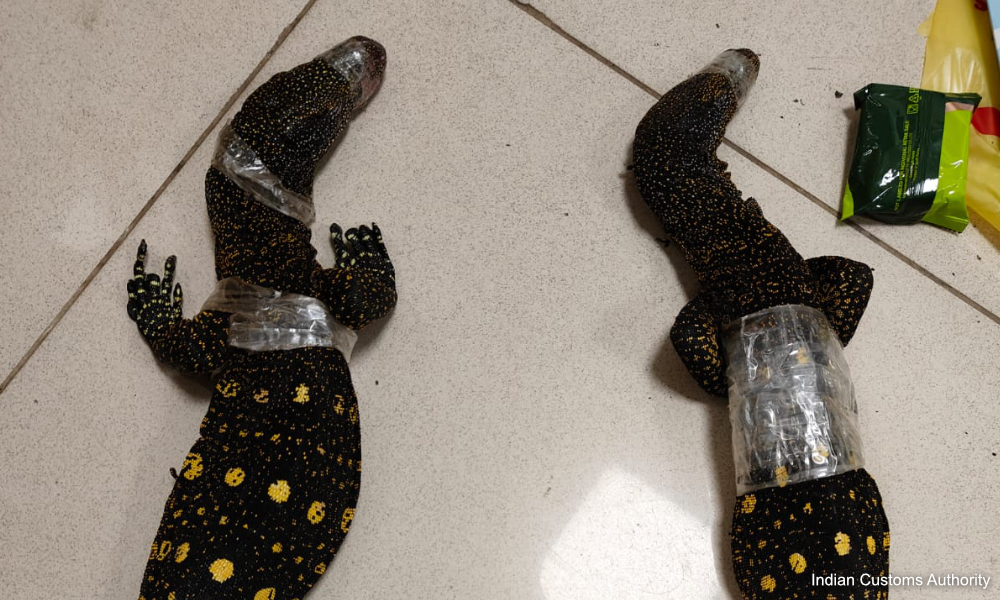
The incident prompted outrage and questions from the public, who criticised MAHB over the rising cases of wildlife smuggling out of the country.
In March, Transport Minister Anthony Loke admitted it was a serious issue and demanded immediate action by the airport operator.
Loke expressed bewilderment that despite all luggage being screened, wildlife can still be taken into Malaysian airports and then depart on passenger flights.
He said the baggage handling system at KLIA is being upgraded, and MAHB is also looking into upgrading its X-ray machines.
Check-in luggage falls under the purview of MAHB’s baggage handling services and not the Customs Department.
MAHB says timely actions taken
In a statement to Malaysiakini on Monday, MAHB said wildlife smuggling remains a global issue, driven largely by demand, and that tackling this at transport hubs is “only part of the broader solution”.
“Malaysia Airports continues to work hand in hand with the Wildlife and National Parks Department (Perhilitan), the enforcement agency tasked with preventing wildlife smuggling in Malaysia, to ensure that KLIA’s facilities are not exploited for illegal activities.
“Further, we maintain close collaboration with other key partners, including the Customs Department, the Malaysian Quarantine and Inspection Services Department (Maqis), and the police in the strict enforcement of laws that safeguard Malaysia’s borders against illicit trade.
“As part of our commitment to addressing the issue, Malaysia Airports donated two highly trained Belgian Malinois K9 detector dogs to Perhilitan in 2024. Their deployment has successfully supported several high-impact enforcement operations,” the statement read.
READ MORE | KLIA gets dubious honour as top wildlife smuggling hub to India airports
Malaysiakini reached out to Perhilitan’s KLIA office following MAHB’s statement, but had yet to receive any response as of press time.
Government response intensifies
Natural Resources and Environmental Sustainability Minister Nik Nazmi Nik Ahmad announced in March that his ministry would strengthen anti-trafficking measures through Perhilitan, particularly at border entry points.
The minister outlined plans to overhaul enforcement protocols at KLIA, ensuring rigorous inspections of all import, export, and re-export activities meet regulatory standards, according to Bernama.
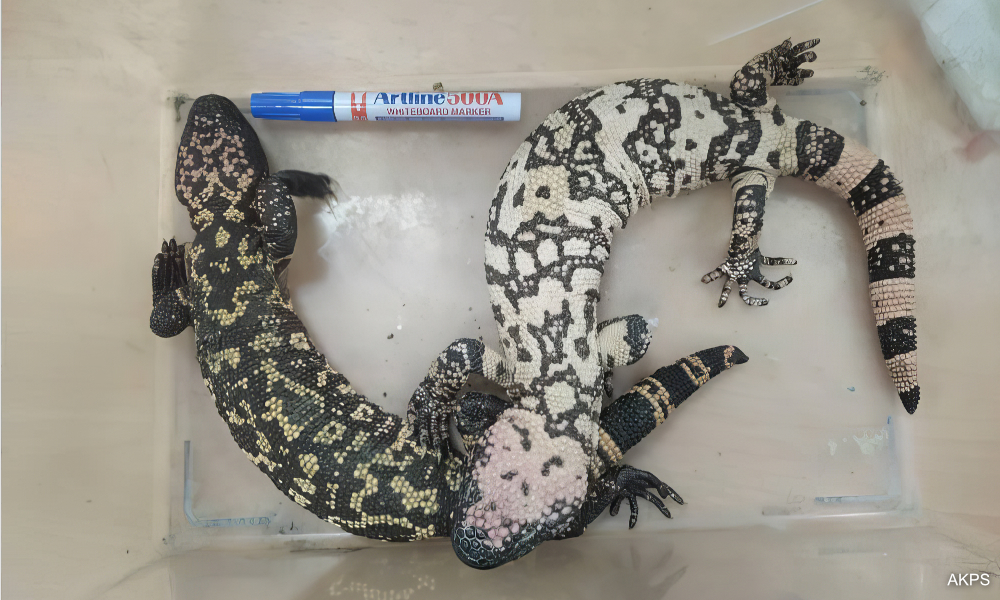
Nik Nazmi highlighted Malaysia’s concerning role as a transit route for valuable contraband, including elephant ivory, rhinoceros horns, and exotic reptiles.
In May, Perhilitan director-general Abdul Kadir Abu Hashim said his department had deployed approximately 20 officers to KLIA in a heightened bid to address the surge in wildlife smuggling cases.
India emerges as primary destination
“The increase in cases of protected wildlife smuggling through KLIA to major cities in India is linked to demand from that country,” Kadir told Harian Metro.
According to him, India has a vast market, which makes it a focus for protected wildlife smuggling syndicates.
“Besides being sold as pets, the black market in that country is extremely fond of rhino horns, pangolin scales, and tiger bones for traditional medicine purposes,” he added.
He said that Perhilitan had achieved “success after success” following the detention of individuals who attempted to smuggle various wild animals such as siamangs, turtles, orangutans, gibbons, koel birds, and monitor lizards to India.
Scale of the smuggling problem
On Feb 18, Malaysian authorities foiled an attempt by two passengers to smuggle over 4,000 pig-nosed turtles in their suitcases from KLIA to Hanoi, Vietnam.
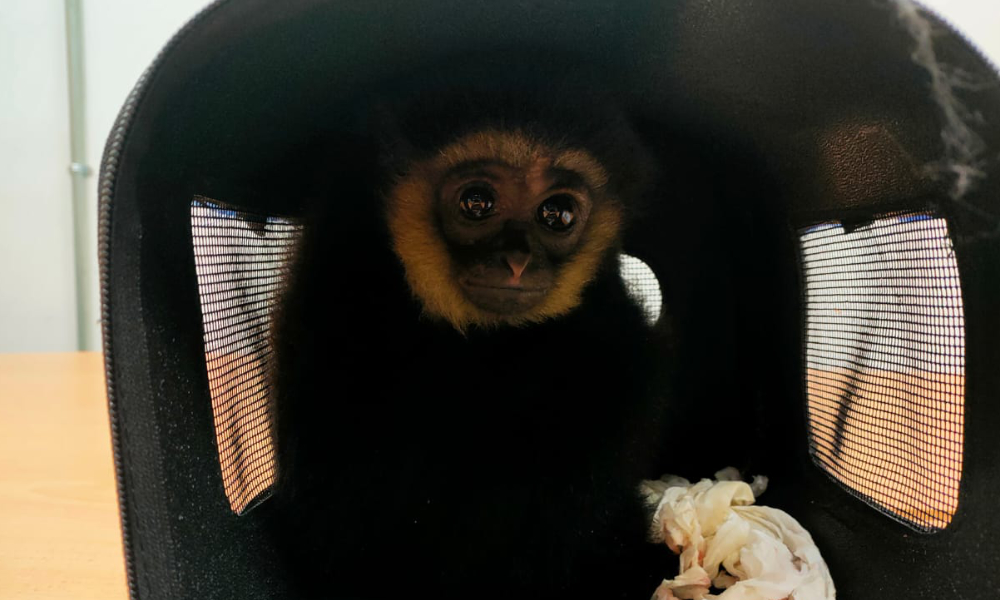
On March 7, two airline passengers were arrested at Anna International Airport, Chennai, India, after trying to smuggle primates, a civet cat, and two polecats in suitcases from KLIA’s Terminal 1.
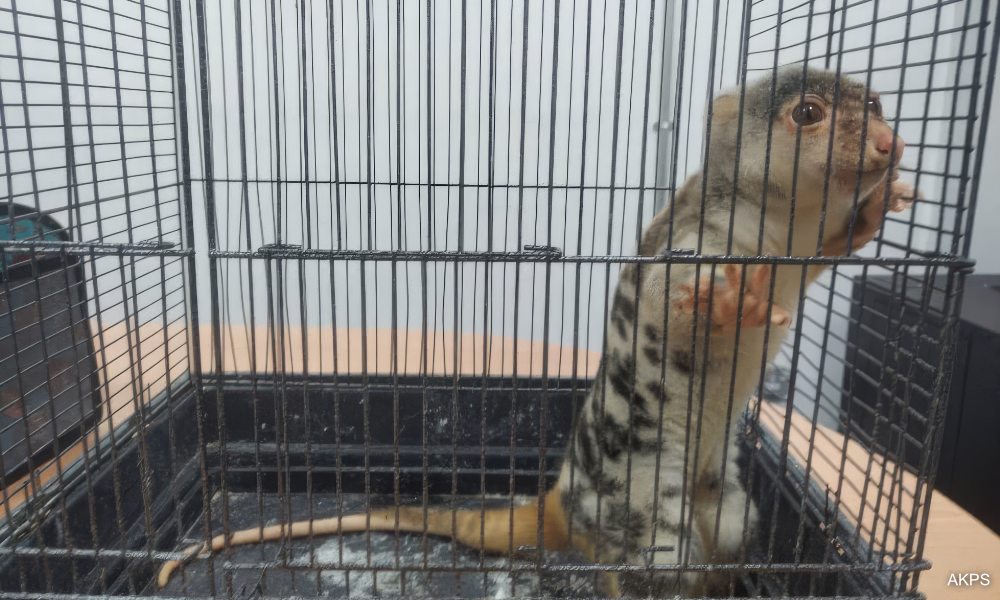
The incident happened on the same day Nik Nazmi inspected KLIA’s Terminal 2 on wildlife trafficking enforcement, following a wave of busts by foreign authorities.
According to the Chennai Customs Department, two Eastern grey gibbons and one Sumatran white beard palm civet died during the journey, while the other five animals survived.
They included one silvery lutung, two marbled polecats, and two Eastern grey gibbons, said Chennai International Airport’s Customs Principal Commissioner Ramanav Srinivasa Naik.
According to Indian authorities, in 2023, there were eight cases of wildlife seizures involving flights from KLIA and KLIA2, while the figure rose to 12 in 2024.
On March 10, an airline passenger was arrested at KLIA2 when he tried to travel to Surabaya, Indonesia, with five Asian koel birds stuffed into PVC pipes in his checked-in luggage.
According to Perhilitan, koel birds are common in Malaysia and are prized as songbirds in Indonesia, attracting a high price on the black market there.
On May 5, a Malaysian was arrested with an Indian national in India over the suspected trafficking of nine infant primates.
On May 20, Indian Customs authorities stopped two Indian nationals who arrived at the Kempegowda International Airport, in Bengaluru, India, via IndiGo flight 6E-1038 from KLIA and found nearly 3,000 red-eared slider turtles in their luggage.
/file/publisher-c1a3f893382d2b2f8a9aa22a654d9c97/2025/06/c5a5d281b51c267b4a93b9c0f5d6f8c8.jpg)
/file/publisher-c1a3f893382d2b2f8a9aa22a654d9c97/2024/04/386882ce803fa087cf2c4e01a982c25c.jpg)
/file/publisher-c1a3f893382d2b2f8a9aa22a654d9c97/2025/05/20a7c335bbf2dfe701950d10a62cfdd9.jpg)
/file/publisher-c1a3f893382d2b2f8a9aa22a654d9c97/2025/05/1cb2c12087be06ac36f9e009a0002365.jpg)
/file/publisher-c1a3f893382d2b2f8a9aa22a654d9c97/2025/05/db1f8075ae14d58246af97988aad7e82.jpg)


Are you sure you want to delete this comment?
This action cannot be undone.