


/file/publisher-c1a3f893382d2b2f8a9aa22a654d9c97/2021/11/57e648e456b890a7df2dfe8a6c32fa12.jpg)

Malacca fisherfolk to lose RM12m a year from SM-WEZ project: EIA report
(Editor’s Note: An earlier copy of this article used a photo from Melaka in Fact without permission. It has been removed. We regret the error.)
Malacca fisherfolk stand to lose more than RM12 million a year if the Straits of Melaka Waterfront Economic Zone (SM-WEZ) reclamation project proceeds.
The project’s environmental impact assessment (EIA) report said this loss will stem from higher fuel expenses, increased boat and engine maintenance, and opportunity costs from additional time at sea.
Summary
The huge potential loss for fisherfolk over the SM-WEZ reclamation project is due to increased fuel, boat maintenance, and opportunity costs.
The majority of fisherfolk oppose the project, citing concerns about reduced fishing grounds, unpaid compensation, and long-term environmental damage.
The SM-WEZ project is part of a large-scale reclamation plan along Malacca’s coastline, which critics have labelled as ‘unsustainable and destructive.’
(Editor’s Note: An earlier copy of this article used a photo from Melaka in Fact without permission. It has been removed. We regret the error.)
Malacca fisherfolk stand to lose more than RM12 million a year if the Straits of Melaka Waterfront Economic Zone (SM-WEZ) reclamation project proceeds.
The project’s environmental impact assessment (EIA) report said this loss will stem from higher fuel expenses, increased boat and engine maintenance, and opportunity costs from additional time at sea.
The EIA found that disruptions to local ecosystems will reduce fish stocks, forcing fisherfolk to spend more time and travel further to secure their daily catch.
According to the report, 674 fisherfolk in the area could collectively pay an additional RM62,176 per month on fuel, or an average of RM92.25 per person.
Those with engines below 20hp will spend an extra RM88.83 a month, while those with engines between 20hp and 39hp will see their costs increase by RM78.77.
Fisherfolk using engines exceeding 40hp will pay an extra RM113.41.
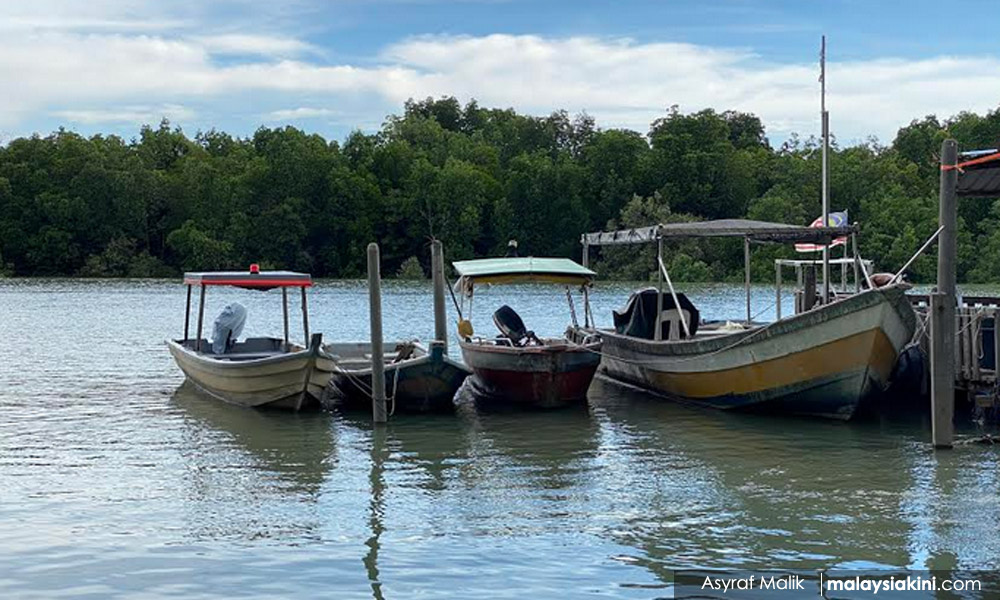
The fisherfolk will also face an additional RM336,324 per year in maintenance costs, which averages out to RM499 per person annually.
The group’s estimated RM12,547,276 in annual opportunity costs refers to the value of lost profits from missed opportunities due to longer fishing times.
Majority reject project
The SM-WEZ project aims to reclaim 1,123.41ha across 16 plots along the Strait of Malacca for commercial and industrial development.
This is part of the larger Melaka Waterfront Economic Zone (M-WEZ) plan, which seeks to reclaim 10,117.141ha of land along 33km of Malacca’s coastline.
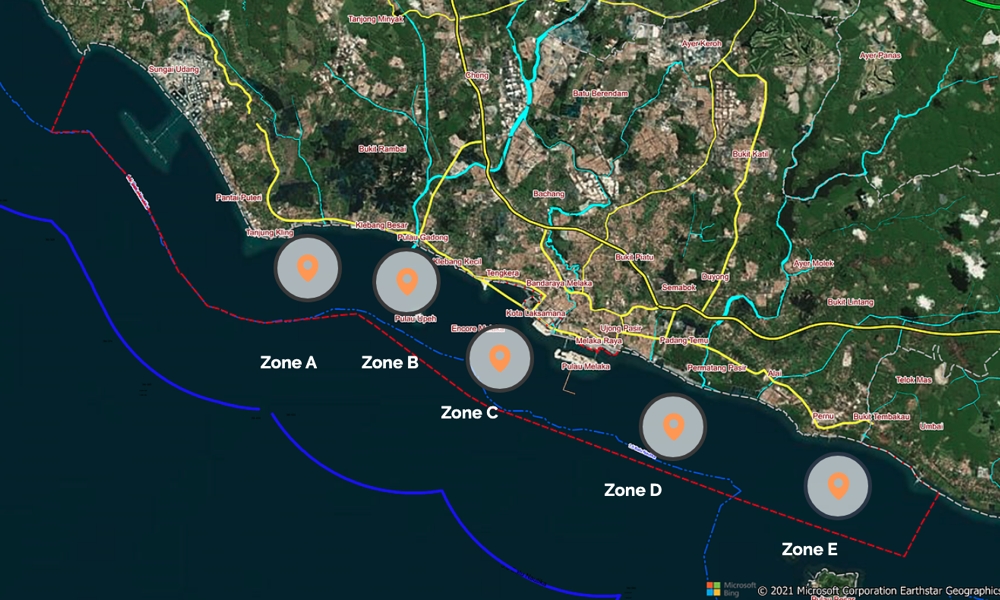
The EIA noted that 72 percent of the fisherfolk surveyed disagreed with the project, while another 28 percent expressed conditional approval.
“The primary concern, with 89 percent agreement, was the negative impact on their overall wellbeing,” the report said.
“Additionally, 83 percent of the respondents highlighted that the previously promised compensation had not yet been paid.
“Furthermore, 68 percent emphasised the need to prioritise the welfare of fisherfolk, stating that appropriate compensation must be provided.
“Another 57 percent of respondents raised concerns about their fishing grounds becoming narrower due to the project,” it added.
There are 702 licensed fisherfolk in the area: 585 Malays, 65 Chinese, 52 Portuguese, five listed as "others" and two Indians.
However, the EIA only surveyed Malay fisherfolk.
The Portuguese Settlement, located just 1.07km east of the project site, was excluded despite being the only location with a high erosion rate.
Last year, Malaysiakini reported that residents of the Portuguese Settlement lamented the loss of their livelihood and cultural traditions due to nearby reclamation projects.
An earlier Malaysiakini report also found that the project would permanently destroy surrounding mudflats and mangrove trees, potentially causing a loss of biodiversity.
Huge negative impact
Several concerns about compensation were raised during feedback sessions with fisherfolk, who said government agencies should not be involved in the process.
They also stressed that the long-term ecological impacts of the project would take years to recover from.
The EIA dismissed the significance of the Malacca fishing industry, saying it contributed only 0.21 percent of Peninsular Malaysia’s total seafood landings in 2023.
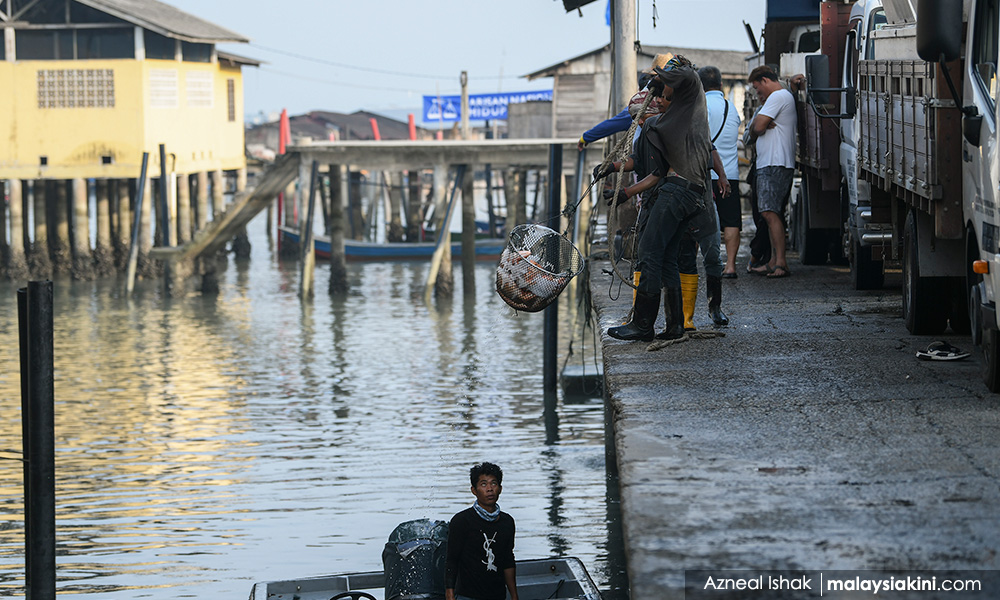
On Tuesday (June 10), Save Our Seashores Melaka (SOS Melaka) slammed the project as “unsustainable, environmentally devastating, and economically reckless.”
The NGO described the reclamation as “the largest and most destructive” ever attempted in Malaysia.
SOS Melaka said Malaccans are sceptical of the promised RM100 billion in investments and 75,000 job opportunities, pointing to unfulfilled pledges from past developments.
The EIA, prepared by Perunding UEP Sdn Bhd for the Malacca government and SM-WEZ Corporation, was displayed from May 14 to June 12.
Public feedback is open until June 27.
/file/publisher-c1a3f893382d2b2f8a9aa22a654d9c97/2024/02/596dc9e178f24f43309377814867273d.jpg)
/file/publisher-c1a3f893382d2b2f8a9aa22a654d9c97/2022/03/3b1e4e5bb7071fa34f171abb8eedec62.jpg)
/file/publisher-c1a3f893382d2b2f8a9aa22a654d9c97/2024/02/bc160e286348c8f956a7ba92aea3037b.jpg)
/file/publisher-c1a3f893382d2b2f8a9aa22a654d9c97/2021/11/a84797ba2588e570aab719f5ad423d06.jpg)
/file/publisher-c1a3f893382d2b2f8a9aa22a654d9c97/2023/01/4b8c7527126f488180697b4ed00f3f45.jpg)


Are you sure you want to delete this comment?
This action cannot be undone.