


/file/publisher-c1a3f893382d2b2f8a9aa22a654d9c97/2022/03/3b1e4e5bb7071fa34f171abb8eedec62.jpg)

NGO pans 'most destructive' Malacca waterfront economic zone project
An NGO has reiterated its objection to the Straits of Melaka Waterfront Economic Zone (SM-WEZ) project, labelling it as “unsustainable, environmentally devastating, and economically reckless”.
Referring to the project’s environmental impact assessment (EIA) report, which covers a 2,766-acre (1,119.3ha) reclamation, Save Our Seashores Melaka (SOS Melaka) said the reclamation is the “largest and most destructive” ever attempted in Malaysia’s history.
Summary
Save Our Shores Melaka criticises the Straits of Melaka Waterfront Economic Zone reclamation project as “unsustainable” and a threat to marine life, fisherfolk’s livelihoods, and food security.
The project’s EIA admits to permanent seabed habitat loss, flood and erosion risks, and potential damage to Malacca’s Unesco World Heritage status.
Group also warns of other white elephant mega projects, cautioning that SM-WEZ could turn out like past “abandoned” ventures like the Melaka Gateway.
An NGO has reiterated its objection to the Straits of Melaka Waterfront Economic Zone (SM-WEZ) project, labelling it as “unsustainable, environmentally devastating, and economically reckless”.
Referring to the project’s environmental impact assessment (EIA) report, which covers a 2,766-acre (1,119.3ha) reclamation, Save Our Seashores Melaka (SOS Melaka) said the reclamation is the “largest and most destructive” ever attempted in Malaysia’s history.
The EIA report covers part of SM-WEZ’s larger project, which seeks to reclaim 25,000 acres of land across 33km of the entire Malacca coastline.
The group highlighted that the EIA report confirms that the reclamation would see the dumping of 112 million cubic metres of sand into Malacca’s coastal waters to create 2,766 acres of artificial sand.
“The report itself admits the project will cause a permanent loss of seabed habitat,” the movement said in a statement today.
“Malacca’s sea is rich in marine life, including vulnerable fishes and corals, dolphins, and Peninsular Malaysia’s last remaining nesting population of Hawksbill sea turtles, which are globally categorised as critically endangered.”
It added that potential destruction to fishing grounds will cause even more permanent loss of fishing areas on a massive scale, thus directly attacking the livelihoods of Malacca’s fisherfolk while threatening food security in the state.
Floods, coastal erosion
The group also raised concerns over the SM-WEZ project worsening issues of floods, coastal erosion and rising sea levels, asserting that previous reclamation projects had disrupted natural drainage and blocked the flow of rainwater to the sea.
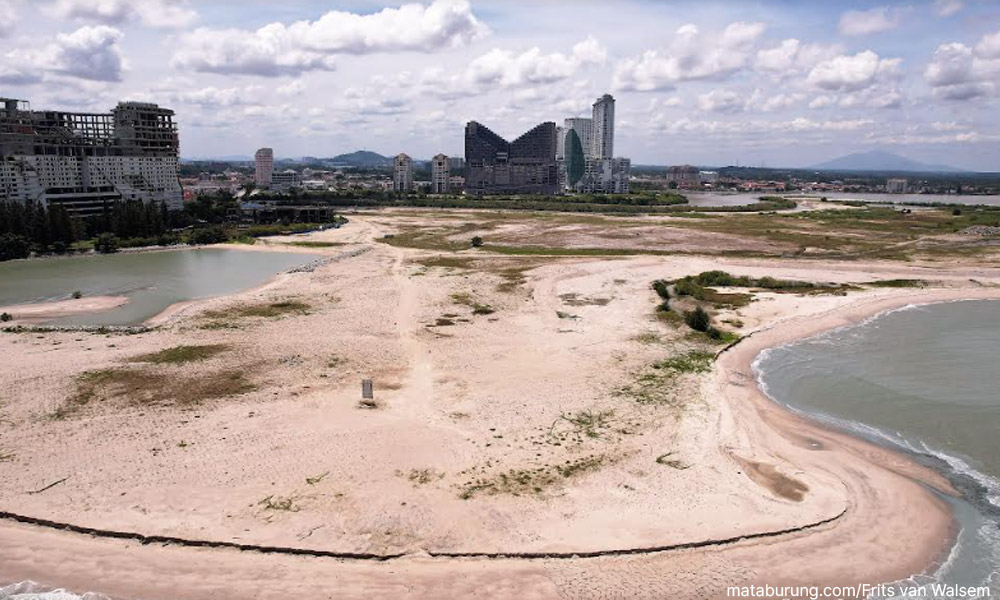
“Large-scale reclamation will alter tides, block drainage, and destroy natural flood barriers like mangroves, increasing disaster risks.
“The EIA report itself admits the project site is sensitive to flooding and erosion while highlighting several parts of the Malacca coastline as erosion-prone and flood-prone, especially during high tides,” it added.
The group pointed out that the EIA report also acknowledges that the project will drastically change the coastline and could potentially affect Malacca’s outstanding universal value as a World Heritage City under the United Nations Educational, Scientific and Cultural Organisation (Unesco).
“The state government should note that the city of Liverpool lost its Unesco status in 2011 after a waterfront development destroyed its cultural and historical value.
“Similarly, will Malacca also lose its Unesco status because of the SM-WEZ project?” it questioned.
It stressed that since a part of the project overlaps with a Protected Heritage Zone gazetted in 2022 under the National Heritage Act 2005, any reclamation attempts are “illegal” and a “blatant assault” on Malacca’s cultural heritage.
“We call on the National Heritage Department to defend this protected zone and not to degazette it for such a project that offers no benefit to the people.”
‘Empty promises’
In July last year, Malacca Chief Minister Ab Rauf Yusoh said the state government would have to make a new application to develop an area gazetted as a Unesco World Heritage Site for works on the SM-WEZ project.

A previous application, Rauf said, was rejected by the department.
SOS Melaka said that while the project aims to provide RM100 billion in investments and 75,000 job opportunities, Malaccans are wary of such “empty promises” due to unfulfilled pledges concerning previous projects.
“The Melaka Gateway and Pulau Melaka Twin City projects were launched decades ago with similar rhetoric. Today, both are abandoned and deserted like ‘ghost towns’.
“How can we justify more reckless development when so much previously reclaimed land sits idle and wasted? SM-WEZ is shaping up to be another expensive white elephant driven by speculative real estate interests - not the genuine needs of the people,” it lamented.
The EIA report referenced by the group is open for public consideration and can be accessed here.
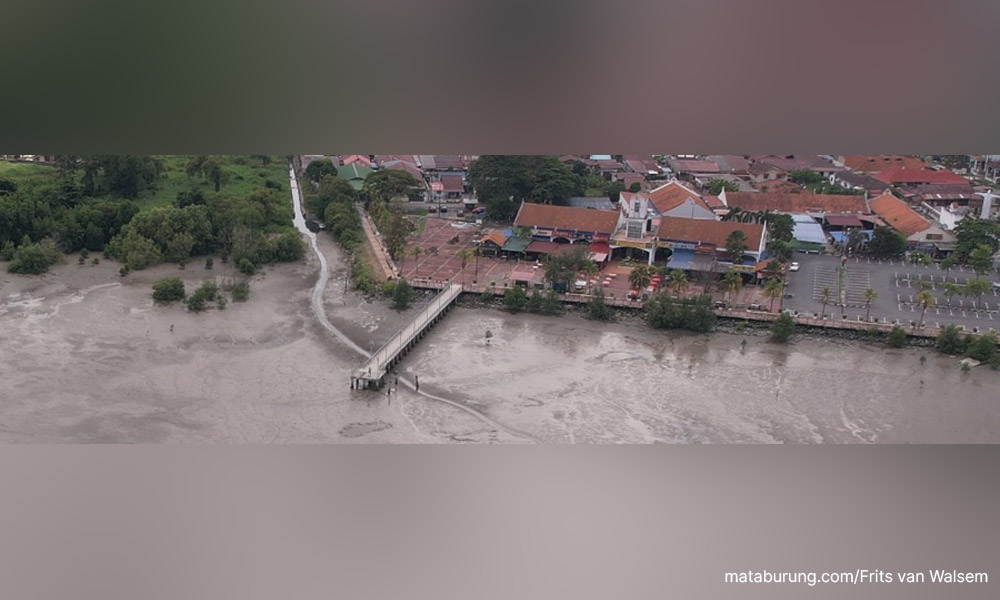
In 2023, a total of 26 organisations urged that the proposed development of a deep-sea port at Malacca’s shoreline be stopped, citing major impacts on the natural environment there.
The site of the deep-sea port, which is part of the SM-WEZ, is said to be an environmentally sensitive area consisting of a main fishing zone, mangroves, and the Pulau Besar gazetted marine park.
The groups were referring to an EIA report submitted by Far East (Malacca) Sdn Bhd the previous year and reported on by Malaysiakini.
/file/publisher-c1a3f893382d2b2f8a9aa22a654d9c97/2020/07/d4619e08bcb662d99e913c7ec193373e.jpg)
/file/1135/b69c771ce388d868b08a9102871c9400.jpeg)
/file/publisher-c1a3f893382d2b2f8a9aa22a654d9c97/2023/09/c78aa1bcbb15df553d011f4b2bd7578e.jpg)
/file/publisher-c1a3f893382d2b2f8a9aa22a654d9c97/2024/07/08ee5f5271d7113fe3bc3d242b0d9dda.jpg)


Are you sure you want to delete this comment?
This action cannot be undone.