


/file/publisher-c1a3f893382d2b2f8a9aa22a654d9c97/2025/06/7df27998933a0e56165a378e8905a77e.jpg)

Treasury sec-gen urges builders to avoid cutting corners as SST looms
Treasury secretary-general Johan Mahmood Merican has strongly urged construction industry players to maintain professionalism and integrity, warning against using the expanded sales and service tax (SST) to justify compromised work quality.
His remarks follow reported concerns from industry associations that the revised tax regime will drive contractors towards cheaper alternatives.
Summary
The Treasury secretary-general has urged construction industry players to avoid using the SST expansion to justify a decline in quality or to cut corners.
Johan Mahmood Merican stresses that the SST is simpler than the GST, with its business-to-business exemptions and higher registration threshold to avoid burdening small contractors.
Johan adds that basic construction materials remain exempt from sales tax and insists that taxation is merely one of many cost inputs.
Treasury secretary-general Johan Mahmood Merican has strongly urged construction industry players to maintain professionalism and integrity, warning against using the expanded sales and service tax (SST) to justify compromised work quality.
His remarks follow reported concerns from industry associations that the revised tax regime will drive contractors towards cheaper alternatives.
Johan (above), however, dismissed the notion that the tax should lead to a decline in workmanship.
He highlighted that the SST framework has been deliberately simplified compared to the previous goods and services tax (GST), which had burdened contractors at multiple stages.

“I’m a bit worried about construction associations admitting that they will cut corners because of taxes.
“You know we have had GST on construction before, and that’s where every single stage of contractors - sub-contractor level one, subcontractor level two, level three - you know, each level having to do the administering of the GST. It is now a lot simpler under this SST,” he said.
Johan explained that under SST, a business-to-business exemption is being undertaken.
“So even if you have the main contractor, subcontractor one and subcontractor two, from subcontractor two to subcontractor one, because they are in the same business of construction, there is no service tax.
“Subcontractor one to the main contractor also has no service tax. SST is a single-layer tax, so we have already said that it is only going to be imposed from the main contractor to his clients, maybe the property developer.
“So there is only one level where they have to worry about (with regards to the service tax),” he said.
Last week, The Star reported the Malay Contractors’ Association of Malaysia president, Rosdi Ab Aziz, as saying that consumers will eventually have to bear the brunt of the expanded SST, which is scheduled to start on July 1 this year.
Rosdi reportedly said that the new SST policy could also affect the smooth flow of projects and cause delays, and that higher costs may even lead to contractors opting for cheaper alternatives when carrying out projects, resulting in compromised quality.
Master Builders’ Association Malaysia (MBAM) president Oliver HC Wee stated that with the construction industry already subject to multiple layers of taxation across various elements of project execution, including building materials, labour, and equipment, the SST expansion would significantly disrupt existing contractual obligations, budgets, and project timelines.
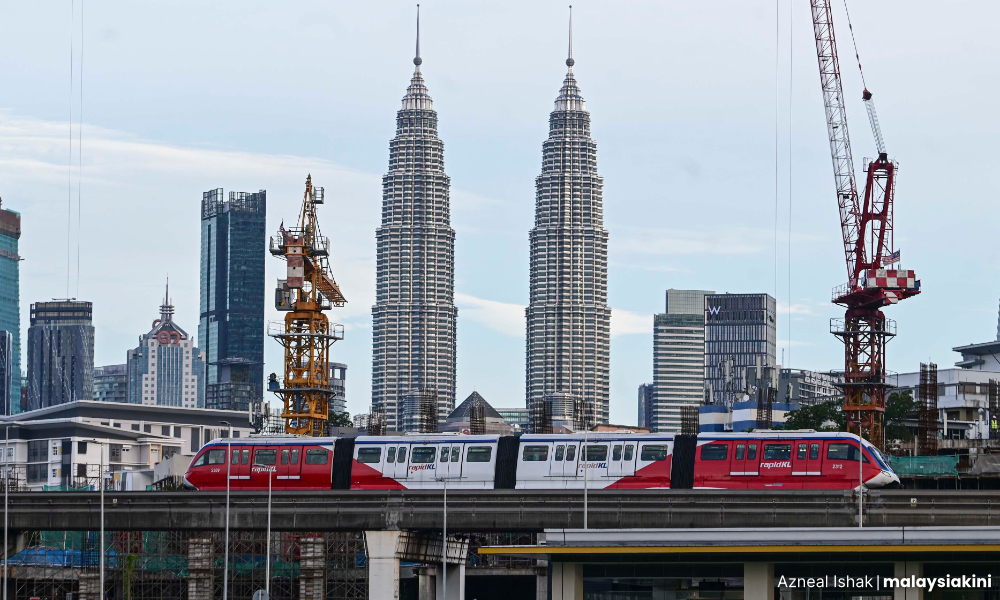
The Star reported Wee suggesting that if the six percent SST is unavoidable, the government should consider reducing the rate to four percent at least.
Zero sales tax on construction materials
Johan pointed out that the sales tax on key construction materials such as cement, aggregates, and sand remains at zero percent, with the aim of keeping base costs stable for the sector.
Responding to industry claims of being taxed at multiple levels, Johan reiterated the government’s policy intent behind the SST expansion: to target more commercially viable projects.
He further noted that the government has taken deliberate steps to soften the impact on smaller contractors.
The revenue threshold for SST registration in the construction sector has been raised to RM1.5 million - triple the standard RM500,000 threshold - aligning it with the threshold for restaurants.
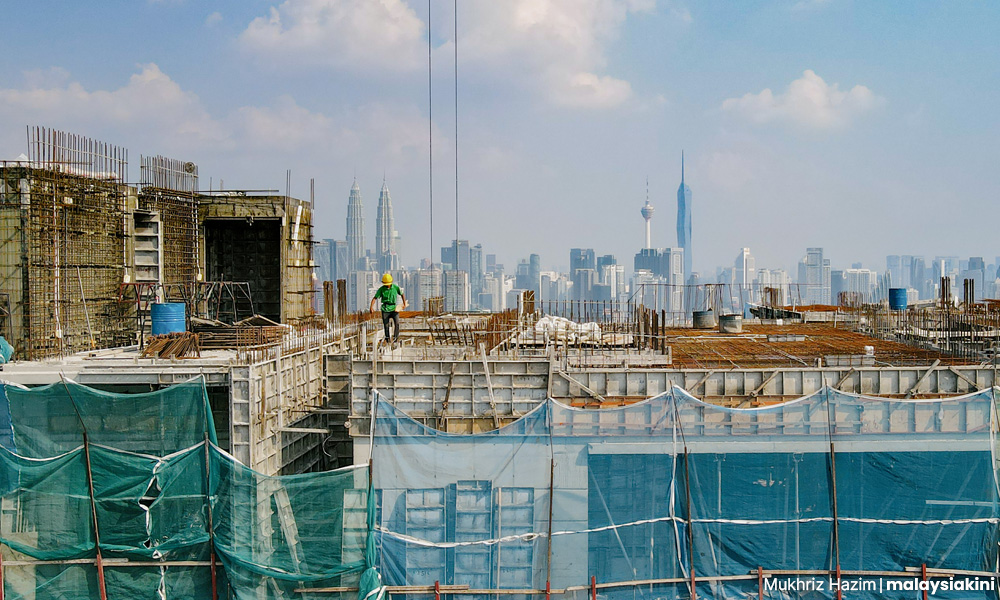
“So that we give a bit more leeway for the construction sector, for the small contractors who do all the fixing, repairs, and renovations, are less affected,” he said.
Johan stated that the government has also undertaken to ensure zero percent sales tax, not just for the basic goods for the rakyat and consumers, but also basic construction items.
“If let’s say you talk about construction, we have exempted, again, housing. So we’re basically imposing service tax on the building of commercial and industrial properties.
“And I guess, bottom line, it is then the view of the government that these segments - those who build office blocks or those who build factories - we believe that these groups are better able to bear a portion of taxes, than let’s say a typical household.
“It is a policy call that we have introduced taxes for these segments,” he added.
Do what is right to stay in business
On concerns about the potential for price hikes or quality compromises, Johan stressed the importance of professionalism across the board.
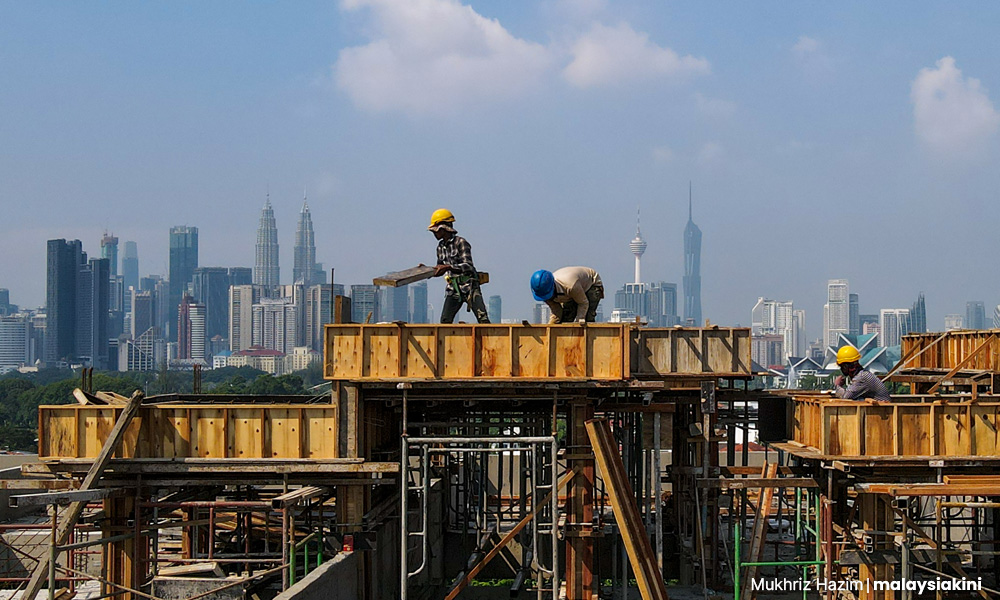
Ultimately, he reminded industry players that taxation is simply one of many cost factors they face.
“If you are building, say, a commercial or industrial building, I would accept that tax is basically another form of cost, and they (contractors) would respond to that just the way they respond to increases in any inputs that they face.
“I don’t think it’s a valid argument to say that because of taxes, contractors would suddenly cut corners on the quality of buildings,” Johan added.
He called on construction industry professionals to remain guided by ethics and long-term integrity.
“I would hope that there is enough professionalism in all the different sectors, from the architect who designs it to the quantity surveyor who confirms that it is built to specifications.
“Hopefully, the contractors themselves have a value system that shows that they want to be in the business for a long time, so they would do what is right. They shouldn’t change behaviour because of taxes,” he added.
/file/publisher-c1a3f893382d2b2f8a9aa22a654d9c97/2025/06/270b763924d11bd017ccfd6668d04ef9.jpg)
/file/publisher-c1a3f893382d2b2f8a9aa22a654d9c97/2024/10/8f1fc555fb3400cf553d4eb249aabe9f.jpg)
/file/publisher-c1a3f893382d2b2f8a9aa22a654d9c97/2025/05/46eb87e427e9c2fedcd0e3a27f846791.jpg)
/file/publisher-c1a3f893382d2b2f8a9aa22a654d9c97/2023/06/1f3262c10442a3210588005e0071a467.jpg)
/file/publisher-c1a3f893382d2b2f8a9aa22a654d9c97/2025/06/57de7f437fdca9eeed2c53c12151e8a7.jpg)
/file/publisher-c1a3f893382d2b2f8a9aa22a654d9c97/2022/07/32a15857d7adf64c5f7ab4ee1eb31199.jpg)


Report this comment
Are you sure you want to delete this comment?
This action cannot be undone.