


/file/publisher-c1a3f893382d2b2f8a9aa22a654d9c97/2025/02/8482aadd9f2670a260d93c2a2423e61d.jpg)

Zaid urges reforms in AGC, alleging 'flawed prosecution' after Najib's DNAA
Firing a salvo on the AGC, he accused it of having operated without accountability for too long, adding that public fatigue over "flawed prosecution" has already hit a tipping point...
Summary
Ex- law minister Zaid calls for comprehensive reforms of the AGC following Najib's discharge not amounting to acquittal in his money laundering case.
Zaid accuses the AGC of operating without accountability, stating that Malaysians are angry over "flawed prosecution" and that the current system lacks proper oversight.
He outlines several key reforms, including establishing an independent Prosecution Oversight Commission to review decisions, implementing a mandatory ethics code for prosecutors, and requiring written justifications for DNAA and no further action decisions.
Former law minister Zaid Ibrahim has called for thorough reforms in the Attorney-General's Chambers (AGC) after former prime minister Najib Abdul Razak was granted a discharge not amounting to an acquittal (DNAA) in his latest SRC International money laundering case.
Firing a salvo on the AGC, he accused it of having operated without accountability for too long, adding that public fatigue over "flawed prosecution" has already hit a tipping point.
"Malaysians are watching, and they are angry.
"The AG, who is also the public prosecutor, answers to no one, guided by no statutory code of ethics, shielded from scrutiny, and insulated by laws that make it almost impossible to challenge decisions unless one can prove malice, an absurdly high threshold," Zaid said on X today.
Earlier today, Kuala Lumpur High Court judge K Muniandy granted a DNAA to Najib over three money laundering charges involving RM27 million from SRC International Sdn Bhd.
A DNAA means the accused is temporarily discharged from the charges, but may still be prosecuted for the same offences in the future if the prosecution decides to reinstate them.

Upset, Zaid said the AGC is riddled with a long list of issues, including the void of a public body that reviews prosecutorial decisions, even in politically sensitive or high-stakes cases.
He also said that DNAA and decisions to drop cases (no further are also handed without justifications.
No accountability
At present, Zaid said the prime minister controls the appointments and removals of AGs. With AGs having the authority to pursue or drop charges, he warned that this creates a "dangerous incentive structure."
"No obligation to disclose prosecutorial data. Parliament is left in the dark on how justice is administered on the rakyat’s behalf.
“Prosecutors are not required to turn over evidence that could exonerate the accused, a fundamental breach of fair trial norms," he added.
Zaid explained that, unlike in the UK, Canada, or Australia, Malaysian prosecutors have no binding public code of conduct.
Oversight body
Offering solutions, the former Kota Bharu MP called for the formation of a Prosecution Oversight Commission to review AGC’s decisions not to prosecute public interest cases, and to investigate allegations of misconduct, bias, or abuse of power.
Zaid also called for recommendations of disciplinary action or referrals to judicial review.
In addition, he also called for the enactment of a mandatory ethics code for prosecution, whereby all exculpatory evidence will be disclosed. Zaid said that written justifications must also be furnished for DNAA, NFA, and plea bargains.
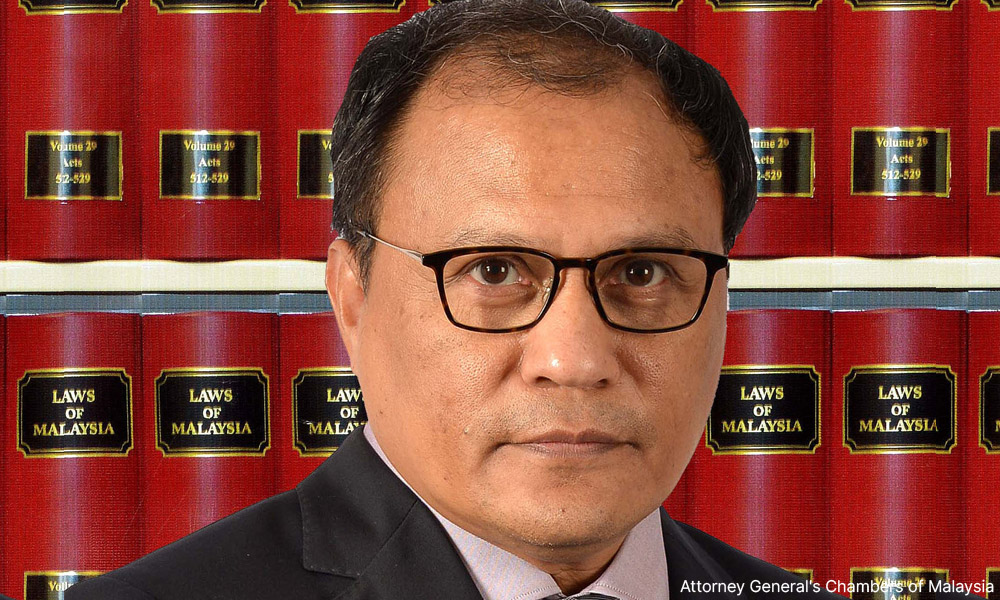
"Like judges, senior prosecutors must also have fixed terms and protection from arbitrary removals," he added.
At the parliamentary level, Zaid said the government must establish a parliamentary select committee on justice and legal affairs to oversee prosecutorial conduct - with annual reports on prosecution outcomes, dropped cases and statistics on DNAA and NFA cases to be tabled.
On protection for whistleblowers, Zaid said the Whistleblower Protection Act 2010, in its present form, is "toothless and gagged by the Official Secrets Act (OSA)."
As such, he called for the to be amended to allow disclosures, even if they are involved in classified information.
This is especially needed when the exposé is made in good faith and related to public interest, with immunity granted for those exposing prosecutorial misconduct.
/file/publisher-c1a3f893382d2b2f8a9aa22a654d9c97/2025/06/6bedcbeab1097cebb6d40e982f12a277.png)
/file/publisher-c1a3f893382d2b2f8a9aa22a654d9c97/2025/06/cbb58038ad23fdc6fe13ee0248703445.jpg)
/file/publisher-c1a3f893382d2b2f8a9aa22a654d9c97/2025/02/a984e9b6cc4a6788a45d88eb217aacd0.jpg)


Are you sure you want to delete this comment?
This action cannot be undone.