


/file/publisher-c1a3f893382d2b2f8a9aa22a654d9c97/2025/07/ab561a23eb90115036929db50d15a9bc.jpg)

Sarawak rep cries gerrymandering as assembly seats set to hit 99
A Sarawak state assemblyperson has accused the state government of gerrymandering following the tabling of a bill to expand the state assembly from 82 to 99 seats.
DAP's Pending representative Violet Yong lamented that the move is “not only untimely, but unfair, unnecessary and politically motivated”, The Borneo Post reported.
“Let’s call it what it is...
Summary
DAP's Violet Yong accuses Sarawak's ruling GPS coalition of gerrymandering after the state government tabled a bill to increase assembly seats from 82 to 99.
She argues the move is "politically motivated" and prioritises adding politicians rather than addressing urgent issues affecting Sarawakians.
Two GPS state assemblypersons defend the move, citing the need for efficient representation and diverse collective viewpoints.
A Sarawak state assemblyperson has accused the state government of gerrymandering following the tabling of a bill to expand the state assembly from 82 to 99 seats.
DAP's Pending representative Violet Yong lamented that the move is “not only untimely, but unfair, unnecessary and politically motivated”, The Borneo Post reported.
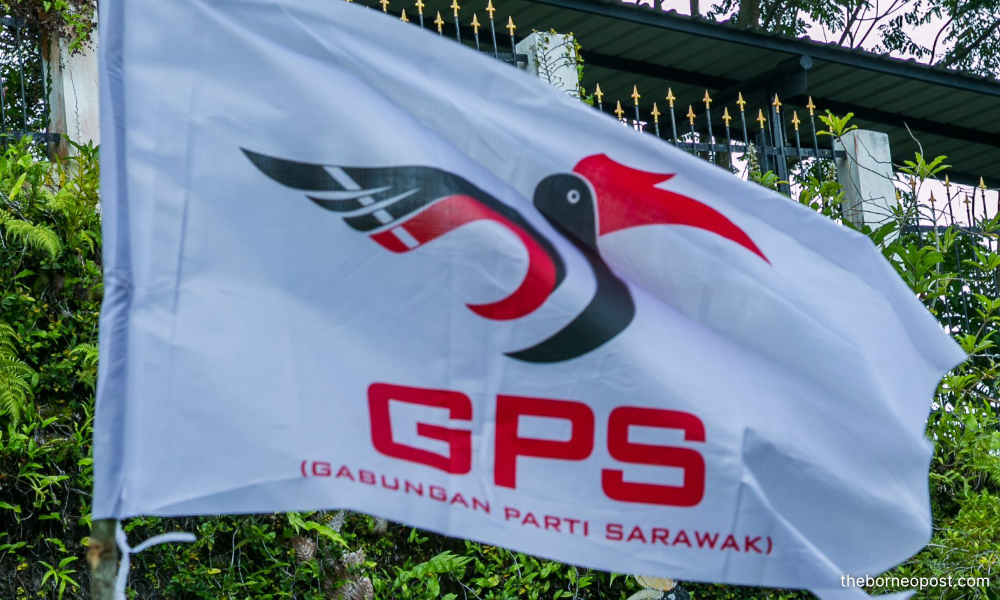
“Let’s call it what it is: GPS is adding new seats only where it can win, not where they’re actually needed based on voter numbers. This is gerrymandering dressed up as reform,” she was quoted as saying, referring to the state's ruling Gabungan Parti Sarawak coalition.
Earlier, Bernama reported that the Sarawak government had tabled the Dewan Undangan Negeri (Composition of Membership) Bill 2025, proposing to increase the number of elected representatives in the state assembly from 82 to 99.
The bill, tabled by Sarawak tourism, creative industry and performing arts minister Abdul Karim Rahman Hamzah, reportedly aims to reflect demographic changes, urban expansion, and the growing need for equitable representation in the state.
Abdul Karim added that the new composition, once passed and gazetted, would be implemented in time for the next state election.
He said that the proposed amendment would also repeal the current Dewan Undangan Negeri (Composition of Membership) Ordinance 2014 (Cap 70), which fixed the number of seats at 82.
What’s the rationale?
However, Yong said the move shifts focus away from urgent rakyat issues such as poverty, high cost of living, poor infrastructure and lack of basic amenities.
“At a time when many Sarawakians are struggling with the rising cost of living, inadequate roads, no electricity, no clean water supply, and poor access to basic services, the GPS government has chosen to prioritise adding more politicians instead of addressing the people’s real needs,” she said.
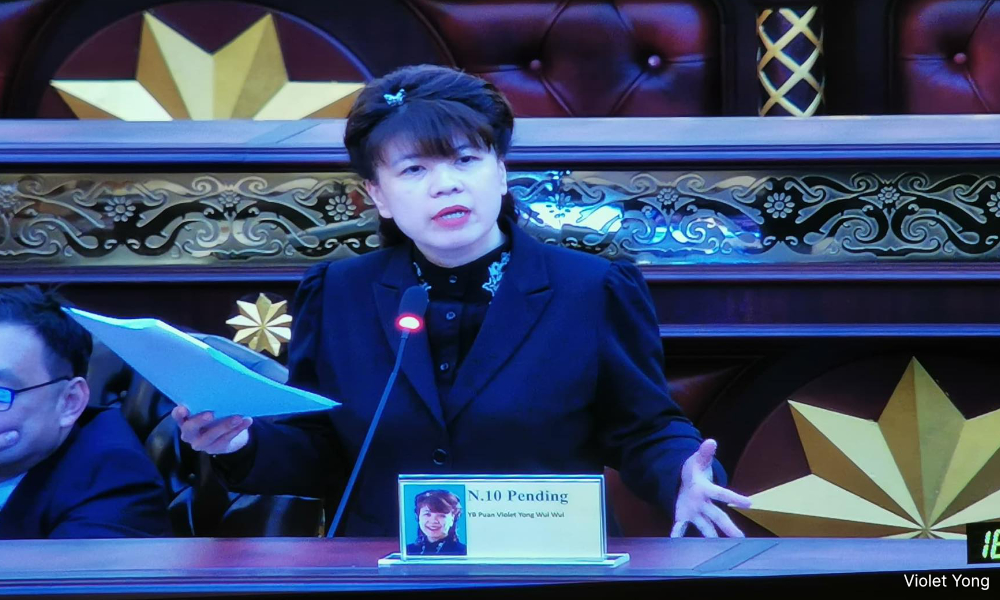
She said this during a debate on the bill, at the special one-day sitting of the Sarawak state assembly.
Yong further questioned the rationale for the increase, observing that although voter numbers had risen significantly through automatic voter registration and Undi18, the growth was concentrated in urban and semi-urban areas.
In addition to warning about the financial burden on the state, Yong questioned the perceived silence of Sarawak’s GPS federal ministers on the matter.
“What have our five federal ministers from Sarawak GPS done in Parliament to fight for more parliamentary seats for Sarawak? Why is there no visible push from them to demand what is rightfully ours?” she asked.
Sarawak's uniqueness mandates move
In his speech, GPS' Opar assemblyperson Billy Sujang said that Sarawak's unique characteristics, with its vast geographical area and multi-ethnic composition, make efficient local representation critically important.
"Some existing constituencies cover hundreds of kilometres, making it logistically difficult for an assemblyperson to provide comprehensive services to all residents," Utusan Malaysia reported him as saying.
Billy explained that the addition of 17 new seats would allow constituency boundaries to be redrawn to reflect the actual reality of communities and population distribution, whilst making it easier for people's representatives to address local issues more thoroughly.
Billy also highlighted Sarawak's rapid development under the implementation of the Post-Covid-19 Development Strategy 2030, which saw mega projects such as new roads, bridges, industrial parks and renewable energy being implemented on a large scale.
His party colleague, Wilson Nyabong Ijang, reportedly emphasised that the increase in members from 82 to 99 in future would enable diverse collective viewpoints to be achieved, thereby empowering the rakyat.
"This is not about expanding the size of government for self-interest, but rather about enhancing the legitimacy, inclusiveness and integrity of democracy," the Pelagus representative was quoted as saying during a debate at the special sitting.
/file/publisher-c1a3f893382d2b2f8a9aa22a654d9c97/2024/07/8386472bd46eec1a705e1882cb4b9bee.jpg)
/file/publisher-c1a3f893382d2b2f8a9aa22a654d9c97/2024/10/5855d72188daa8a95d22cb8fc51c822d.png)
/file/publisher-c1a3f893382d2b2f8a9aa22a654d9c97/2024/03/6eb4cc7fc22fe5bc0722e1a0d2e485ce.jpg)


Report this comment
Are you sure you want to delete this comment?
This action cannot be undone.