


/file/publisher-c1a3f893382d2b2f8a9aa22a654d9c97/2024/01/f786107dbe12c479426cea421e12797e.jpg)

PSM: Food security at risk as farmers battle cheap imports, evictions
Parti Sosialis Malaysia (PSM) said that food security is at risk with farmers facing the twin threats of uncontrolled cheap imports and evictions.
In a statement today, Perak PSM chairperson KS Bawani urged the state government to protect the livelihoods of farmers and support local food production to ensure food security.
Summary
PSM warns that Malaysia’s food security is at risk due to uncontrolled cheap imports and farmer evictions.
She urges the government to curb imports, stop unfair evictions, and provide stronger support to farmers.
Parti Sosialis Malaysia (PSM) said that food security is at risk with farmers facing the twin threats of uncontrolled cheap imports and evictions.
In a statement today, Perak PSM chairperson KS Bawani urged the state government to protect the livelihoods of farmers and support local food production to ensure food security.
She cited a statement by DAP's Tanah Rata assemblyperson Ho Chi Yang on Aug 21, when he raised concerns over the impact of cheap vegetable imports from China on Malaysian farmers and its potential to destabilise the domestic market.
"Malaysia’s vegetable imports from China have increased from US$550 million (RM2.3 billion) in 2022 to US$882 million in 2024, representing an average annual growth of 26 percent.
"This is not new, and the government needs to encourage local production," she said.
She said that the prices of farm produce from Cameron Highlands have fallen, leaving farmers scrambling to cover their production costs.

"This is despite several crops - including tomatoes (118 percent), cucumbers (106 percent), spinach (108 percent), eggplant (111 percent), and long beans (108 percent) - having exceeded their 100 percent self-sufficiency ratio.
"This overproduction, combined with uncontrolled imports, is depressing prices and threatening the sustainability of local agriculture," she added.
Eviction threat
Additionally, she said that farmers in Perak are facing evictions from the land they farm by private owners and government agencies.
"Many of these farmers cultivate vegetables, fruits and freshwater fish on government land to meet local needs, but are facing evictions and court action by private landowners.
"Evicting them not only disrupts local food production but also reduces Malaysia’s self-reliance and increases prices, which affects ordinary people while benefiting developers and stakeholders," she said.
In 2022, Malaysiakini reported that 12 farming communities in Perak were facing eviction.
According to documents sighted by Malaysiakini, those with land grants who are driving the farmers out are mostly developers seeking to build residential areas on these lands.
Six farmers - aged between 49 and 56 - then filed a legal challenge, which named the Kinta district and land office administrator, the Perak State Development Corporation, the state land and mines director, as well as the state government as respondents.
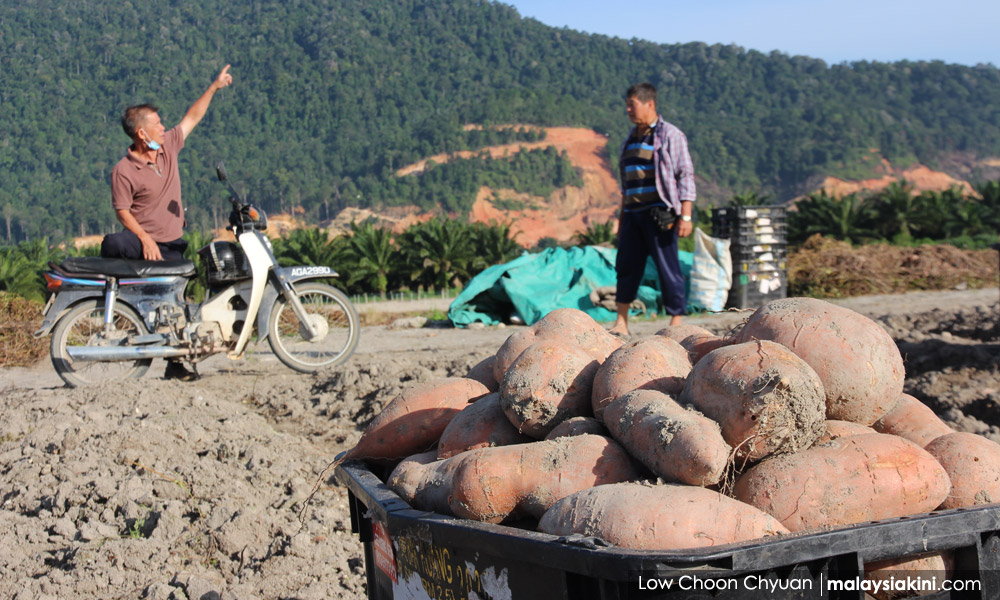
They contended that the land has been farmed by their parents and family members continuously since the 1940s, during the colonial period until today.
Protect farmers’ rights
Bawani urged the state government to:
protect the farmers' rights by ensuring they are not unfairly evicted,
support sustainable agriculture by providing resources and assistance towards long-term food security,
engage with farmers to address their concerns and find mutually beneficial solutions, and
ensure state mechanisms are not used to eliminate farmers.
She further called on the government to control vegetable imports, especially when it comes to self-sufficient crops, and provide specific support to farmers through measures such as subsidies for inputs of agricultural production.
"This issue is also closely linked to the 13th Malaysia Plan (13MP), which emphasises strengthening domestic agriculture, reducing import dependency, and ensuring food security.
"Protecting farmers’ livelihoods and supporting local food production are essential to building a resilient and self-reliant agricultural sector," she added.
‘Manufactured crisis’
In June, former Klang MP Charles Santiago questioned why ordinary citizens should be forced to shoulder Malaysia’s food import bill when such shortfalls stem from the failure of government policies.
Saying that importing fruits is a “manufactured crisis” in Malaysia, Charles asserted that the nation is “food insecure” as 60 percent of its food was imported to meet domestic demand in 2024, racking up a RM78.8 billion bill.
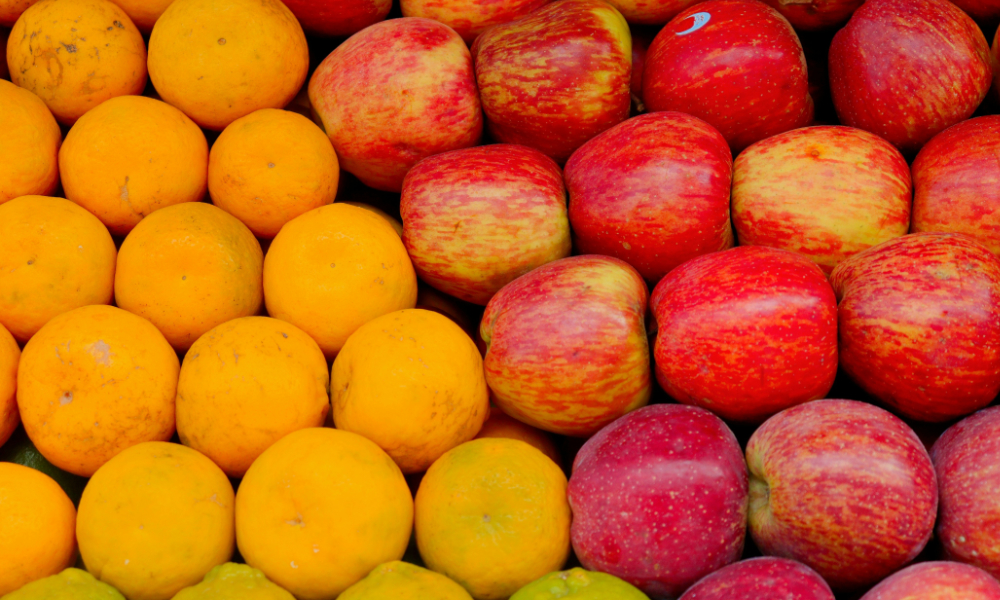
He claimed the issue is further compounded by how local farmlands are being “repurposed” to support specialised facilities and technological advancements, while farmers also face eviction issues.
He was commenting on the government's announcement that imported fruit will face a five percent sales tax.
Later, Prime Minister Anwar Ibrahim announced that apples and oranges were exempted from the sales tax following backlash.
/file/publisher-c1a3f893382d2b2f8a9aa22a654d9c97/2025/08/fce7886f7e1d08ced8d9ec35cf9b4146.jpg)
/file/1072/9eeb074ef449a4048d5de09240b86374.jpg)
/file/publisher-c1a3f893382d2b2f8a9aa22a654d9c97/2025/07/65ce6b23b0790307524b0b8eb20f2e26.jpg)
/file/publisher-c1a3f893382d2b2f8a9aa22a654d9c97/2023/11/25d700f2c55cbb322825a4d191bcc52d.jpg)
/file/publisher-c1a3f893382d2b2f8a9aa22a654d9c97/2025/07/d23378f0beef19d22d0796edcb5904bc.jpg)
/file/publisher-c1a3f893382d2b2f8a9aa22a654d9c97/2025/07/13ccfcc7a40f9355b646c99aa2151b25.jpg)
/file/publisher-c1a3f893382d2b2f8a9aa22a654d9c97/2025/07/527a6199ba099178be8bc07b758ec31f.jpg)
/file/publisher-c1a3f893382d2b2f8a9aa22a654d9c97/2024/09/e3a783a51d6d3e6cc5858cd745f44388.jpg)


Are you sure you want to delete this comment?
This action cannot be undone.