


/file/publisher-c1a3f893382d2b2f8a9aa22a654d9c97/2020/10/0b58ceb8a0736b50e49b15b5446f4a00.jpg)

Procurement law will cause major harm to M'sia if not fixed, groups warn
A group of civil society organisations (CSOs) want the government to commit to fixing flaws in the newly passed Government Procurement Act.
They warn that if this is not done, the law risks causing major damage to the country.
A group of civil society organisations (CSOs) want the government to commit to fixing flaws in the newly passed Government Procurement Act.
They warn that if this is not done, the law risks causing major damage to the country.
"This legislation will bring major harm to Malaysia’s long-term future if the identified flaws are not addressed.
"If and when a major scandal emerges as a result of the (law's) provisions, every MP who voted in favour of it will be responsible for the harm caused from their refusal to acknowledge CSOs’ repeated warnings," the group said in a statement today.
Among the 30 signatories of the statement are C4 Center, Rasuah Busters, Suaram, Bersih, Projek Sama, economist Edmund Terence Gomez, activist Cynthia Gabriel, former home minister Syed Hamid Albar, and former MACC deputy chief Sutinah Sutan.
Besides a commitment to address flaws in the law through legal amendments, the CSOs also want the government to conduct periodic impact assessments on the law.
The law has passed through both the Dewan Rakyat and Senate, and now awaits assent from the Yang di-Pertuan Agong before it can be gazetted and enacted.
Preventing scandals, but…
Prime Minister Anwar Ibrahim had argued that the bill is critical to prevent a repeat of past financial scandals such as 1MDB, and entails a procurement framework for federal and state governments.
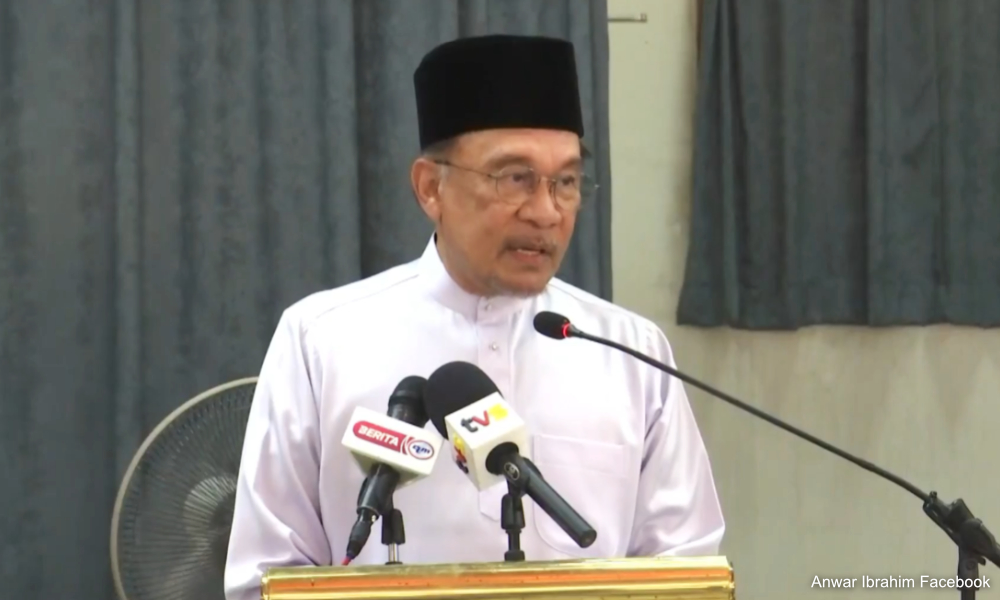
The goal is ostensibly to strip ministers and others of their power to award contracts without transparent procedures.
However, critics argued that there are significant gaps in the law that are open to abuse.
The CSOs said that, among others, the finance minister still has wide discretionary powers under the law, including to approve contracts and make exemptions.
They also argue that the Appeals Tribunal proposed under the law as a check and balance mechanism is weak and susceptible to influence from the finance minister, who will be appointing the tribunal members.
Proponents of the law have argued that the law contains safeguards, such as ensuring that tribunal members do not have conflicts of interest, including on a familial basis.
Further, all Appeals Tribunal proceedings are open to the public.
/file/publisher-c1a3f893382d2b2f8a9aa22a654d9c97/2025/07/fa051093d3d35c3164bb2a8bf4e8ff67.jpg)
/file/publisher-c1a3f893382d2b2f8a9aa22a654d9c97/2023/08/1c750887add0c0bf87103135c7b357dc.jpg)
/file/publisher-c1a3f893382d2b2f8a9aa22a654d9c97/2023/10/44bb1f8c0da4e0901936f22b9f0ddc02.jpg)
/file/publisher-c1a3f893382d2b2f8a9aa22a654d9c97/2024/03/2ec2cff62f904e88dadca663477c805d.jpg)
/file/publisher-c1a3f893382d2b2f8a9aa22a654d9c97/2025/08/b72264f0bdbf33bd64c6da284ded902d.jpg)


Report this comment
Are you sure you want to delete this comment?
This action cannot be undone.