


/file/publisher-c1a3f893382d2b2f8a9aa22a654d9c97/2024/12/4157f54b6316dcb195773d4a17d12e47.jpg)

High Court erred in dismissing Yeoh's suit against ex-IGP: lawyer
Yeoh’s counsel Razlan Hadri Zulkifli listed several analyses made by the court which he deemed irrelevant - including one where the judge said Yeoh had failed to produce documentary evidence to prove Musa’s statement referred to her...
The Kuala Lumpur High Court committed a basic error of law when considering irrelevant analysis, leading to Youth and Sports Minister Hannah Yeoh’s defamation suit against former inspector-general of police Musa Hassan being dismissed last year, the Court of Appeal heard today.
Yeoh’s counsel Razlan Hadri Zulkifli listed several analyses made by the court which he deemed irrelevant - including one where the judge said Yeoh (above, left) had failed to produce documentary evidence to prove Musa’s statement referred to her.
“There is no requirement in law that (such) documentary evidence must be produced.
“It is, hence, unfair for the court, which appears to have placed an evidentiary burden on the appellant (Yeoh) to produce documentary evidence in order to establish whether the statements referred to her (or not).
“The court was wrong when it did not find the (alleged) slanderous statement was defamatory (but instead) merely a passing remark to Yeoh in the speech.
“In any event, a statement is no less defamatory just because it is a short sentence or passage in the context of a long speech, or thick publication which focuses on other broader issues,” he said in his submission to a three-member bench, chaired by judge Azimah Omar.
Presiding with Azimah were judges Choo Kah Sing and Shahnaz Sulaiman.
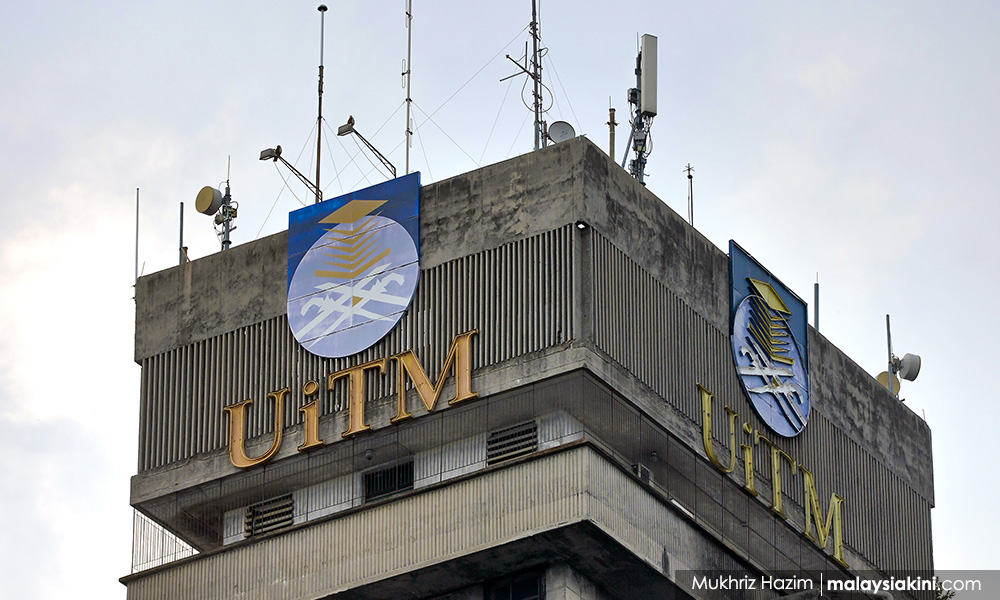
Musa, on Jan 30, 2020, had claimed, in a forum at Universiti Teknologi Mara (UiTM), that Yeoh wanted to “evangelise” Malaysia and turn it into a Christian country, leading to Yeoh’s filing a suit against him in July the same year.
The DAP MP argued that Musa's statements in his speech were untrue, false, and unfounded and that they were made with malicious intent to tarnish her good name and reputation.
However, the Kuala Lumpur’s High Court dismissed Yeoh’s suit on Dec 23 last year, and ordered her to pay him RM40,000 in costs.
Judicial Commissioner Arziah Apandi said there were no malice elements proven in the suit and that Musa had reasonable grounds to have made such a statement, following Yeoh’s admission and writings in her book titled “Becoming Hannah”.
She also said that the constitutional right to freedom of expression must be robustly protected, especially in matters of public interest and statements made during privileged occasions.
Arziah added that Musa, being a former IGP, had a moral and social duty to speak on matters affecting national security.
‘Court didn’t consider Musa’s replies ‘
On that note, Razlan submitted that the court had failed to consider Musa’s answers when cross-examined by him, where the former IGP said to have relied his statements on one Kamarul Zaman Yusoff’s Facebook posts and intelligence documents.
Musa had also agreed that he could not produce any documentary evidence to support his claims.
“(During cross-examination) Musa justified his statements by relying upon Kamarul’s Facebook post. He said so numerous times.
“Unfortunately, there is no law supporting this. In terms of justification, you cannot rely on somebody’s opinion.
“Justification is truth (where the concept is) ‘I am stating the truth, and that truth is objectively variable’. Not because (one individual) had said so. (Such concept) is not the law, and therefore the reference to Kamarul’s post cannot be relied upon.”
‘No mala fide’
Meanwhile, Musa’s lawyer Khairul Azam Abdul Aziz rebutted, stating Musa did not have mala fide (bad faith) against Yeoh, as the statements was made in relying upon Kamarul’s Facebook post, as well as on intelligence information relating to national security.
In his written submissions, Khairul claimed that Yeoh had cherrypicked certain parts of his speech, which lasted for one hour, 56 minutes and 33 seconds.

“This argument is further supported by the appellant’s admission (during trial) that she herself did not listen to the respondent’s (Musa) speech in entirety but only on certain parts which were more or less two minutes from the entire speech,” he added.
Khairul also defended Musa for not being able to produce documentary evidence to support his claims, as intelligence documents were confidential.
The judges then reserved their judgment and fixed Oct 21 for case management to determine the date to deliver their verdict.
/file/publisher-c1a3f893382d2b2f8a9aa22a654d9c97/2024/10/860b74753d1b656e72827a50e9ea0c65.jpg)
/file/publisher-c1a3f893382d2b2f8a9aa22a654d9c97/2025/01/d6a6f5793eb29f133b5f0d45bbb67b4d.jpg)
/file/publisher-c1a3f893382d2b2f8a9aa22a654d9c97/2024/05/5b9e496110d8e659cca0fcc492d1354b.jpg)
/file/publisher-c1a3f893382d2b2f8a9aa22a654d9c97/2024/02/04ccbb0128d853fb4497f2020779c411.jpg)


Are you sure you want to delete this comment?
This action cannot be undone.