


/file/publisher-c1a3f893382d2b2f8a9aa22a654d9c97/2025/11/27ba40ecd8edce168ad8fa1c9d25fe90.jpg)

No excessive radiation detected in M'sian waters: Minister
PARLIAMENT | No excessive radiation has been recorded in Malaysian waters through real-time monitoring by five Gamma Spectrum Water Monitoring Stations, according to Science, Technology and Innovation Minister Chang Lih Kang.
Speaking in the Dewan Rakyat, Chang (Harapan-Tanjong Malim) cited the functions of the first monitoring station set up at the Universiti Malaysia Sabah jetty in June 2023, followed by four more stations in Pulau Perhentian, Pulau Tioman, Bukit Malut, and Bintulu, up to October this year.
PARLIAMENT | No excessive radiation has been recorded in Malaysian waters through real-time monitoring by five Gamma Spectrum Water Monitoring Stations, according to Science, Technology and Innovation Minister Chang Lih Kang.
Speaking in the Dewan Rakyat, Chang (Harapan-Tanjong Malim) cited the functions of the first monitoring station set up at the Universiti Malaysia Sabah jetty in June 2023, followed by four more stations in Pulau Perhentian, Pulau Tioman, Bukit Malut, and Bintulu, up to October this year.
“These stations continuously monitor gamma radiation, providing real-time readings, and all data is analysed by the National Nuclear Emergency Response Management Centre.
“In the event of a contamination incident or radioactive waste spill, the government has contingency measures in place, including increased monitoring and sampling of seawater, temporary restrictions on fishing activities and the consumption of seafood in affected areas, as well as issuing safety alerts to the public,” said Chang in response to Tan Hong Pin (Harapan-Bakri).
He stressed that the measures are carried out through close collaboration with the Health Ministry, the National Disaster Management Agency and the Malaysian Maritime Enforcement Agency.
“So far, we have not detected any levels exceeding control limits.
“The government remains committed to continuous monitoring and preparedness to safeguard public health and environmental sustainability,” said Chang.
Treated radioactive water released from Japan
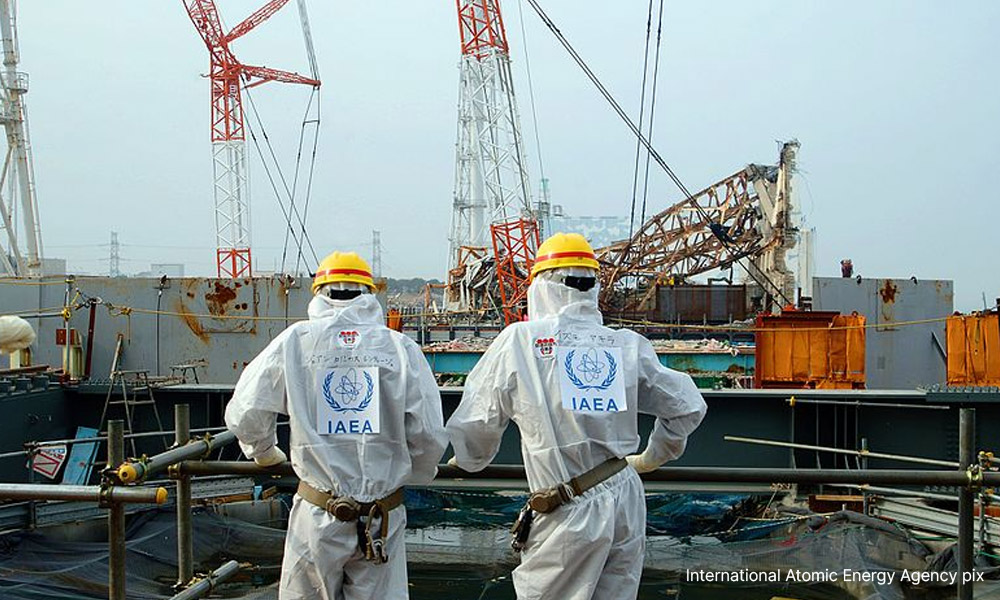
The first GSWMS was set up to monitor treated radioactive water released from the Fukushima Daiichi nuclear power plant into the Pacific Ocean by Japanese authorities.
In September, the National Fisheries Department reportedly said it has not received any complaints regarding radioactive contamination in local seafood products, but would send samples to the National Nuclear Agency for further investigation if the need arises.
At the time, the department was responding to the United States’ Food and Drug Administration’s discovery of radioactive contamination of Caesium-137 in frozen shrimp imported from Indonesia.
The source of the contamination has since been traced to the Modern Cikande Industrial Estate in Banten, Indonesia, where the radioactive material is believed to have been imported for disposal as scrap metal.
Yesterday, Bernama reported that the Indonesian Quarantine Agency (Barantin) confirmed that the destruction of 5.7 tonnes of shrimp in 494 cartons contaminated with radioactive Cesium-137 was an effort to maintain food safety.
Reporting by Alyaa Alhadjri, Zarrah Morden, Shakira Buang
/file/publisher-c1a3f893382d2b2f8a9aa22a654d9c97/2024/10/24740d1f3f5335107d476cca4e71c62d.jpg)
/file/publisher-c1a3f893382d2b2f8a9aa22a654d9c97/2025/09/476bdd10c7db1405a90d887b0efa199a.jpg)
/file/publisher-c1a3f893382d2b2f8a9aa22a654d9c97/2025/08/d9b2da59e36558da9fb87ca5d95ae401.jpg)
/file/publisher-c1a3f893382d2b2f8a9aa22a654d9c97/2022/09/ee680dae5df241e6dae2640287e4c002.jpg)
/file/publisher-c1a3f893382d2b2f8a9aa22a654d9c97/2023/10/c93010498a32eda0a043ca407539040c.jpg)
/file/publisher-c1a3f893382d2b2f8a9aa22a654d9c97/2023/10/4e7e1a76f35181aed9b13f1cf51b9f05.jpg)


Are you sure you want to delete this comment?
This action cannot be undone.