


/file/publisher-c1a3f893382d2b2f8a9aa22a654d9c97/2026/02/449b70256213788f339a275b5d6c3930.jpg)

Govt urged to prioritise reforms, local polls over mayoral election
The government has been urged to prioritise reinstating local council elections and reforming the Kuala Lumpur City Hall’s (DBKL) structural weaknesses before instating mayoral polls.
Panellists Setiawangsa MP Nik Nazmi Nik Ahmad, Seputeh MP Teresa Kok, former Kuala Lumpur mayor Nor Hisham Ahmad Dahlan, and PSM’s Kuala Lumpur branch chairperson, Geetha Anbalagan unanimously shared this sentiment at a forum yesterday discussing the feasibility of a mayoral election for Kuala Lumpur.
The government has been urged to prioritise reinstating local council elections and reforming the Kuala Lumpur City Hall’s (DBKL) structural weaknesses before instating mayoral polls.
Panellists Setiawangsa MP Nik Nazmi Nik Ahmad, Seputeh MP Teresa Kok, former Kuala Lumpur mayor Nor Hisham Ahmad Dahlan, and PSM’s Kuala Lumpur branch chairperson, Geetha Anbalagan unanimously shared this sentiment at a forum yesterday discussing the feasibility of a mayoral election for Kuala Lumpur.
Nor Hisham, whose tenure ran from 2018 to 2020, explained that, despite being unelected, the mayor does not have as much power or authority as others assume, since they are mainly answerable to authorities within the federal government.
“In my opinion, we should leave the mayoral position as it is, but DBKL’s system must be reformed. We know of the existence of cartels, corruption, and whatnot. But as a mayor, you must seek to be clean.
“Fix the issues at the grassroots first, and ensure that there are advisory boards that function similarly to elected local councillors,” he said.
Yesterday’s forum, organised by CSO Platform for Reform and Pusat Komas, came in the wake of Minister in the Prime Minister’s Department (Federal Territories) Hannah Yeoh’s announcement on Feb 1, saying that she had instructed her office to conduct a study on the feasibility of holding a mayoral election for Kuala Lumpur.
Yeoh said her ministry was considering such an election as it would be more practical than electing multiple city councillors through local council polls – pointing out how the current administrative structure already involves “too many units”, with the capital overseen simultaneously by a mayor, MPs, and DBKL advisers.
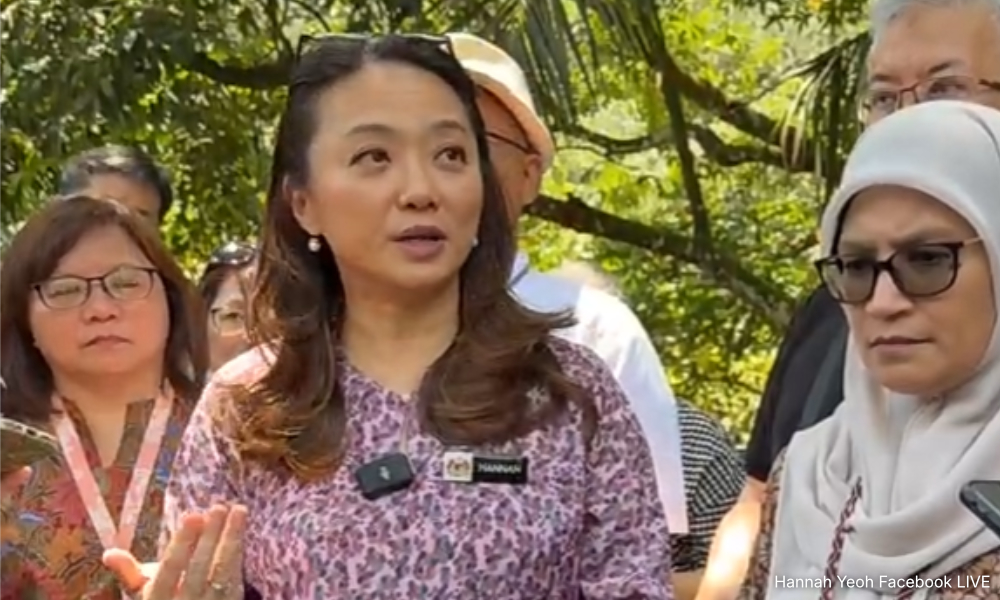
Following Yeoh’s remarks, Umno and PAS pushed back against the feasibility study, with leaders playing on sentiments to rile up Malays rather than offering logical arguments that challenge the merits of such polls.
Kota Bharu MP Takiyuddin Hassan had also cited parliamentary debates from 1960 to counter current findings on Malay support for the return of the local council election.
‘KL MPs have no say in DBKL’
Kok also highlighted the mayor's limited oversight - reminding that decisions made by the mayor were often influenced by various stakeholders, including the Prime Minister’s Department, the chief secretary to the government, the federal territories minister, and royal institutions.
Further, she also highlighted that Kuala Lumpur MPs had no say in the administration of DBKL, expressing frustrations over the lack of involvement.
“People in Putrajaya make a lot of important decisions, but Kuala Lumpur MPs have to take the blame,” she said.
Kok also explained that the land exco continued to approve land for high-density projects in Kuala Lumpur - with neither the mayor nor elected Kuala Lumpur MPs having a say in such decisions - citing a “Madani residential development project” in Bukit Jalil, with an expected 15,000 units to be built, as the latest example.

“If we want to push for local government polls or a mayoral election, we must rectify the current structural problems of governance in Kuala Lumpur.
“The government must also first work more closely with the mayor and DBKL regarding such important local decisions,” she said.
More importantly, Kok stressed that the government should first strive to adopt the suggestions made by the bipartisan Public Accounts Committee (PAC) from 2025, before introducing mayoral elections as separate from local council elections.
In November last year, Kok was joined by six other Kuala Lumpur MPs, including Nik Nazmi, who submitted a Private Members’ Bill to Parliament, seeking to amend the Federal Capital Act 1960, and calling for a councillor-based governance system for the nation’s capital.
The bill reportedly followed recommendations of the bipartisan PAC from August 2025, which called for the city’s administration to be restructured to align with the Local Government Act 1976.
However, it was later rejected by the Dewan Rakyat on the grounds of “technicalities.”
“But at the moment, even PAC proposals can be rejected by the Dewan Rakyat speaker and the federal government, so it is very frustrating,” Kok said at yesterday’s forum.
Stepping stone
Nik Nazmi also suggested that local council elections for Kuala Lumpur could be an important stepping stone for parties to field and train their candidates before competing at a national level.
He cited examples of Turkish President Recep Tayyip Erdogan and former Indonesian president Joko Widodo, who formerly held the positions of Istanbul mayor and Jakarta governor before being elected to lead at the federal level.

“It is very strange that a country like Malaysia, which operates democratically and holds general elections – somehow does not have local polls.
“Our neighbouring countries, such as Thailand and Indonesia, also have elected representatives to lead big cities like Bangkok and Jakarta, so why can't we also do the same?" he asked.
Responding to concerns about local polls possibly “threatening the status of Malays” in Kuala Lumpur, Nik Nazmi also suggested that opposition parties should instead view it as an opportunity to field candidates and gain voters’ support at a local level.
“For example, we could also introduce a proportional representation system in local polls. During the last general election, Perikatan Nasional had a very strong presence in my area, especially in comparison to BN.
“If there are local elections, parties like PAS and Besatu, and even PSM, can also make a presence in Kuala Lumpur. We can design the system in a way that suits the people best - and if need be, perhaps there can also be quotas, such as gender and racial quotas to prevent this fear of being marginalised,” he said.
Nik Nazmi also reminded that findings from his study, conducted by Invoke in October last year, had shown that 51 percent of Malays were actually in favour of “some form of local elections” in Kuala Lumpur, and reminded that statistics were needed “to confront the myth” of Malays being marginalised.
“At least 48 percent of Kuala Lumpur residents are also bumiputera, according to data from the national statistics department… but what I have noticed is that previously, there has also been a lack of incentive to vote in Kuala Lumpur.
“For example, I have relatives who have lived in Kuala Lumpur for most of their lives, but always choose to vote in Kelantan, because it feels like their vote is more meaningful there,” he said.
Best way to incentivise
Hence, Nik Nazmi said the best way to incentivise Kuala Lumpur residents to vote is through reinstating local council elections, to assure them that they still have a say in the way their city is governed.
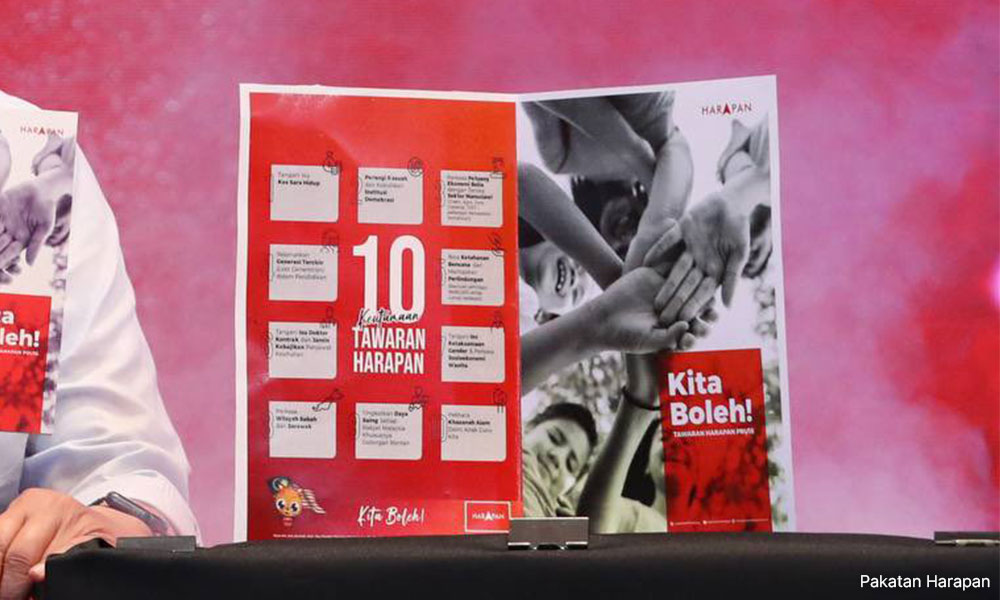
The former natural resources and environment minister also reminded that suggestions to reinstate local polls had already been suggested in Pakatan Harapan’s 2022 general election manifesto, which pledged to strengthen democratic participation at the local level.
However, he noted that a more "realistic" approach was needed, describing Yeoh’s suggestion for a Kuala Lumpur mayoral election to override reinstating local council elections as "not that simple."
“We also need to remember that Kuala Lumpur has the most prosperous economy in Malaysia, even surpassing Selangor. So if Kuala Lumpur were a country, it would already be considered a high-income nation, yet we still do not have the same scrutiny applied to other places.
“In the long run, we definitely have to have local council and mayoral elections. But in the interim, perhaps, it might be more realistic for MPs to suggest local councillors first, and that these advisory boards can also be appointed by the Federal Territories minister," he added.
/file/publisher-c1a3f893382d2b2f8a9aa22a654d9c97/2025/11/67dcc7af230da575baeb00b83fc6dccb.jpg)
/file/publisher-c1a3f893382d2b2f8a9aa22a654d9c97/2024/06/8ed92a99159e15695f20cc74c0a77552.jpg)
/file/publisher-c1a3f893382d2b2f8a9aa22a654d9c97/2026/02/3739443292b70382b87c13377e0c17ea.jpg)
/file/publisher-c1a3f893382d2b2f8a9aa22a654d9c97/2025/11/4847325a90f72824a5c08fa80a7b3933.jpg)
/file/publisher-c1a3f893382d2b2f8a9aa22a654d9c97/2023/12/f272d5903f9eeee2575d9d16f2b916cd.jpg)
/file/publisher-c1a3f893382d2b2f8a9aa22a654d9c97/2025/12/bbc05dcb7b02744866e4fff415a202f9.jpg)
/file/publisher-c1a3f893382d2b2f8a9aa22a654d9c97/2026/02/68b57b38f67db9c87c382c32078dce31.jpg)


Are you sure you want to delete this comment?
This action cannot be undone.