


/file/publisher-c1a3f893382d2b2f8a9aa22a654d9c97/2021/07/6dc88843afc8617ff248b0bbce72811c.jpg)

PAC report on insurance, hospital charges must spur action, govt told
The Galen Centre for Health and Social Policy has urged the government to treat the Public Accounts Committee’s (PAC) report on rising medical insurance premiums, private hospital charges and their impact on healthcare as a “mandate for action”.
Its chief executive officer Azrul Khalib said the 1,999-page report tabled in Parliament yesterday confirmed that Malaysia’s private healthcare market requires stronger and more specific consumer protections.
"The findings are deeply concerning but not surprising...
The Galen Centre for Health and Social Policy has urged the government to treat the Public Accounts Committee’s (PAC) report on rising medical insurance premiums, private hospital charges and their impact on healthcare as a “mandate for action”.
Its chief executive officer, Azrul Khalib, said the 1,999-page report tabled in Parliament yesterday confirmed that Malaysia’s private healthcare market requires stronger and more specific consumer protections.
“The findings are deeply concerning but not surprising. The PAC has identified problematic hospital billing, excessive mark-ups, different prices for insured and cash-paying patients, closed insurance risk pools, sudden premium increases, and inadequate regulatory powers to control the non-professional components of private hospital bills.
“These are not isolated industry practices. They are symptoms of structural issues in the governance of private healthcare, which are grounded in the realities of patients, families, healthcare workers and the community.
“The PAC report confirms that the present regulatory arrangement is fragmented and inadequate to provide sufficient consumer protection in the private healthcare space,” he added.
Regulation gap squeezing consumers
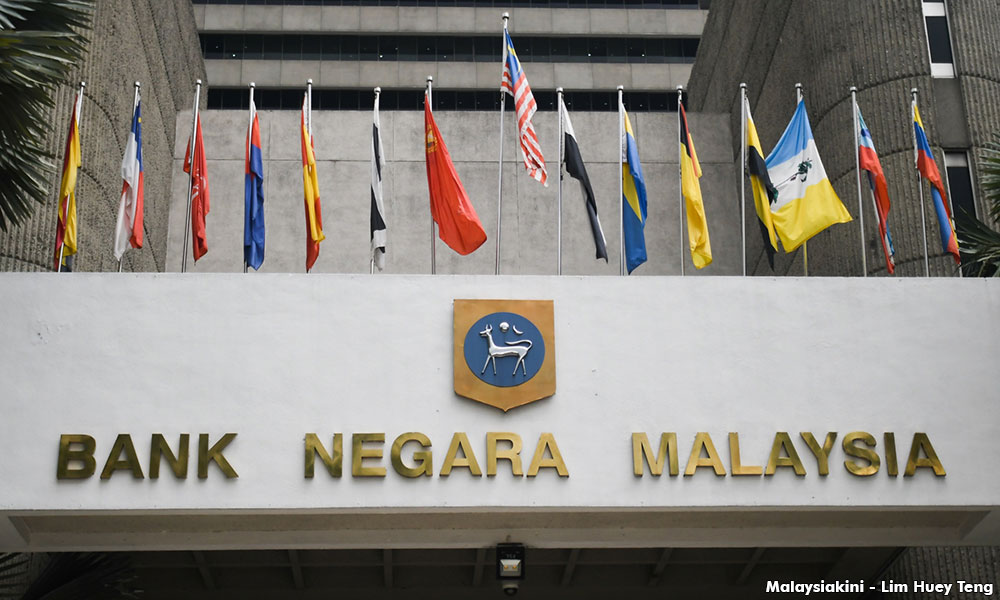
Azrul said Bank Negara Malaysia regulates insurers and takaful operators, but not third-party administrators, which act as medical intermediaries and remain largely unregulated.
He added that while the Health Ministry regulates healthcare facilities, it has limited powers over most billing components, which are essentially determined by the free market.
“The PAC has now put into an official parliamentary record what Malaysians have been saying and experiencing for years. Consumers are being squeezed between rising hospital bills, increasingly unaffordable insurance and takaful premiums, and forced into dilemmas involving healthcare costs and financial catastrophe.
“Passing responsibility between agencies can no longer be accepted as a policy response. No single body is mandated to ensure transparency, fair treatment and consumer protection in private healthcare,” he added.
Establish independent commission
The Galen Centre, an independent public policy research and advocacy organisation, said it supports the PAC’s recommendation to establish a new independent governance mechanism for private healthcare.
It urged the government to establish an independent statutory Private Healthcare Commission with an explicit consumer protection mandate. According to the centre, the commission should be empowered to:
Scrutinise, approve, and cap increases in private hospital charges and medical insurance premiums;
Establish standardised and transparent hospital billing practices;
Investigate discriminatory pricing and excessive mark-ups;
Regulate the relationship between hospitals, insurers, takaful operators and third-party administrators;
Publish comparable information on prices, claims rejection rates, premium increases and patient complaints;
Impose meaningful penalties for unfair or abusive conduct; and
Provide an independent and accessible mechanism for consumer complaints and appeals.
“Amending the Private Healthcare Facilities and Services Act 1998 is essential. However, amendments alone will be insufficient unless enforcement powers, technical capability, independence and responsibility are clearly located within a properly resourced regulator,” Azrul said.
“The PAC’s findings regarding closed insurance pools and risk selection also demand immediate attention. Long-standing policyholders should not be punished simply because an insurer closes a risk pool, attracts healthier customers into a new portfolio and leaves older or less healthy policyholders facing escalating premiums,” he emphasised.

Azrul said health insurance and takaful products are intended to pool and share risk, rather than gradually price out the very people who need protection most.
“Even the proposed base MHIT product is based on this fundamental concept,” he added.
Recommendations for BNM
He also urged Bank Negara Malaysia to require fairer risk-pooling arrangements across comparable portfolios, prohibit practices that disadvantage long-term policyholders, and ensure smaller, predictable annual premium adjustments instead of allowing sudden increases of 40 percent, 50 percent or even 70 percent, which have already occurred.
“The amount of co-pay imposed should also be capped annually, similar to what is done in Singapore.
“Interim premium adjustments may offer temporary relief, but they do not resolve the underlying problem. Without moderating private healthcare costs, large premium increases will simply return after the interim period,” he emphasised.

Azrul said the Galen Centre also supports the introduction of Diagnosis-Related Groups (DRG), which could improve efficiency and reduce unnecessary itemised billing.
Comprehensive implementation
However, he said DRG implementation must be supported by reliable cost data, standardised clinical coding, interoperable electronic medical records, independent auditing and safeguards against hospitals avoiding complex or high-risk patients.
“We need to learn from other countries and territories, such as Taiwan, on overcoming these challenges.
“The PAC is correct that this crisis has consequences for the public health system. When individuals can no longer afford private insurance or hospital care, they do not stop becoming ill. They turn to government hospitals, increasing waiting times, workloads and pressure on public expenditure.

“However, responsibility for medical inflation must not be shifted onto patients through claims that unhealthy lifestyles or inadequate screening are the principal cause of rising premiums. Prevention is important, but it cannot explain excessive mark-ups and billing, weak regulation or unfair practices. People should not be penalised or punished for getting sick or growing older.
“Malaysia does not need another temporary patch. It needs structural reform, clear accountability and an independent institution capable of bringing fairness and discipline to private healthcare,” he added.
/file/publisher-c1a3f893382d2b2f8a9aa22a654d9c97/2024/08/c9cfe3f27aea2e04f8827ac2502b54e2.jpg)
/file/publisher-c1a3f893382d2b2f8a9aa22a654d9c97/2024/10/1fa150710058c294ae7a70d90bf3c14e.jpg)
/file/publisher-c1a3f893382d2b2f8a9aa22a654d9c97/2023/04/91c113dec783dfba31534dea036cf31f.jpg)


Are you sure you want to delete this comment?
This action cannot be undone.