


/file/publisher-c1a3f893382d2b2f8a9aa22a654d9c97/2024/10/1fa150710058c294ae7a70d90bf3c14e.jpg)

MPs press govt for more mental health experts, facilities
PARLIAMENT | The country's critical shortage of mental health workers took centre stage in the Dewan Rakyat this morning, with MPs urging Putrajaya to step up efforts to address the rising prevalence of mental health issues.
Lawmakers today debated a proposal to strengthen Malaysia's mental health system by the parliamentary special select committee (PSSC) on health.
PARLIAMENT | The country's critical shortage of mental health workers took centre stage in the Dewan Rakyat this morning, with MPs urging Putrajaya to step up efforts to address the rising prevalence of mental health issues.
Lawmakers today debated a proposal to strengthen Malaysia's mental health system by the parliamentary special select committee (PSSC) on health.
Its chairperson, Suhaizan Kaiat (Harapan-Pulai), in his speech highlighted that the National Centre of Excellence for Mental Health (NCEM) - a cross-ministry body tasked to establish a national mental health agency - only has 13 staff members.
This is despite the centre being established three years ago, against the backdrop of prevalent depression among the country’s population.
"This means there is only one officer for each state. This is very insufficient, and there is a need to increase the permanent positions (for NCEM)," he said.
According to Suhaizan, the rate of depression among citizens aged 16 and above rose from 2.3 percent in 2019 to 4.6 percent in 2023, or equivalent to about one million people.
Statistics also show a rising trend of mental health issues among children, increasing from 7.9 percent to 16.5 percent in the same period, while one out of four teenagers aged between 13 and 17 has been detected to suffer from the same problem.
Abd Ghani Ahmad (PN-Jerlun) called on the government to look into the disparity of mental health specialist distribution between urban and rural areas.
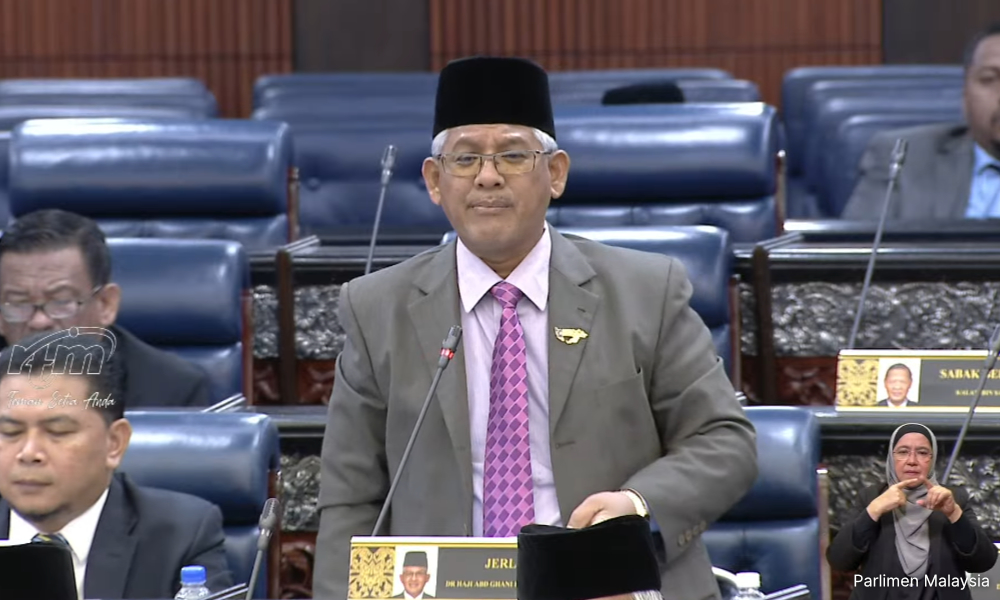
He also highlighted that the Health Ministry supposedly has only between 18 and 20 child and adolescent psychiatrists, saying the number is far too small to cater to thousands of children in need of treatment nationwide.
"Most of the child psychiatrists, either in the public or private sectors, are based in urban areas such as the Klang Valley, Penang, and Johor Bahru.
"Parents who live in rural areas have to travel a long distance just to take their children to see a psychiatric specialist, and this requires them to take leave from work and fork out a lot of money for transportation," Ghani said.
Inadequate facilities
Teresa Kok (Harapan-Seputeh) said the ministry should encourage more medical students and its existing doctors to specialise in psychiatric medicine to address the shortage.
Citing ministry data showing Malaysia has 623 registered psychiatrists in 2024, she said the number was extremely low compared to the country's needs and would contribute to long waiting periods for patients.
Kok also raised questions on the adequacy of public mental health institutions in the country.
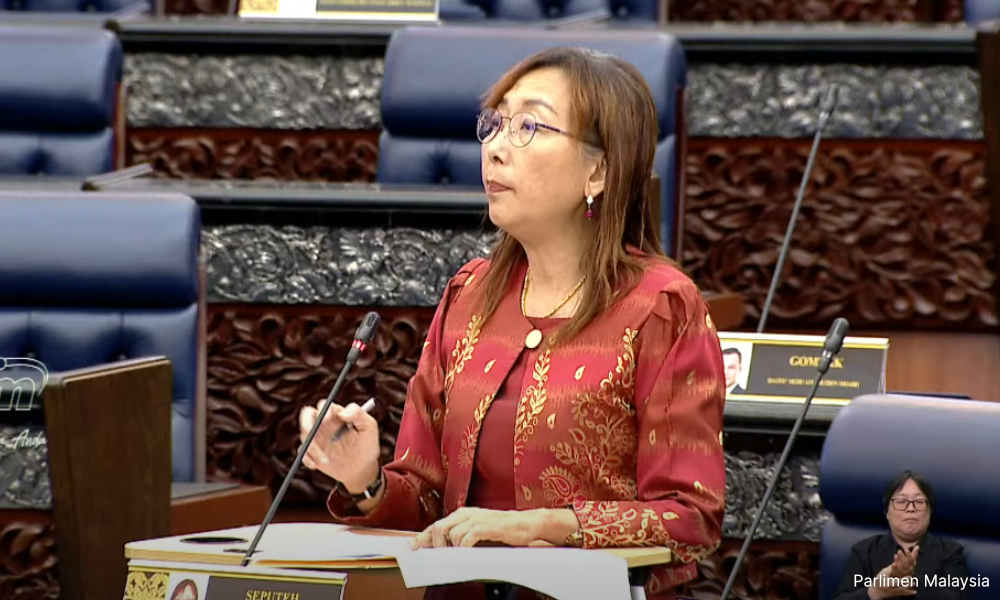
She pointed out that Malaysia has only two hospitals dedicated to this purpose, namely the Hospital Bahagia Ulu Kinta in Tanjung Rambutan, Perak and Permai Hospital in Johor Bahru.
"Given that mental health issues are becoming increasingly critical in our society, I would like to ask the government: what is the number of patients receiving treatment in psychiatric hospitals and healthcare facilities in Malaysia?
"What is the maximum capacity of these hospitals, and to what extent are the existing expertise and resources sufficient to address the growing rise in mental health cases, which is becoming increasingly concerning?
"Does the government have plans to build or increase the number of psychiatric hospitals, psychiatric rehabilitation centres, shelters, or care homes for mental health patients in the upcoming Malaysia Plan?"
RSN Rayer (Harapan-Jelutong) suggested the ministry consider placing healthcare workers who can provide mental health support in every parliamentary and state constituency, and at government health clinics nationwide.
Toxic culture
Ahmad Marzuk Shaary (PN-Pengkalan Chepa) called on the ministry to also address mental health issues among its workforce.
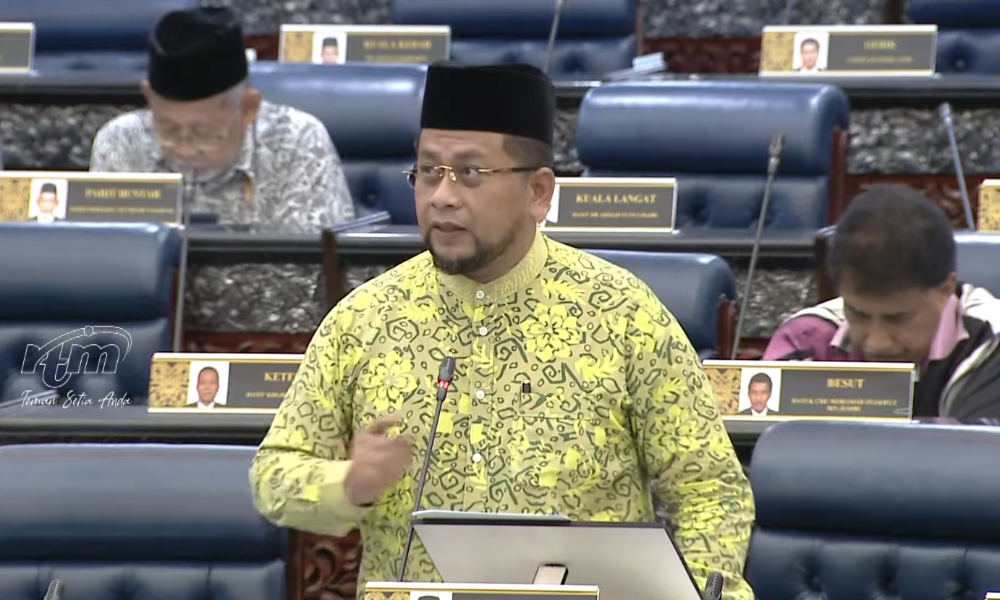
He said that while these issues are widely discussed within the healthcare sector, it is ironic that healthcare workers are among those reportedly suffering from toxic workplace cultures and psychological problems.
Marzuk pointed to several cases involving young doctors who suffer from burnout due to long working hours and stress, leading to road accidents and in some cases, suicide.
"The question here is how can a system that is responsible for healthcare continue to allow a work culture that affects the mental health of its own workforce?
"Who is in charge of monitoring this? Who should be held responsible when changes are so slow despite numerous complaints?
"For how long will this culture continue to be regarded as part of the professional training process?" he said.
/file/publisher-c1a3f893382d2b2f8a9aa22a654d9c97/2025/05/a3b39a8b96339618c993076073143f24.jpg)
/file/publisher-c1a3f893382d2b2f8a9aa22a654d9c97/2019/11/ae272057d31745954e2574d8cb5adb3b.jpg)
/file/publisher-c1a3f893382d2b2f8a9aa22a654d9c97/2024/09/6a81554f8bc24f438656aa36a4014611.jpg)
/file/publisher-c1a3f893382d2b2f8a9aa22a654d9c97/2025/09/d598a426c8e5fc36f1c7297873c039a6.jpg)
/file/publisher-c1a3f893382d2b2f8a9aa22a654d9c97/2024/07/335db34e26334e1c13e7b97011d8503d.jpg)
/file/publisher-c1a3f893382d2b2f8a9aa22a654d9c97/2024/04/386882ce803fa087cf2c4e01a982c25c.jpg)
/file/publisher-c1a3f893382d2b2f8a9aa22a654d9c97/2025/09/9753de03907ae89decefe5612e1eec7c.jpg)


Report this comment
Are you sure you want to delete this comment?
This action cannot be undone.