




Meet Ooi, Penang's investor relations chief
exclusive Days before being elected into the state government in Penang, blogger-turned-politician Jeff Ooi was spearheading the attack on then chief minister Dr Koh Tsu Koon for allowing the ‘Pearl of the Orient’ to lose its shine.
exclusive Days before being elected into the state government in Penang, blogger-turned-politician Jeff Ooi was spearheading the attack on then chief minister Dr Koh Tsu Koon for allowing the ‘Pearl of the Orient’ to lose its shine.
One of the key issues during the 13-day election campaign was the accusation that Koh had to plead with the federal government to give American multinational Motorola a lucrative contract so that it would not relocate from Penang to countries such as Vietnam, which has cheaper labour.
So it was surprising that the new DAP-led Pakatan Rakyat government had to reassure foreign companies soon after it took power.
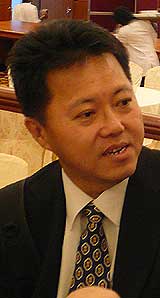 Even before the state cabinet was formed, Chief Minister Lim Guan Eng had tapped Jelutong member of Parliament Ooi
(photo)
as his investor relations coordinator.
Even before the state cabinet was formed, Chief Minister Lim Guan Eng had tapped Jelutong member of Parliament Ooi
(photo)
as his investor relations coordinator.
“From Day One of the new government, we announced that we would continue the pro-investors policy,” Ooi said in an interview.
His major headache as investor relations coordinator is not so much to calm the fears of current investors, but how to promote Penang as a pro-investment destination.
“That is tough because Penang faces land shortage,” said the 52-year-old former advertising executive.
Ooi said investors prefer to base their operations on the island instead of the mainland because of accessibility to the airport, and to avoid daily congestion on the Penang bridge.
“Long-term investors, the big names, have been here for more than two decades and some for about 35 years. Basically they know that there is ready pool of talent to be drawn from Penang island, but not so much for those across the bridge (in Seberang Perai).”
Ooi also said the Pakatan coalition involving DAP, PKR and PAS appears frail because it does not have a common agenda.
“Pakatan Rakyat looks fragile because we do not have common premises when it comes to ideology and the mode of governance, even the culture. But if we can form a basic platform, (we could) really (make) an effort (to) break down barriers.”
For example, DAP should be made fearless about all the talk about the Islamic state and PAS would have to make more concrete efforts to dispel fears among non-Muslims about the Islamic state.
The conclusion of a two-part interview follows.
Apart from being chief of staff in the Penang CM’s office, you're also the state government's investor relations coordinator.
Before (being appointed chief of staff), I was appointed as the investor relations coordinator. We needed a person to coordinate (with investors immediately after the elections) as it took several days more for the state exco (executive council) to be formed…
Penang is a state where 60 percent of the revenue has come from manufacturing as well as high-tech industries - this is one area that I'm quite familiar with.
From Day One of the new government, we announced that we would continue the pro-investors policy. During the first week, I mobilised whatever resources that I had by talking to the trade bodies, for example, the CEO network of foreign investors (including) Intel, Dell - they have this association called Penang Free Industrial Zone Companies Owners Association (Frepenca) - and we told them that we are pro-investors and will do whatever it takes to facilitate and improve their production and reduce the cost of doing business in Malaysia.
We also talked to the manufacturers because manufacturing is big in Penang. We talked to the Federation of Malaysian Manufacturers’ Penang branch and took note of their issues that they could not resolve for the last three years. We resolved them within the first two weeks.
Issues like what?
Issues like certain hours when the gate to the free industrial zone was closed, which really hampered the inflow of vendors, trucks, as well as components that the factories needed. This happened under the previous local government. So we talked to them and ask them to have the security gate open during peak hours.
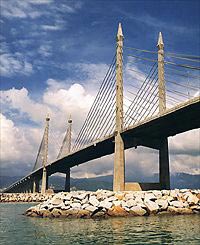 One of the issues that we can't solve immediately is the traffic jam around the Penang bridge because there's this massive movement of workers from the mainland to factories (on the island) during peak hours. We tried to solve both issues and we called up UEM-World - the concessionaire for the bridge - and force them to come back with firm answers on when the extension programme of the first bridge is to be completed.
Of course, the are some other issues. For example, during the second week of our government, there were massive flash floods in Seberang Prai and that affected 140 companies. These factories suffered millions of ringgit in losses and we got the deputy chief minister to the scene within the first few hours of the flood. We called up the local government which oversees the industrial zone in Seberang Prai and we listened to feedback from the people; then we followed up two days later with a personal visit by the chief minister to talk to the (operators of the) affected factories.
But of course for the first month, there was a lot of fire-fighting and we really had to calm down to look at looming issues. For example, we are losing competitiveness against China, India and even Vietnam when it comes to labour-intensive manufacturing processes.
Obviously in Penang, with 35 years of industrial presence, certain sectors have not changed much and are still dependent on the production line, so much so that the wage level has not improved. We were told that for production operators, for example, the basic pay is around RM600 and with overtime thrown in, it could be about RM1,000-1,200. With the senior ones who have stayed on for more than 10 years, they could be drawing RM1,500 so most of the Penangites do not want such a type of work any more.
So about 50 percent of such production pays all assembly line production centres and it depends on immigrant workers. I think in the long run that's where we lose out. Firstly, (in terms of) social amenities, we subsidise foreign workers; at the same time we are not moving up the value chain.
One of the key issues that we talked about during the Frepenca AGM (annual general meeting) was to tell them it's high time for them to slowly phase out the production-based industry, and to phase in D&D (design and development) and R&D (research and development). That is what Penang is strong at - micro-tooling , precision engineering and automation and that's what we want to provide.
How can you convince foreign investors that you want them and how do you convince them that Penang is the place for them to continue their operations?
Long-term investors, the big names, have been here for more than two decades and some for about 35 years. Basically they know that there is ready pool of talent to be drawn from Penang island, but not so much for those across the bridge (in Seberang Perai).
So one assurance would be to facilitate whenever they have reinvestment programmes or need additional facilities. They have to file proposals - where it involves tearing down old buildings and putting up new buildings on the same plot of land - with two agencies, the Penang Development Corporation, and local government. And I think we have worked that out quite well with the key managers.
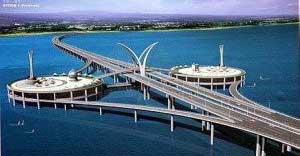 But the third thing is how to promote Penang as a pro-investment destination. That is tough because Penang faces land shortage. Most of the factories, especially the new investors, would prefer Penang island as their base because of access to the airport, congestion on the bridge, and the 2011 deadline for completion of the second bridge
(photo)
- that is something that poses logistical problems for the industry.
But the third thing is how to promote Penang as a pro-investment destination. That is tough because Penang faces land shortage. Most of the factories, especially the new investors, would prefer Penang island as their base because of access to the airport, congestion on the bridge, and the 2011 deadline for completion of the second bridge
(photo)
- that is something that poses logistical problems for the industry.
So that issue is the most difficult part. We are short of land but we are not short of interest. We also found out that there were certain plans when the industrial zone was established in the 70s. They are long-term players. Certain factories have stock production but still maintain the land and the land is not fully utilised because there's really no production on fallow plots of land, and they are left vacant.
So that is where new investors are showing keen interest but we cannot evict these people, you can't be sending the wrong signal: (that) we don't want you any more. So it is going to be tough.
Our alternative is to open up new industrial land. Basically there are about 300 acres in Bukit Minyak and also about 4,000 acres in Batu Kawan. But the thing is, the readiness of land is still not there in terms of infrastructure. And one of the issues that the industry is facing is power shortage (outage), especially in the semi-conductor industry. Even though there may be be a power outage of five minutes, they (have to) stop the production line for half a day and that translates into losses.
Most times the power outages are due to reckless maintenance (work) by the local councils or their contractors. So these are key issues that we need to pay attention to.
A lot of DAP MPs are also exco members - P Ramasamy, Chow Kon Yeow - even in Selangor, for instance, Teresa Kok. Has there been any talk within the party how this should be handled?
When it was arranged (for them to) contest in dual posts, it was basically ‘political hatching’. I call it that because we didn't know what the trend would be or how the result would turn out. You want key people with experience to wrest the seat so that it can be passed on (down) the line in a much easier manner.
(When) you are the incumbent, it's much easier to pass it on. As the results turned out, it became a triple burden on the candidates, the persons who are MPs and excos. One of the key things that we did was (to decide that) they had to first appoint chiefs of party workers at constituency level to run the service centres, and appoint special assistants as one of the interim measures.
We have a shortage of candidates of calibre, that's why certain candidates have to (take on a dual role). I think the DAP must learn to spend its political capital to, one, carry out strong recruitment; two, nurture and foster leadership qualities in new recruits and existing ones.
What about the fact that DAP is still pre-dominantly Chinese? How will you overcome that?
If we had a Malay candidate or two in Perak for example, by means of the number of candidates elected, DAP should have (been given) the post of chief minister. But we simply did not make it because we did not have many candidates.
I think it's going to be one of the key issues but of course it's going to take time. In fact, we worked very hard to recruit non-Chinese, non-Indian members but the result has been negligible. I think I should be relieved from my post as the day-to-day administrator of the Penang chief minister’s office and I should be the point-man to make this happen. I happen to have camaraderie between PAS and PKR members and I'm at ease with the Malay language and culture, and I personally would want to do this.
And that is quite evidence in the way that my readers respond to my blog, I think they accept me not as a Chinese but more as a Malaysian - and in ‘colourless’ manner - so I think I should put more effort on this.
What about the issue of the long-term merger with PKR?
People say that politics is the art of the possible. Pakatan Rakyat looks fragile because we do not have common premises when it comes to ideology and the mode of governance, even the culture. But if we can form a basic platform, (we could) really (make) an effort (to) break down barriers.
For example, DAP should be made fearless about all the talk about the Islamic state and PAS would have to make more concrete efforts to dispel fears among non-Muslims about the Islamic state. I think it takes both sides to really play that role to facilitate the coalition. If that happens, only then will we see two-party system.
If not, (it will be a) coalition of convenience and that would be bad. It would be a setback that would be a regressive development for Malaysian politics.
And I would certainly want to see DAP and all other opposition parties at the federal level to mutate from being issues-oriented political parties to agenda-setting parties. In a larger sense, they will help with the (maturing) of Malaysian politics.


Are you sure you want to delete this comment?
This action cannot be undone.