



US report: M'sia prosecuted no agencies over recruitment abuses, retains Tier 2 status
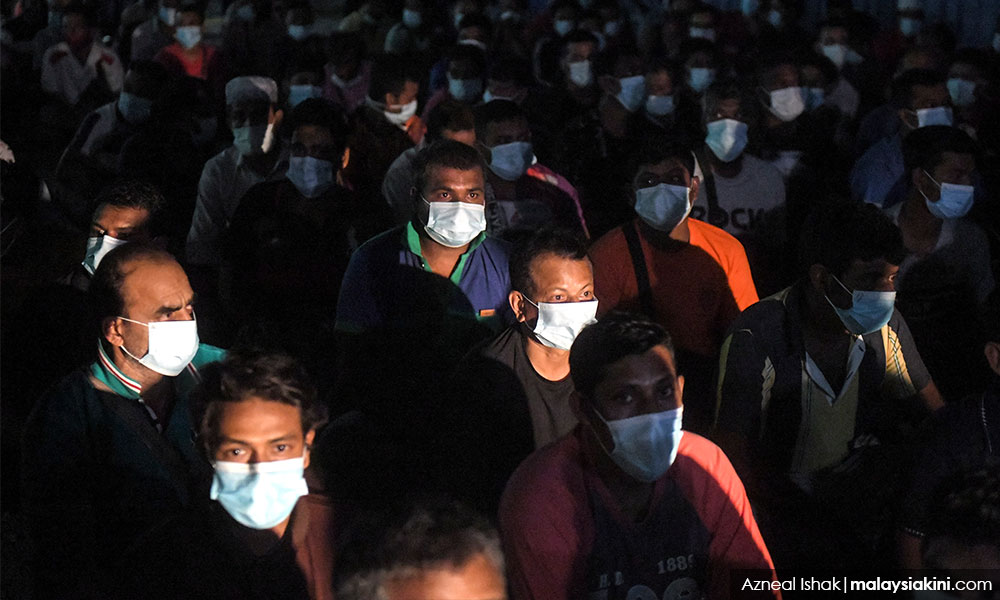
Malaysia did not prosecute any employment agencies under the Private Employment Agencies Act 1981 during the latest United States assessment period, despite longstanding concerns that excessive recruitment fees leave migrant workers vulnerable to debt bondage and forced labour.
The finding was highlighted in the US State Department’s annual Trafficking in Persons (TIP) Report, covering April 1, 2025, to March 31, 2026. Malaysia retained its Tier 2 ranking for the third consecutive year.
The report said Malaysia...
Malaysia did not prosecute any employment agencies under the Private Employment Agencies Act 1981 during the latest United States assessment period, despite longstanding concerns that excessive recruitment fees leave migrant workers vulnerable to debt bondage and forced labour.
The finding was highlighted in the US State Department’s annual Trafficking in Persons (TIP) Report, covering April 1, 2025, to March 31, 2026. Malaysia retained its Tier 2 ranking for the third consecutive year.
The report said Malaysia continued to fall short in regulating labour recruiters and holding them civilly or criminally accountable for fraudulent recruitment, despite increased efforts by Putrajaya to combat human trafficking.
The absence of prosecutions contrasts with developments in Bangladesh, where recruitment agencies involved in supplying workers to Malaysia have faced legal action.
/file/publisher-c1a3f893382d2b2f8a9aa22a654d9c97/2024/08/bcc5cf21e3a5bf80a19f37aedaf6cc3b.jpg "The Immigration Department detained 14 foreign nationals in an operation to combat human trafficking and migrant smuggling at two restaurants in Shah Alam, Selangor 170824")
In June, Malaysiakini reported that 51 private recruitment agencies in Bangladesh had been charged in the Dhaka High Court over alleged irregularities linked to the Malaysian labour market.
The TIP report also highlighted Bangladesh’s recruitment system, saying a limited pool of government-authorised agencies had enabled practices under which some workers reportedly paid up to US$7,200 (RM30,000) before arriving in Malaysia.
Such debts, it said, increased workers’ vulnerability to debt-based coercion and forced labour.
Under Malaysia’s Private Employment Agencies Act, agencies recruiting migrant workers must be licensed by the Human Resources Ministry, while placement fees for non-citizens are capped at one month’s basic wages.
However, the report said the law does not clearly define a “placement fee”, while authorities have failed to adequately enforce the cap.
“Most migrant workers paid fees well above permitted levels, which contributed to workers’ vulnerability to debt-based coercion,” it said.
Investigations expose abuses
The findings echo concerns previously documented by Malaysiakini.
In 2021, then human resources minister M Saravanan (below) said the Act capped placement fees for non-citizen workers at one month’s basic wages.
He said the fee could be charged to either the employer or the worker, but agencies could not demand payment from workers if their employers had already paid.
/file/publisher-c1a3f893382d2b2f8a9aa22a654d9c97/2026/08/02563c4c4e31d3f924f53581d47d211f.jpg "MIC deputy president M Saravanan 270826")
However, a Malaysiakini investigation in 2023 found migrant workers being traded through layers of intermediaries who charged employers fees while also taking commissions from workers’ wages.
Some intermediaries collected workers’ salaries and retained their passports, effectively trapping them in arrangements that industry sources described as commonplace.
Questions over who should bear recruitment costs have also persisted for years.
In 2022, Malaysiakini reported that although Malaysia had adopted a zero-recruitment-fee principle requiring employers to bear recruitment expenses, no legislation, policy, or directive provided an effective basis for enforcing it.
After three years on the Tier 2 Watch List (2018-2020), Malaysia was downgraded to Tier 3 in 2021. It remained in that lowest tier in 2022 before improving to the Tier 2 Watch List in 2023 and Tier 2 in 2024, a ranking it has retained since.
The latest report also found that some employers continued deducting the government levy for migrant workers from their wages, sometimes without their knowledge, despite employers being responsible for paying it.
It recorded 15 convictions for unlawfully retaining passports, down from 16 in the previous reporting period. However, Malaysian authorities did not disclose whether any of the cases were investigated for possible trafficking offences.
Regional comparisons
Malaysia’s Tier 2 ranking places it among the middle tier of countries assessed for their efforts to combat human trafficking in Southeast Asia.
Indonesia also remained in Tier 2, while Singapore retained Tier 1, reserved for governments assessed as fully meeting the minimum standards for eliminating trafficking.
Cambodia, Myanmar, and Laos remained in Tier 3 for governments assessed as neither meeting the minimum standards nor making significant efforts to do so.
Recruitment enforcement offers another point of contrast. Singapore has faced similar concerns over fees paid by migrant workers but has taken action against employment agencies for violations, including overcharging.
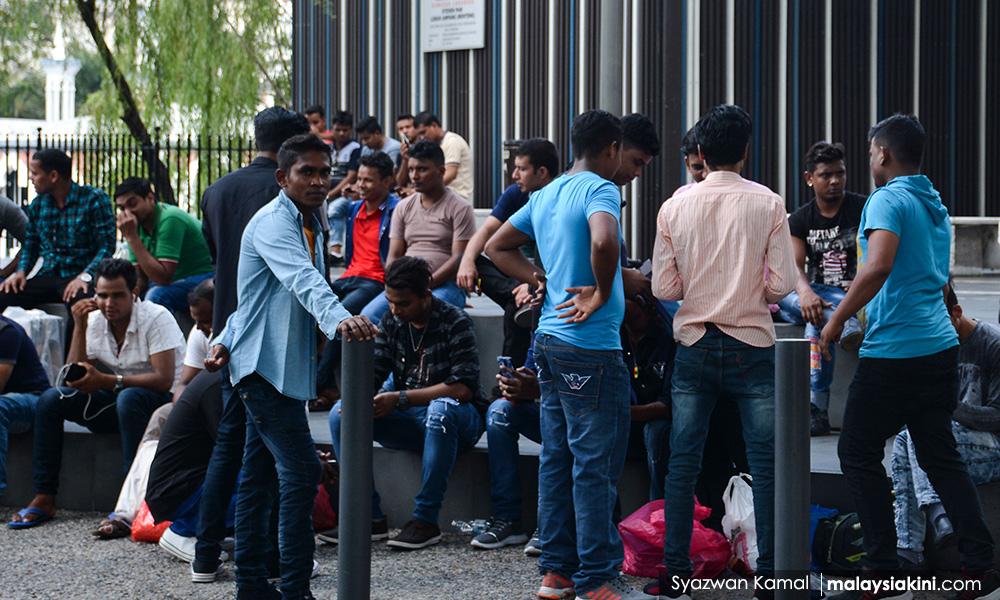
Malaysia, by comparison, recorded no prosecutions of employment agencies in the latest assessment.
Despite these shortcomings, Malaysia retained Tier 2 amid an overall increase in enforcement against human trafficking during the reporting period.
Authorities initiated 209 trafficking investigations, up from 188, while prosecutors brought cases against 128 suspects, compared with 72 previously.
The country also recorded 36 human trafficking convictions, up from 26 in the preceding reporting period.
Funding for anti-trafficking efforts rose from RM9 million in 2024 to RM10.6 million last year, with RM11.1 million approved for 2026.
Nevertheless, the report concluded that Malaysia still did not fully meet the minimum standards for eliminating trafficking. Outstanding concerns included recruitment abuses, official complicity, inconsistent victim identification, and inadequate victim protection.
The government had previously attributed Malaysia’s progress to measures under the National Action Plan on Anti-Trafficking in Persons 3.0 (2021-2025).
The next five-year action plan is expected to continue efforts to improve victim identification, investigations, and prosecutions, tackle official complicity, and strengthen victim protection services in East Malaysia.
/file/publisher-c1a3f893382d2b2f8a9aa22a654d9c97/2026/03/827751fcbf33e7983e4d564fb73d6836.png)
/file/publisher-c1a3f893382d2b2f8a9aa22a654d9c97/2019/11/f9023d9fbcb61a3c740c6e5fdba171ab.jpg)
/file/publisher-c1a3f893382d2b2f8a9aa22a654d9c97/2026/06/dc87c221dea73ea95efa173d453e8e64.jpg)
/file/publisher-c1a3f893382d2b2f8a9aa22a654d9c97/2025/09/98efd8d6dc8a7783a71d67340520e3a4.jpg)


Report this comment
Are you sure you want to delete this comment?
This action cannot be undone.