


/file/publisher-c1a3f893382d2b2f8a9aa22a654d9c97/2025/09/98efd8d6dc8a7783a71d67340520e3a4.jpg)

US trade rep proposes duties after flagging M'sia, 59 nations over forced labour imports
The Office of the United States Trade Representative (USTR) has found that Malaysia is among 54 economies which failed to impose and effectively enforce a prohibition on the importation of goods produced with forced labour.
Describing the failure of the US’ most important trading partners to address the importation of goods made with forced labour as “unacceptable,” US trade representative Jamieson Greer warned that Washington will no longer tolerate such “disparity.”
The Office of the United States Trade Representative (USTR) has found that Malaysia is among 54 economies which failed to impose and effectively enforce a prohibition on the importation of goods produced with forced labour.
Describing the failure of the US’ most important trading partners to address the importation of goods made with forced labour as “unacceptable,” US trade representative Jamieson Greer warned that Washington will no longer tolerate such “disparity.”
This, Greer (above) said, is because such a situation has created a dynamic where American workers are forced to compete globally on an uneven playing field.
“Some trading partners have taken initial steps to prevent the importation of forced labour goods, including through the United States–Mexico–Canada Agreement (USMCA) and commitments in Agreements on Reciprocal Trade.
“However, each of our trading partners must do more to ensure that trade does not perversely encourage and entrench forced labour globally,” he said in a press release issued by the USTR yesterday.
Responsive action
The statement added that the USTR has proposed responsive action for public comments, which are due by July 6. The office will then hold hearings on the suggested action the following day.
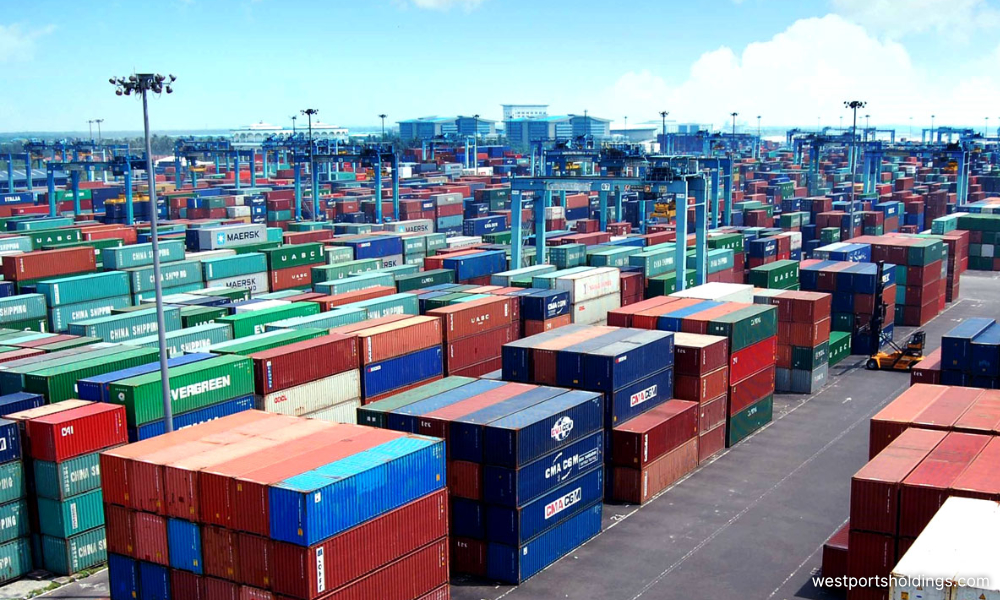
Specifically, it proposed 10 percent duties related to forced labour probes on imports from Canada, Ecuador, the European Union, Indonesia, Mexico, Pakistan, Argentina, Bangladesh, Cambodia, El Salvador, Guatemala, Indonesia, Malaysia, Taiwan, and Britain.
For the remaining 45 countries investigated, the USTR proposed 12.5 percent as the rate of additional duty.
It also put forth a textile mechanism that would allow for a certain volume of apparel and textile imports from certain economies to enter the US at a reduced Section 301 tariff rate.
According to a copy of the report, the USTR initiated 60 investigations on March 12 to determine whether action could be taken under Section 301 of the Trade Act against the acts, policies, and practices of various economies based on the importation of goods from forced labour.
The investigations featured an examination of 60 economies from which 99.40 percent of US imports are shipped.
As part of its findings, the report cited the reciprocal trade agreement between Malaysia and the US as a deal which included commitments to prohibit the importation of forced labour goods.
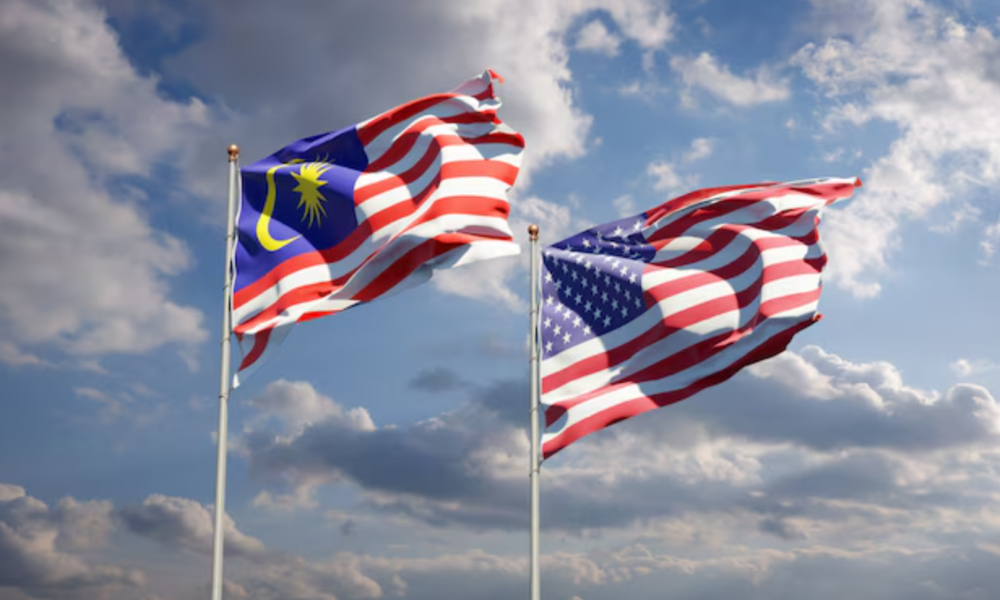
Such commitments, it stated, reflect increasing awareness of the need to address trade in forced labour goods, growing acceptance of forced labour import prohibitions as a universal norm, and greater recognition that trade is a critical means to accomplish such goals.
“The international community agrees that forced labour, and by extension goods produced using forced labour, should not exist or alter the conditions of competition in international trade.
“However, despite longstanding and universal agreement, forced labour continues to persist globally, and has even increased in recent years, abetted by international trade,” the report documented.
‘Unreasonable’ failure
Asserting that Malaysia had failed to adopt measures to “legally forbid” the importation of goods produced with forced labour, the report concluded that such failure, as allegedly demonstrated by the 53 other nations, is “unreasonable”.
It highlighted that the leading export sources of downstream products identified as being at risk for using inputs included in the Trafficking Victims Protection Reauthorisation Act (TVPRA) List for being produced with forced labour encompass a number of investigated nations.
The USTR was able to identify major downstream industries by extrapolating from several sources, including the TVPRA List and the Department of Labour’s ImportWatch tool, industry descriptions of production process inputs and outputs, as well as trade data.
Malaysia was listed as one of the top exporters of at least one good for which forced labour was found as an input.
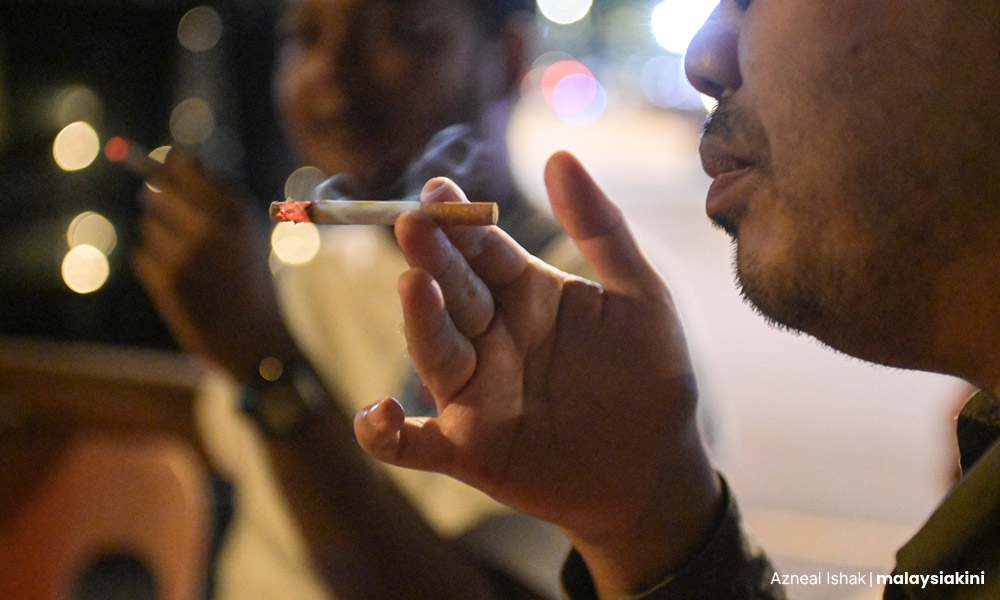
Specifically on tobacco from Malawi, a product on the TVPRA List, the USTR cited export data from the US Census Bureau and importer countries to show that at least 90 percent of Malawi and the US’ global tobacco exports in 2025 were to 23 of the investigated countries, including Malaysia.
Exploitative hiring in M’sian apparel industry
The USTR further referenced an October 2024 report by labour and environmental rights group Transparentem on forced labour indicators and exploitative recruitment practices in the Malaysian apparel industry.
Detailing hearing testimony and comments which support its finding of nations burdening or restricting US commerce, the report noted that witnesses had testified that forced labour goods circumvent Section 307 of the Tariff Act through third economies, thus affecting competition in the US market.
In particular, it pointed to testimony from global supplier Vantage Specialty Chemicals’ senior vice-president for corporate affairs and sustainability, Michael Waldron, who is said to have stated that Indonesia and Malaysia use forced labour to produce inputs that are later integrated into pharmaceutical, personal care, beauty, and nutrition products in the US.
“The results of this investigation indicate that the acts, policies and practices of Malaysia related to the failure to impose and effectively enforce a forced labour import prohibition are unreasonable and burden or restrict US commerce,” the report found.
The report noted that the USTR had participated in confidential government-to-government consultations with a total of 46 economies, including Malaysia, while the governments of the remaining countries did not accept the USTR’s requests for engagements or were unable to participate.
Besides Malaysia, the report’s findings also implicated other Southeast Asian nations, namely Cambodia, the Philippines, Singapore, Thailand, and Vietnam.
Outside Southeast Asia, the USTR also slapped countries across Asia-Pacific, including China, India, Japan, South Korea and Australia, the Middle East and North Africa, Europe, Sub-Saharan Africa, and Latin America and the Caribbean, with a similar finding.
Indonesia was among six economies found to have failed to effectively enforce a forced labour import prohibition, alongside Canada, Ecuador, the European Union, Mexico, and Pakistan.
/file/publisher-c1a3f893382d2b2f8a9aa22a654d9c97/2026/05/6eafe6f3a48d66c88f684b4a398962a4.jpg)
/file/publisher-c1a3f893382d2b2f8a9aa22a654d9c97/2026/03/827751fcbf33e7983e4d564fb73d6836.png)
/file/publisher-c1a3f893382d2b2f8a9aa22a654d9c97/2023/07/a73bf847b63cce331f0f3cf70ed493d6.jpg)
/file/publisher-c1a3f893382d2b2f8a9aa22a654d9c97/2023/11/600be82fd56a708503656d3163bc8102.jpg)
/file/publisher-c1a3f893382d2b2f8a9aa22a654d9c97/2020/10/0b58ceb8a0736b50e49b15b5446f4a00.jpg)
/file/publisher-c1a3f893382d2b2f8a9aa22a654d9c97/2024/11/488a7d96ee328356d361d599a93c4477.jpg)
/file/publisher-c1a3f893382d2b2f8a9aa22a654d9c97/2025/04/cd07f3a02d1bacb46c9dc8585ea64fc8.jpg)
/file/publisher-c1a3f893382d2b2f8a9aa22a654d9c97/2025/10/14b680f007233cf30c141ab5e78e3f93.jpg)


Are you sure you want to delete this comment?
This action cannot be undone.