


Study: Chinese youths insecure over education, job, and political opportunities
Chinese youths feel insecure about their opportunities in education, employment, and politics, according to a study by Iman Research.
In a report titled "Kami Orang Sini Juga: Chinese Youths and Democratic Belonging - The Politics of Pragmatism and Fairness", released today, the think tank said it found a consistent concern among its 116 respondents about racial inequality within the system.
This has reinforced an inherited belief among young Chinese that they must find alternative ways to succeed.
"Whether they were discussing education, work, migration or politics, many returned to the same practical logic. If the wider system could not be relied upon, one should build enough personal or family capacity to manage around it.
"Most participants focused instead on what they could control: working harder, paying for another route, relying on personal connections, or pursuing opportunities elsewhere," the report said in a chapter on Chinese pragmatism.
According to Iman Research, the interview-based study was conducted between August last year and June 2026. It involved respondents aged between 18 and 35, mostly from Peninsular Malaysia, and a small number of Chinese Malaysian youths living overseas.
However, the think tank stated that its findings are not statistically representative of all Chinese Malaysian youths and were not aimed at measuring how many Chinese youths hold a particular view.
It also stated that the interviewees' recruitment depended heavily on community networks and referrals, meaning that young people connected to universities, professional organisations, political groups, NGOs, or community networks "were sometimes easier to reach".
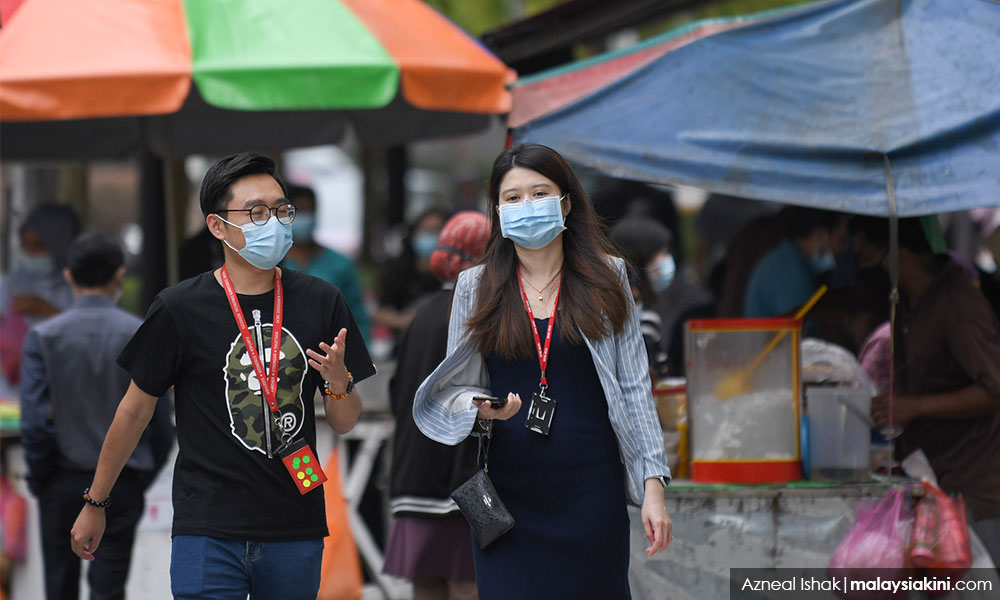
The study found that Chinese youths tended to seek private solutions "when public institutions appear unreliable".
Several factors drive their self-reliance, including historical experiences in which earlier generations of Chinese Malaysians built their own schools, businesses, and associations when public provision was limited and their political membership was insecure, it said.
"Families passed on stories about what they had built and warnings about what they could not count on.
"Today, ethnic distinctions in access to some public programmes give those warnings continuing force. What makes this pattern significant here is the different kinds of evidence young people use to understand inequality, and the family and community narratives that turn adaptation into common sense."
Inequality in opportunities
Among the issues respondents raised was unequal access to public universities for non-bumiputera students.
Iman Research said respondents highlighted concerns over the 90 percent bumiputera quota for public matriculation programmes, as well as how the Universities and University Colleges Central Unit (UPU) evaluates applicants from matriculation and Sijil Tinggi Pelajaran Malaysia (STPM) pathways despite differences in their respective levels of difficulty.
According to the study, one STPM graduate who did not pursue university education due to financial constraints acknowledged the rationale for supporting historically disadvantaged bumiputera communities but questioned whether the current allocation system was sufficiently based on need.
"His account instead shows how class and ethnicity can overlap. A wealthier non-bumiputera family may be able to pay for private education or local Chinese college when public options appear limited. But a poorer family cannot adapt as easily," the report said.
In response to these concerns, Iman Research proposed that the government improve transparency in university admission criteria, selection mechanisms, and intake data.
It also called on Putrajaya to review disparities in co-curricular opportunities between STPM and matriculation students and ensure comparable opportunities for both groups.
"The same principle applies to the UEC (Unified Examination Certificate). Rather than allowing recognition of the qualification to remain a recurring political dispute, the government should clarify and streamline existing pathways for UEC holders seeking entry into public universities.
"Clear, consistent administrative requirements would reduce uncertainty for students and allow the issue to be treated primarily as an education and talent-retention matter."
READ MORE: PM: Entry for UEC holders to public uni still subject to strict conditions, must pass BM and History
'Strengthen integration'
The report further found that many Chinese youths had "a strong desire to understand other communities better".
However, interviews revealed that friendships that ended after school or work often hampered this intention, while familiar social circles, inherited stereotypes, and unspoken boundaries continued to keep communities apart.
The report said young people sometimes attributed ethnic tensions to politicians and social media, distinguishing the Malays they knew personally from the politics associated with them.
To address this, Iman Research called for stronger local participation and greater everyday integration among Chinese youths.
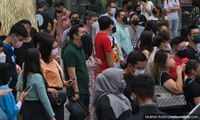
It said state governments could help achieve this by creating more structured opportunities for residents and youth groups to participate in local decision-making.
"At the same time, authorities should encourage cross-ethnic integration through spaces where young people already interact naturally.
"Local authorities can make it easier for young entrepreneurs, cultural groups, and community organisations to use public spaces for food, arts, creative and social activities.
"Night markets, food bazaars, and creative pop-ups can create opportunities for interaction without requiring participants to enter an explicitly 'integration' programme," the report added.



Solving insecurity of Chinese is not important because they are a dwindling number. Solving the insecurity of the MMs are more important because GREEN WAVE is growing. This is why we need to MIGA-- Make Islam Great Again-- first, by supporting our WINNING HAMAS, making sure that concerts are HALAL and celebrating the VICTORY of a Muslim senator in US midterm election.
Anything rotten seem to have a way of being connected to this country.
Report this comment
Are you sure you want to delete this comment?
This action cannot be undone.