




Better public transport: a local fairy tale
Shortly after the government announced the Greater KL concept last month, a reporter called me for an opinion.
“How long would you wait for a bus to come in London?” She was curious.
“Roughly five minutes, but usually no more than 10 minutes.” I could feel her disbelief over the phone.
Shortly after the government announced the Greater KL concept last month, a reporter called me for an opinion.
“How long would you wait for a bus to come in London?” She was curious.
“Roughly five minutes, but usually no more than 10 minutes.” I could feel her disbelief over the phone.
“And there are now a lot more buses on the road compared to a decade ago while London’s population growth over the same period was rather insignificant. Investing in public transport has long been a core target of the mayoral office, regardless of whoever is the occupant.”
She was amazed, and we both sighed.
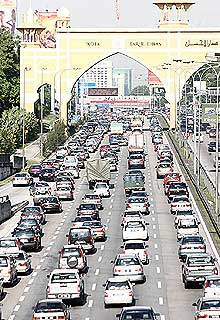
The imposition of the so-called ‘congestion charge’ in 2003 in London would have been a flop had it not been backed with a vastly improved bus service. On the contrary, KL-ites protested vehemently when the government toyed with the same idea. Given the pathetic state of public transport in the capital ( below ), it was only perceived to be yet another half-baked measure and one more underhanded tactic to rip us off.
 But my favourite European metropolis is actually not London. It’s Berlin. The German capital is renowned for green spaces and parks of various sizes, and bliss is a nice summer day out by the canal or reading in a park.
One can hardly feel this to be a city of three million, where streets are wide while cars are comparatively few. The wonder is always that the city does not become traffic-choked during peak hours; neither does it come to a standstill after a rainfall.
What are the secret recipes? Not much, but a highly complex transportation network with diverse modes of urban mobility encompassing buses, suburban trains, trams and the famous U-Bahn (subway).
And all these systems are well integrated, making public transport a popular option for the masses.
Berlin’s success is not unique. In fact, most of Germany’s large and medium-sized cities are served by a comprehensive public transport network, with some 18 of them relying on an efficient light-rail system. Little wonder that Düsseldorf, Frankfurt, Münich and Berlin are among the most liveable cities according to a host of global surveys.
What makes Germany an interesting case to observe in terms of public transport is that the country is, as we all know, one of the largest car producers in the world. At 29% of market share, it has the largest car production facilities in Europe.
Car not a status symbol
Still, Malaysians might be rather puzzled to learn that as many as 23% of German families do not own a car, while 56% of them have just one car. Only 21% of German households have more than one car.
This is not all. In 2007, the number of motor vehicles per 1,000 people in Germany was 508. Although it exceeded the average number of 454 in the European Union, car usage in the country was relatively low at 9,025km per person per year, or 173.55km per week, less than the EU annual average of 10,125km.
Here in KL, I am compelled to drive at least 300km per week, which translates into 15,600 per year, and this does not include the long distances that I have to travel from time to time.
Germany’s per capita income is about US$36,000, and cars are easily affordable there. So how can the Germans maintain low car usage despite the country being a rich nation with a top-rated automobile industry?
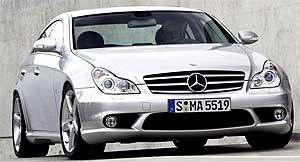 The answer, again, lies in the widespread availability and accessibility of public transport not just in the urban areas, but across the country as well. The Deutsche Bahn, the German Rail, boasts one of the most extensive networks in the world.
In other words, having a car parked in front of one’s house does not necessarily reflect one’s social status in Germany (save for the luxury makes of course). Whether or not one should own a car largely depends on one’s necessity. Since the Germans are well served by a variety of public transport systems, it spares many the hassle of car maintenance and helps keep the country environmentally-friendly.
Not long after he came to power in 1933, Adolf Hitler launched a state-sponsored Volkswagen programme to ensure Germany’s economic self-reliance, but also to make every German feel proud. In tandem with this ambitious project was the construction of interstate ‘autobahn’ (highways).
The Führer himself is consigned to the dustbin of history, and the Germans have long ditched his monstrous ideology. Like much of Europe, reliance on public transport is now an entrenched culture in Germany.
Who pays for Proton?
But in Malaysia, a megalomaniac leader by the name of Dr Mahathir Mohamad was so bent on creating an alpha race that he happened to pick up where Hitler had left off by introducing a national car programme, again buttressed by highway systems.
Two and a half decades later, one of his successors Najib Abdul Razak would praise the man as the prime mover behind Proton’s success, conveniently oblivious to the fact that the cars are substandard and overpriced. It also makes us wonder if the Najib administration is serious about improving public transport.
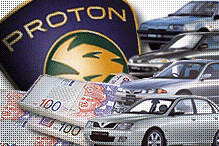 Unlike German or Japanese cars, the lack of penetration into foreign markets means that Malaysians are forced in one way or another to bear the costs (and debts) incurred by Proton, which has also dampened the government’s intention to improve public transport in the country. Ling Liong Sik, a former transport minister, once had the nerve to tell the public not to complain but be grateful because ‘traffic congestion symbolises prosperity’.
Just last week, Syed Hamid Albar, chairperson of the Land Public Transport Commission, called on Malaysians to change their ‘mentality’ and start using public transport as their ‘first option’. This chauffeur-driven public servant should perhaps set an example by taking a bus to work everyday.
In March 2006, Abdullah Ahmad Badawi argued the removal of fuel subsidy was necessary so that the money saved could be used to improve public transport. More than four years have passed and Abdullah is now a happy, retired man yet Malaysians are still made to suffer the daily ordeal of traffic congestion and rising oil prices.
Undi BN, Beban Naik . How true.
JOSH HONG studied politics at London Metropolitan University and the School of Oriental and African Studies, University of London. A keen watcher of domestic and international politics, he longs for a day when Malaysians will learn and master the art of self-mockery, and enjoy life to the full in spite of politicians.


Report this comment
Are you sure you want to delete this comment?
This action cannot be undone.