




Umno's seven deadly sins
On a whirlwind visit to four areas in Kelantan, Prime Minister Najib Abdul Razak should have returned a triumphant man, having addressed a record turn-out of 50,000 people at the 'Bekwoh (Gathering with the People)' meet in Tanah Merah. Then he listed the “seven sins of the opposition” . Why the magnanimity? Why only seven sins?
On a whirlwind visit to four areas in Kelantan, Prime Minister Najib Abdul Razak should have returned a triumphant man, having addressed a record turn-out of 50,000 people at the 'Bekwoh (Gathering with the People)' meet in Tanah Merah. Then he listed the “seven sins of the opposition” . Why the magnanimity? Why only seven sins?
In the early Christian world, the seven deadly vices or seven cardinal sins were used to teach the failings of man and his tendency to sin. The seven deadly sins are lust, gluttony, greed, sloth, wrath, envy and pride.
- Lust may not necessarily be sexual, but could be an uncontrollable desire for power and money.
- Gluttony may not be only over-indulgence, but could be a selfish desire to want more than one’s entitlement.
- Greed or avarice, is the desire for more material possessions and power, as well as forcing others to bend to your will.
- Sloth, is doing nothing or failing to act.
- Wrath is the feeling of hatred, which can lead to vindictiveness and the desire to cause hurt and pain.
- Envy is begrudging someone else’s good fortunes or traits, but is also characterised by having an uncontrollable desire to possess them.
- Pride is considered to be the worst deadly sin; it has the most harmful effect (on others) because of the person’s insatiable desire to outdo others, his failure to appreciate and recognise other people’s efforts.
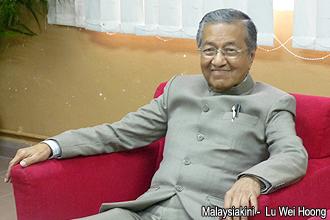 Ask any Malaysian which party is best characterised by the seven deadly sins, and the answer will probably be Umno. It is ironical that in his attempt to paint a picture of a ‘sinful’ opposition, it is Umno, Najib and the former PM Dr Mahathir Mohamad (
right
) which are commonly associated with the seven deadly sins.
Umno and the seven deadly sins penetrate almost every facet of our lives. When Muslims are pitted against Muslims, as in the recent Suluk invasion, religion is used as an excuse for prevarication and procrastination. Are Malaysians tolerant of a prime minister who attempts to distract his mishandling of the invasion by blaming opposition leaders?
Imam Hoslan Hussein’s attempt to expose the alleged corruption perpetrated by mosque officials and Umno politicians in a mosque in Kuala Lumpur, ended in him being jailed for throwing a shoe at the judges who refused to listen to his case. The shoe-throwing was used as an excuse to silence him and also to make him as an example for others.
'The two-faced premier'
In 2011, Najib had an audience with Pope Benedict XVI in an effort to please the local Catholics and show western democracies that he is tolerant. Meanwhile at home, sinister plots were being hatched to undermine the Christian Malaysians.
Far from being privileged, Malays are being corrupted in mind and in body. With affirmative action policies, many Malays feel that other Malaysians owe them a living. They grow up with low self-respect and little self-confidence. Material goods - rather than the attainment of knowledge - feature in their lives.
When Malay extremists incite hatred, they are not censured, but when members of the opposition criticise Umno, the full force of the sedition laws are applied, thus making Malay extremists act with moral and social impunity.
If the family is to be an important building block in our community, our leaders should shake up the syariah law system and help single mothers, most of whom are Malay. Many single mothers live in squalor, their futures blighted. Husbands who leave their families rarely provide child maintenance. Husbands who wish to marry another wife do not bother asking their first wife’s permission. They nip across the border to marry, then pay a nominal fine on their return.
Najib is not known for his maturity and his ability to empathise with the public. He empties the treasury with handouts and creates a culture of dependence. He offers food items when visiting some communities and gets smug satisfaction from seeing a crowd surge to grab the freebies.
 Real power would be encouraging people to come to his ceramahs and listen to him for the duration of his talk, without having to give offerings to force them to stay to the bitter end.
The screening of the May 13 film, Tanda Putera to Malays, shows that Najib is aware that he is losing his grip on the Malay mind. He works on Malays’ insecurities using fear and the threat of violence. His coalition partners like MCA and MIC remain silent about this selective screening.
The recent events in Sabah have shown that the various ministries have passed the responsibility of security, from one to another. Therefore, it is disingenuous of the Ex-Servicemen’s Traders Association and the Malay Army Veterans' Association (PVTM), to warn former generals about criticising the government’s handling of the Suluk invasion.
In times of peace, were these associations as vocal about condemning corruption in the procurement of defence equipment? Did they criticise the butt dances of the veteran soldiers in front of Ambiga Sreenevasan’s house?
Yesterday, Najib told a gathering of women that they should be “the eyes and ears of the government in fighting crime and threats to the national security”. The same was asked of taxi drivers a while ago.
When will Najib realise that glib statements will not do anything to reduce crime levels in Malaysia. He must stop using the police as the enforcement bureau of Umno, and insist that they begin to perform their duty to enforce the peace and protect the rakyat.
Najib’s attempts at portraying the opposition as sinful have failed. Despite the apparent success of his campaign in an opposition-controlled state, photos and coverage of the events in Tanah Merah, Kelantan, are scant.
It was alleged that soon after Najib listed the “seven sins of the opposition”, the venue was hit by a freak storm which ripped tents and scattered tables, chairs, fans and computer equipment. The scene of devastation would not have made good promotional material for Umno. Could this have been divine intervention, or a freak weather system?
MARIAM MOKHTAR is a non-conformist traditionalist from Perak, a bucket chemist and an armchair eco-warrior. In ‘real-speak', this translates into that she comes from Ipoh, values change but respects culture, is a petroleum chemist and also an environmental pollution-control scientist.


Report this comment
Are you sure you want to delete this comment?
This action cannot be undone.