




Politicians ticked off over KK hospital woes
Prominent anti-immigration activist Dr Chong Eng Leong has turned his sights, for a change, on 'the politicians' over the ill-fated Queen Elizabeth General Hospital in Kota Kinabalu.
Prominent anti-immigration activist Dr Chong Eng Leong has turned his sights, for a change, on “the politicians” over the ill-fated Queen Elizabeth General Hospital in Kota Kinabalu.
 He is particularly incensed that they “issue a daily barrage of statements on the public healthcare situation in Sabah” unmindful of the consequences that would befall the people.
“These people are misleading the public and policymakers with their various comments and suggestions,” fumes Dr Chong, a medical practitioner himself with the privately-run Sabah Medical Centre.
“It’s difficult to comprehend the gravity of the situation, following the decanting of QEH, unless one has a medical background and is familiar with the administration of a hospital.”
Dr Chong was speaking in his personal and professional capacity.
He does not concede that “the politicians” mean well or are otherwise acting in good faith. He sees everyone in the QEH issue as either having his own axe to grind or harbouring “narrow, personal or political agendas”.
Dr Chong, no stranger to politics himself, worries that the politicisation of QEH has placed patients at grave risk.
“This is all very unnecessary and has not only compounded an already acute situation but further inflicted unnecessary suffering on patients,” said Dr Chong who was in the political wilderness for quite a spell after quitting as a senior member of the PBS (Parti Bersatu Sabah) Supreme Council over the immigration issue.
“Policy-makers must not cave in under pressure to what is politically expedient but do what is right for the people.”
Why a hospital bed is so expensive
Dr Chong did not single out any politician or group of politicians over the QEH issue. However, he feels that “enough is enough” and that there’s a need to keep the issue in perspective.
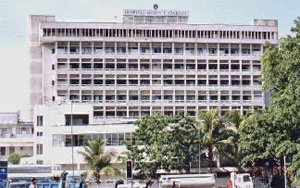 The costing per hospital bed and the intricacies of putting together a fully-functioning hospital, in the public interest, are among his prime concerns on the unresolved QEH crisis.
For starters, he reckons that a hospital bed at today’s prices cannot be at anything less than RM1.5 million and may be even more in the final analysis.
He cites the Ministry of Health’s (MoH) proposed 80-bed RM140 million Heart Centre in Kota Kinabalu as a case in point. The price per hospital bed, he hastens to add, does not just refer to the actual price of the bed but all the services and facilities that go with it.
“I must particularly stress this point because there are so many people querying why a hospital bed costs so much,” said Dr Chong. “This is why they have taken issue with the various financial options that the MoH is considering in resolving the QEH issue.”
Some completed hospital projects in Sabah, according to Dr Chong, give an idea of the hospital bed costs. He cites the 60-bed Kuala Penyu Hospital which was completed at RM50 million; Pitas Hospital’s 60 beds at RM50 million; Sipitang Hospital’s 100 beds at RM100 million; and Keningau Hospital’s 400 beds at RM400 million.
The figures, it is pointed out, excludes the land cost and are in accordance with the MoH’s lower specifications and requirements for district hospitals. Hence, city and big town hospitals would cost much more per bed in the final figures.
Ignore the political pressures
Stinting on the cost per hospital bed, warns Dr Chong, would not be the most prudent approach in tackling public healthcare issues in Sabah or elsewhere and “indeed may simply store up even more problems for the future”. The MoH’s penny-pinching approach to QEH over several decades is a case in point.
The suggestion from the good doctor is that policy-makers ignore the political pressures for too quick a solution and instead ensure that any new hospital in Sabah is a fully-functioning community.
“Each supporting department and section in a hospital has its own significance and is closely connected with each other,” said Dr Chong.
“This demands a high degree of co-ordination in order to ensure a proper, efficient, and synchronised operation. Anything less would place the lives of patients, especially those with life-threatening conditions, in grave danger.”
The SMC doctor lists the critical supporting departments and sections as the mechanical & electrical (M&E) room; reverse osmosis water storage system; kitchen; staff office; staff rest room; on-call room; and admission department.
Elsewhere, other “invisible but crucial facilities” include the patient lift system, central control system, medical gas system, guided airflow and filtering system, nurse call system and emergency call system, among others.
Apparently, all these supporting departments and sections along with back-up facilities serve the myriad departments and sections in the hospital proper.
'We must not gamble with people’s lives'
At the very least, worries Dr Chong, a fully-functioning hospital must go beyond mere patient wards and include adequate OTs (operating theatres), ICUs (intensive care units), day room for haemodialysis, central sterilisation department and pharmacy department.
Also in the list are the radiology imaging department (eg. X-Ray, CT Scan, MRI or magnetic resonance imaging, etc), radiotherapy and oncology department, mortuary, pathology and forensic department, consultation suites, anaesthetic department, procedure room, A&E (accident & emergency department), blood bank, laboratory and endoscopy department.
“To put all these aspects and features in place does not come cheap, especially in today’s market situation,” explained Dr Chong. “We must not gamble with people’s lives.”
Meanwhile, it is not immediately clear at this juncture how the public healthcare nightmare created by the decanting of QEH last October would be resolved in the near future.
 Newly-appointed Deputy Health Minister Rosnah Rashid Shirlin, a Sabahan, confirmed in recent days that the MoH is currently finalising plans to buy the 171-bed SMC premises in Luyang, Kota Kinabalu.
If the deal goes through, this would be the second time the MoH has acquired a property owned by SMC. The first property, also in KK, was turned several years ago into the Likas Women’s Hospital.
“If the takeover of the SMC hospital property fails for any reason, we have a back-up plan to build a 144-bed ward at the QEH car park and rent several other buildings for patients,” said Rosnah.
Already, there have been criticisms that the relatively-inexperienced Rosnah, also the Puteri Umno leader, has been set up as “the fall person” to prevent Sabahans continuing to complain about the unresolved QEH crisis and the generally poor state of public healthcare facilities in the state.


Report this comment
Are you sure you want to delete this comment?
This action cannot be undone.