




MCA's presidential horse race
The three presidential candidates comprising incumbent president Ong Tee Keat and his challengers, former deputy president Chua Soi Lek and past president Ong Ka Ting are racing against time with a tight nationwide campaigning schedule before polling day on March 28 this weekend.
The three presidential candidates comprising incumbent president Ong Tee Keat and his challengers, former deputy president Chua Soi Lek and past president Ong Ka Ting are racing against time with a tight nation wide campaigning schedule before polling day on March 28 this weekend.
From the sprint to the finish, the presidential hopefuls are banking on their support from some 2,377 central delegates with the usual oratory of uplift, urgency and unity.
Like peddlers of more hope and promises, each candidate will say anything to become president.
The contrast betwen the issues raised by the respective presidential candidates is compelling.
Stanley Koh talks to Malaysiakini on the latest developments of their campaigns, contentious issues and the strength and weaknesses facing the candidates facing the keen contest.
Malaysiakini: What is the latest take on the campaigning activities by the respective presidential candidates.....on issues, media attention, propaganda, etc.
Koh : There is this last minute frenzy for media attention. Printed media, TV interviews, blogs...so that the messages of the candidates can reach the widest audience even though the actual deserving target comprises only the 2,377 central delegates. Not forgetting the SMSes and anonymous blog posts disseminating gossip and spilling skeletons in the cupboard of candidates.
There are numerous unsubstantiated complaints of money politics and questionable attempts to pull votes from rival camps. So much for a party talking about reforms and integrity in its election campaign.
The significance of the campaign also focused on opposing voices against recycled leaders. Some say, "running on the spot" is not as bad as a leadership forcing the party to "run backwards."
How effective do you think these campaigning activities are upon the central delegates?
If you must dissect the profile of the central delegates, you find generally the so-called "die-hards" or core supporters (of factional leaders). No (amount of) information or spin from opposing camps will change their voting preferences. You see, they have a stake or self-vested interests involved with their political masters.
Another type have the herd mentality, meaning they are likely to show voting preferences as directed by their group leaders or divisional chiefs.
In contrast, there are delegates who are the independent-thinking ones who may have already made up their minds. This category may not follow instructions. Yet, there are others who wait till the last minute to decide their voting preferences. But the cai tan (voting menu) will appear only at the last minute for their voting supporters and may guide some in their voting.
Really, the printed propaganda and manifestoes has little impact on the central delegates particularly on delegates from urban areas, say compared to those from smaller towns and villagers.
Urban delegates are well informed and are constantly privy to exclusive information when they interact frequently with other party leaders.
Among the three, who are perceived to be leading in the campaign? The manifestoes, promises and propaganda spins?
I think to judge who is leading the campaign in terms of having covered the most ground in the types of media is not correct. It is a matter of effectiveness in the message.
Generally, delegates are the most informed and of course, on the other hand, the paradox, some misinformed. But the truth is always there if only the delegates make the effort to check.
You mean, checking the facts, the past performances of candidates to that of their manifestoes or election promises?
Yes, you're right. Delegates must remember, even Hitler won his 1930s election by preaching democracy. Another good example is former Taiwanese president Chen Shui-bian who championed democracy and anti-corruption before being elected president.
We all know the fate they met and how it turned in the (opposite direction). So delegates should be wary of rhetoric and the printed promises.
What are the campaign themes of the presidential candidates?
Same applies here. A leader recycling himself as capable of saving the party and now making promises, persuading delegates he can bring back unity and stability can be deceptive to many when compared to his past performances.
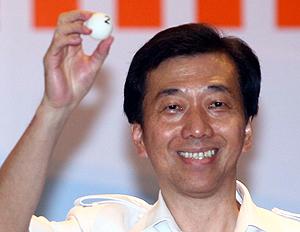 In August 2007, Ka Ting (
right
) as president sent signals to veterans to retire voluntary in honour or they would be axed as election candidates. Is this leadership wisdom?
In August 2007, Ka Ting (
right
) as president sent signals to veterans to retire voluntary in honour or they would be axed as election candidates. Is this leadership wisdom?
Of course, today, he is promising delegates he will use his wisdom. Many good and capable leaders were marginalised and today you see a weak party short of good leadership. Yet, today he is recycling his promise as capable of uniting a party?
His proponents are arguing that it was not Ka Ting's fault, it was the electoral wind. But don't forget, the documented record. The formal report or post mortem analysis of MCA performance at the 308 general elections by its own research house cited acknowledgement that one of the major reasons for the tragic electoral performance of MCA at some 33 parliamentary and state seats was the inappropriate selection of candidates. Who endorsed these candidates?
The choice of candidates endorsed by him was met with resistance or rejected by local party supporters. In short, the so-called unity then was a propaganda piece as undercurrents of disunity prevailed. There were also shortcomings and weaknesses of a failed president.
What about in comparison with Tee Keat's manifesto in this campaign?
Surprisingly, for a leader who had once said he doesn't believe in releasing a manifesto, or a list of accomplishments on his 100-days as president, he has decided to come out with a saffron-robe color (orange) document. Well, it looks like a manifesto, smells like a manifesto and a format like manifesto but (he denies) it as a manifesto.
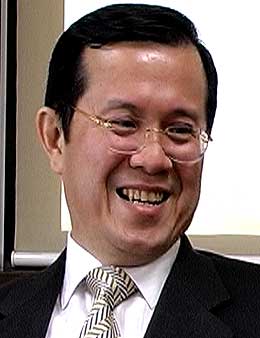 This manifesto or whatever you call it, is brimming with promises including the mention of the importance of the delegates' mandate. Yet, he had refused to step down snubbing the mandate decision of no-confidence by the delegates.
Of course, promises of ensuring principles, transparency and good governance in managing party assets, funds and planned activities. But why spend millions on renovating the party premises and for what reasons, including the presidential office suite and creating another council chamber at the 6th floor?
Tee Keat's manifesto is of no consequence because like the saying goes, he (as president) had begun with an error of an inch, today, whatever promises he is making has ended by being a thousand miles off course.
Lastly, what about Chua Soi Lek's version, his campaign theme?
He has never been president and he has no record. As for Tee Keat and Ka Ting, their character and leadership traits shared many similarities. Examples are their leadership fatal mistakes, arrogant display of power, preference for high-profile publicity, spinning propaganda, control of media, high party spending and so on and so forth.
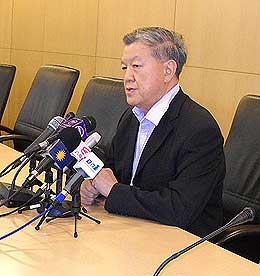 The only fault Soi Lek (
right
) has is that he should have retired peacefully. That probably prompted him to use the
ant
as his central theme.
The only fault Soi Lek (
right
) has is that he should have retired peacefully. That probably prompted him to use the
ant
as his central theme.
(It is a symbol) of humility, hard work, a social order with each hierarchy working in unison and in harmony, a party he hopes to lead.
The choice remains in the hands of the delegates and should be based on the past performances and the characters of the candidates and feedback. As of now, Chua is considered the best candidate in walking his talk.


Are you sure you want to delete this comment?
This action cannot be undone.