


'Out with the dinosaurs': Bersama pitches proportional representation for Malacca
MALACCA POLLS | New kid on the political block Bersama plans to overhaul the composition of the Malacca state assembly by introducing proportional representation, allowing seven additional assemblypersons to be appointed based on each party’s share of the popular vote.
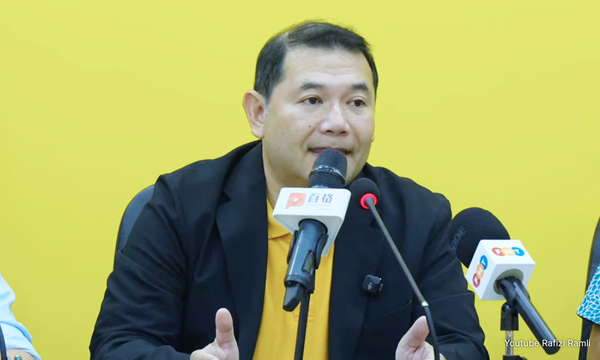
Bersama leader Rafizi Ramli said the current first-past-the-post (FPTP) system had allowed political dinosaurs to thrive unchallenged, adding that the proposed experiment in Malacca would be the first step towards reforming the electoral system nationwide.
He said the existing system created a “winner-takes-all” situation that did not accurately reflect the overall outcome of an election.
"So we want to test the people's response so that we can improve this system starting in Malacca and extend it to other states. This protects the right of the voters and is fair to all contestants,” he said when launching Bersama’s manifesto for the state election.
"If we use the FPTP system, our country will forever be monopolised by dinosaur parties, not because they are popular, but because our system lacks an element of proportional representation," he added.
Popular vote shares
Rafizi explained that under the proposed system, the seven appointed assemblypersons would be allocated according to each party’s share of the popular vote, regardless of whether it won any constituency seats or formed the state government.
"For example, if BN-Perikatan Nasional gets 40 percent of the popular vote, then they will get 40 percent of the seven appointed assemblypersons, which is three people,” he said.
As another example, he said Pakatan Harapan could secure three appointed assemblypersons even if it won only one or two seats in the election, provided it garnered 40 percent of the popular vote, matching the combined share of BN and Perikatan Nasional.
In August, Sunway University political scientist Wong Chin Huat wrote an open letter to Penang Chief Minister Chow Kon Yeow, proposing that the DAP-led state serve as a testing ground for incorporating elements of proportional representation into its electoral system.
Wong suggested introducing "democratically appointed non-constituency seats".

Referring to the recent Negeri Sembilan election, he said the results demonstrated that government performance did not necessarily translate into electoral support. Instead, negative sentiments such as fear and anxiety could prove more effective in mobilising voters or even discouraging some from turning out to vote.
He argued that proportional representation would give smaller political parties a better chance of survival, reducing the risk of them being wiped out when rival parties merge, or their own support bases become fragmented.
This, he said, could also reduce the incentive for political parties to pursue race-based “grand consolidations”.
However, Wong acknowledged that extending electoral reforms to parliamentary and state elections would require amendments to Articles 116 and 117 of the Federal Constitution, which would need the support of a two-thirds majority in Parliament.
Given the difficulty of securing such support, he suggested that the reform should first be pursued at the state level.
Power abuse concerns
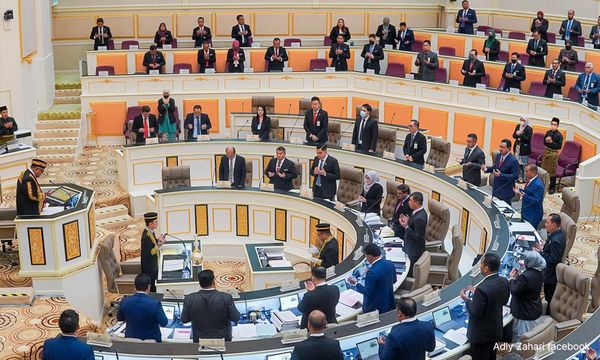
In July, the Umno/BN-dominated Malacca state legislative assembly passed an amendment to its state constitution allowing for the appointment of additional assembly members.

The move drew criticism from DAP lawmakers, who argued that it would undermine democratic principles by allowing unelected individuals to sit in the legislature without a mandate from voters.
They also cautioned that the move could alter the political balance, weaken the assembly’s checks and balances, expand the state government's powers and create room for abuse.
Their concerns centred on the possibility of ruling parties gaining additional appointed representatives, a scenario that differs from Rafizi’s proposal to distribute the seats according to each party’s share of the popular vote.
Meanwhile, Bersama’s manifesto outlined five key areas of focus: sustainable state revenue, addressing urgent infrastructure needs, strengthening governance and the democratic system, and expanding the people's socio-economic programmes.
In the Nov 14 Malacca polls, Bersama is fielding candidates in 16 constituencies, taking on major political coalitions BN, PN and Harapan.






“Out with the dinosaurs” is a catchy slogan, but seven extra seats do not automatically make the whole assembly proportional. What is the allocation formula, who chooses the appointees, and what stops party leaders from rewarding their favourites? Voters deserve answers. Meanwhile, some Bersama supporters behave like thugs on social media, hounding anyone who disagrees with them and calling people vile names. New politics, apparently. Everyone else must evolve, but their own supporters cannot manage a civil disagreement.
We have seen the real reasons and behaviour of parties like BN PN Harapan. They are all self centred . All are not transparent . They hid things from the public for years like the tabung haji , imdb etc. We know how much they tried to cover up Why can't we give others like Muda and Bersama a chance why have the same politicians day in and out
Too early for the Kancil to talk aboiut doing away with the FPTP system. Can the Kancil send the dinosaurs to sleep by contesting in 16 seats and hoping to win one? Lambat lagi. Anyway Prof Wong has proposed this proportional representation to the CM of Penang for consideration. So far, no political will despite it being a progressive idea. Dap should be at the forefront to push for this system, the Rakyat msut ensure it is on the menu when GE16 comes.
Report this comment
Are you sure you want to delete this comment?
This action cannot be undone.