


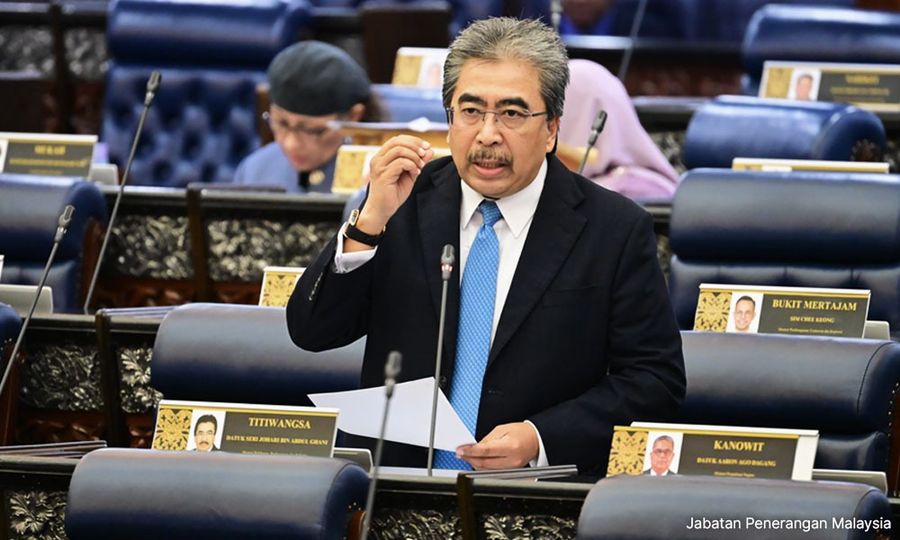

Pay peanuts, rake in millions: Johari takes aim at employers over plight of M’sian workers
PARLIAMENT | Malaysia can raise wages and churn out thousands of skilled graduates, but little will change as long as employers hire cheaper migrant labour than Malaysians.
This is the uncomfortable reality confronting the country, with Investment, Trade, and Industry Minister Johari Abdul Ghani warning that decades of dependence on migrant workers have left many companies reluctant to pay Malaysians what their skills and labour are worth.
Even the increase in the minimum wage to RM1,700 has done little to change employers' attitudes, with some...
PARLIAMENT | Malaysia can raise wages and churn out thousands of skilled graduates, but little will change as long as employers hire cheaper migrant labour than Malaysians.
This is the uncomfortable reality confronting the country, with Investment, Trade, and Industry Minister Johari Abdul Ghani warning that decades of dependence on migrant workers have left many companies reluctant to pay Malaysians what their skills and labour are worth.
Even the increase in the minimum wage to RM1,700 has done little to change employers' attitudes, with some companies still offering Technical and Vocational Education and Training (TVET) graduates salaries comparable to those paid to migrant workers.
"The problem is that the wages we offer do not provide sufficient economic value for them (locals), so they will not take up those jobs," he told the Dewan Rakyat.
Johari (BN-Titiwangsa) also pointed to employers who placed local workers in accommodation designated for migrant labour, while requiring them to pay rent to live outside the premises.

The minister did not mince his words about companies that have grown accustomed to making handsome profits while keeping wages low.
“These companies make profits amounting to hundreds of millions of ringgit, but are reluctant to pay local workers (a minimum of) RM2,000. They are still stuck offering salaries of RM1,700.
"This is why I say the issue will not be easy to resolve. If we fail to address these policies, the 2.6 million migrant workers, not including the many undocumented workers in the country, will become detrimental to Malaysia in the future,” he added.
The warning comes amid concerns that the country's dependence on imported labour is becoming entrenched, despite repeated calls for industries to automate, improve productivity, and create better-paying jobs for Malaysians.
Against loosening recruitment rules
Johari was responding to Tan Hong Pin (Harapan-Bakri), who asked whether the ministry was prepared to introduce industry-specific policies on migrant worker recruitment, taking into account businesses' levels of automation and actual labour requirements.
Tan noted that some industries had already maximised automation but continued to require manual labour. He asked whether they could be given greater flexibility to recruit migrant workers according to their operational needs.

Johari, however, cautioned against loosening recruitment rules, arguing that doing so would only perpetuate the dependence the government was trying to break.
The government's intended workforce composition is 80 percent local workers and 20 percent migrant workers. However, in some industries, the ratio has been reversed, with migrant workers accounting for 80 percent and Malaysians making up the remaining 20 percent.
“Anyone who comes and tries to ask for a new licence to do something similar, we say ‘no’. If they want migrant workers, then the number of migrant workers will keep increasing.
“So, how are we going to manage our TVET graduates, whom we previously did not give enough attention to?” Johari asked.
Only 3D jobs
Malaysia currently has about 2.6 million migrant workers, excluding undocumented labourers, a figure Johari said underscored the urgency of reducing the country's reliance on imported labour, as outlined in the 13th Malaysia Plan.
He said companies that had operated in the country for decades had become accustomed to depending on migrant workers, making the problem particularly difficult to reverse.
Migrant workers, he stressed, should ideally be confined to jobs categorised as dangerous, difficult, and dirty (3D), leaving greater room for local talent to take up other employment opportunities.
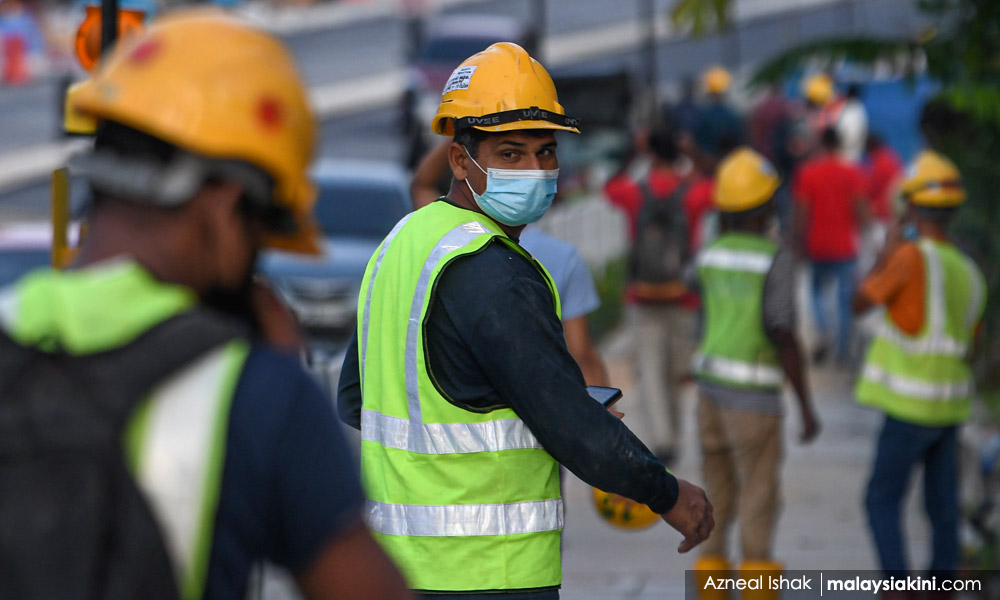
With nearly 400,000 TVET graduates in the country, Johari said the government would make clear to industries seeking to recruit migrant workers that their hiring should be limited to 3D jobs.
"Whenever an industry approaches the ministry or the Investment Development Authority, we will explain that they may hire migrant workers, but only for 3D jobs,” he added.





Malaysia's economy is controlled by many GLCs that dominate the market and their government links ensure the Directors are rewarded handsomely. Then we have the SMEs that have to compete just to survive; so profits are slim if not operating at the margin. There should be a movement to trim down the number of GLCs; maybe just a few linked to electricity, water and highways. Only then can the SMEs afford to pay more to graduates.
Businesses generally hire more productive workers - workers that will produce more per dollar paid. Businesses are generally quite blind to the local/migrant divide. Hence, upskill local workers and get them to be more hardworking to as to better compete. Separately, rational businesses are also blind to the race/religion divide.
I'd pay good money to watch Johari Abdul Ghani run a private SME for 10 years without government assistance, political connections, subsidies, special treatment, or protection. Build it from scratch. Compete fairly. Survive economic downturns. Meet payroll every month. Then come back and lecture business owners about wages. Until then, this sounds like another politician confusing speeches with reality. Politicians think profits are automatic!!
Report this comment
Are you sure you want to delete this comment?
This action cannot be undone.