




'Distrust of Umno will hobble NEM'
special report Bold reforms require a strong and credible government, argued analysts, but as long as the prime minister is Umno president, the government will be swimming against a strong tide.
At a Malaysiakini panel interview about the New Economic Model (NEM) last week, Institute of Democracy and Economic Affairs chief executive Wan Saiful Wan Jan pulled out his mobile phone to make a point.
special report Bold reforms require a strong and credible government, argued analysts, but as long as the prime minister is Umno president, the government will be swimming against a strong tide.
 At a
Malaysiakini
panel interview about the New Economic Model (NEM) last week, Institute of Democracy and Economic Affairs chief executive Wan Saiful Wan Jan pulled out his mobile phone to make a point.
“I will read you an email I received from a friend... He said, ‘The problem is credibility. The angel Gabriel himself can announce the NEM, and people would not trust him if he had Umno tattooed on his wings’,” he said with a chuckle.
Research for Social Advancement research director Richard Yeoh agreed: “Among the young, among intellectuals, (this sentiment) is so strong that they will tell you flat that BN and Umno will never change until they taste defeat.”
The unfavourable views can be blamed on implementation of the New Economic Policy (NEP), which is widely believed to have led to a rent-seeking culture in the ruling coalition.
But, according to social commentator and Malaysian Association of Youth Clubs pro-tem vice-president Akhramsyah Sanusi, rent-seeking is in fact part of Asian business culture and does not directly impact economic growth.
The one thing it may affect is the efficient implementation of affirmative action, whereby the benefits of such policy can be hijacked by a select few, he conceded.
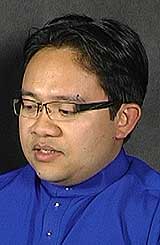 The analysts locked horns over the need for affirmative action in the form of subsidies, with Wan Saiful
(right)
boldly stating that the government is not responsible for welfare.
“(It) is better to liberalise, to stop subsidies and to think again about affirmative action, whether it is needed or not. (Najib) seems to realise that,” he said.
But this realisation has yet to translate to policy, with even the NEM proposal falling short on its own promises.
“While the document talks about how the government should move away from the market place, but it also talks about how the Employers Provident Fund (EPF) will be developing Sungai Buloh,” he noted.
“That is a GLC taking away the role of the private sector (and is part of) a political agenda.”
Yesterday, Petaling Jaya Utara MP Tony Pua accused EPF of insider trading , having purchased shares in Malaysian Resources Corporation Bhd prior to Najib’s announcement about the Sungai Buloh project.
Excerpts of the interview follow, with the content edited for language and clarity.
Malaysiakini: Is there reason for us not to be cynical about the NEM?
Wan Saiful Wan Jan: The cynicism will always be there. I will read you an email I received from a friend when I asked for some advice about what I should be saying. He said, ‘The problem is credibility. The angel Gabriel himself can announce the NEM, and people would not trust him if he had Umno tattooed on his wings’. (Laughs)
That is the level of cynicism that exists. The NEP was implemented many years ago; just look at the way it has been implemented. Now there is a new policy. There will be cynicism and scepticism.
Richard Yeoh: This is Najib’s biggest challenge. Among the young, among intellectuals, it is so strong that they will tell you flat that BN and Umno will never change until they taste defeat.
There is always great opportunity to make good as a states(person) and Najib has that now, but will he have the courage to do it?
Some argue that this cynicism is rooted in the fact that the ruling coalition too takes part in rent-seeking practices. Can we have faith in Najib?
Wan Saiful: The report has been very clear about this, saying this requires political will. It also lists groups who will be resistant to the changes, including those with vested interests. It is yet to be seen, I think. He has been brave enough, bold enough to announce this.
I am very confident that come June when the full policy is announced, there will be lots of compromises. That is the nature of politics. How much he compromises will pretty much dictate how much credibility he can save for himself.
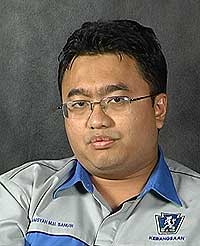 Akhramsyah Sanusi:
I would like to quote someone who was an ambassador of Malaysia to Singapore. His typical response when a Singaporean dignitary complained about having to bribe a police personnel. He would say, ‘It’s not just the policeman’s fault, damn you, it’s also your fault. Who asked you to give?’
The rent-seeking culture goes multiple ways. It also happens due to need. We need to understand what the basis of the rent-seeking culture is. Is it something that naturally happens with time? It is something that is part of the way business is done in this part of the world? We don’t really know. There is a lot of blame on politics and politicians.
But the eruption against the rent-seeking culture and the public clamour against it, has only happened in the last 10 years.
Before that it was within the political parties that people complained that there was this culture between the politicians. Only when it started affecting us did we start asking if it is rent seeking that is causing us to be deprived.
To a large extent, there is inefficiency caused by rent seeking. But that being said, why is it that other countries that are obviously corrupt are still able climb up the economic ladder very rapidly?
Wan Saiful: Such as?
Akhramsyah: China. Indonesia. Thailand to a certain extent. Even the Philippines. Periods of recovery have not coincided with reduction in corruption. What I’m saying is that let’s not think that eliminating patronage and bribery will solve everything. It is not a panacea.
But I agree that it is affecting our attempts to implement affirmative action, because affirmative action (is used) as an excuse, so (the help) does not go where it’s supposed to. I suspect that rent seeking began a few years after the inception of the NEP, when the original spirit died.
People just took advantage of the opportunity they had, but not the level which we saw up to five years ago. It probably started at 2 percent, went up to 5 percent then to 10 percent, then someone go caught, and then it went back down. What we saw was an excess of it, such that it really deprived us of the benefit of the policy.
Wan Saiful: Actually, you are right. Malaysia has been suffering from rent seeking for many years, and we continue to develop still.
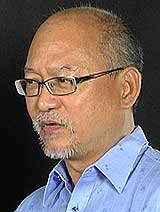 Yeoh:
I think rent seeking is affecting us more and more, and the Najib administration must have the courage to put a stop to it. The other thing is that rent seeking is more damaging during a boom time. We are talking about the 1990s onwards. An Approved Permit for a car in the mid-80s (could go) for RM500, now we’re talking about RM500,000.
To your point about people not complaining about it until a few years ago, I think the space to complain only existed during (former premier) Abdullah (Ahmad Badawi’s) time.
I want to look at some aspects of the NEM. We see quite clearly in the report that the government will cut subsidies and will introduce GST. But at the same time they say they are looking out for the bottom 40 percent of the population who will be adversely affected by these measures. What’s going on here?
Wan Saiful: On GST, my immediate reaction is any form of taxation is bad. But if we go a little bit deeper into it, we have to take drastic action. The deficit and the fiscal situations are worrying.
I quite like the idea of a consumption tax, because it doesn’t penalise (the quantity of) work like the income tax or corporate tax does. But I would like to see it introduced with other measures as well, that government cannot become so big it is uncontrollable.
During difficult times the private sector will lay people off; so how is it that during difficult times (like this), the Public Services Department is acquiring three more buildings in Cyberjaya, to accommodate more people? The government’s human resources departments is not becoming the lean and mean machine that it should be.
Yeoh: The implementation of GST should be in the context of comprehensive tax reforms, which has not happened since 1957. I believe that the efficiency and the coverage of the existing tax system is not wide enough. We have a widening income gap; the rich are getting richer. The people who live opulent lifestyles, those who drive Ferraris ... costing millions, (those with) multimillion ringgit houses...I would like to know if these people pay taxes.
I am thinking there are still a lot of leakages in our tax system. If you can plug these leaks and rent seeking - Approved Permits being an example - that it could be argued that you can cut subsidies without implementing the GST and still have additional funds.
Akhramsyah: Looking at the history of these subsidies, they are all part of the Price Controls Act, which is there not to allow monopolies to arise for sugar, for instance. Subsidies cannot be there forever. I have always opposed the sugar subsidy. When you look at the end-to-end economics, as well as excessive sugar intake being one cause of diabetes, you can track a line from the rise of diabetes in the east coast, for example, where the people are also those only able to afford more of this sugar because it’s so cheap.
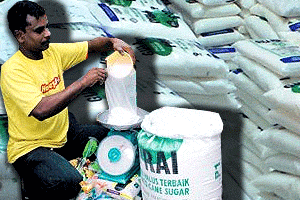 The thing that opened my eyes, however, was an encounter with an economist who was part of the creation of the sugar subsidy. He told me that the subsidy exists because it was realised that there was a segment of society - Malay farmers, Indian estate workers - who needed that burst of energy in the morning and evening when they have work activity. The reality is they cannot afford nutrition, so the sugar provides them with the energy they needed.
A sociological study..., an economic study around it and a dietetic study were done around this and proposed the policy. The lesson to be learnt is this. We have to understand that when we unwind these policies, we need to know why they are there in the first place.
Wan Saiful: You can’t possibly be suggesting that a subsidy is introduced for the whole country because a few farmers can have a sugar high.
Akhramsyah:
But this country was not just about a few farmers then. It used to be a lot of farmers and fishermen and estate workers, as a proportion to the population. But I accept your point, it has to be reformed.Wan Saiful: You are right that the subsidy was introduced with good intentions to assist those who can’t afford to pay the market price. This is part of a bigger social engineering process to help those who cannot pay the money if prices are at market rate, but there are two outcomes - one is the rising incidence of diabetes and the other is that even those who can pay the market- price will benefit from subsidies.
This is an argument that many have used before. How can a bumiputera who is earning millions of ringgit enjoy discounted house prices? It is unjustifiable. It may be good in intention, but the outcome may be problematic and we have 30 years of this as evidence.
Are you arguing that there is no place for affirmative action in the future?
Wan Saiful: I think, to answer your question in a very short way, is that prices should be determined by the market and not by subsidies.
Yeoh: But there must be a social safety net for the poor, and that to many of us, is what affirmative action should be about - needs-based.
Back to subsidies and GST, on a national level, there is an appalling waste of resources. Oil and gas, for example, we have 42 percent energy reserves vis-à-vis Japan managing with 9 percent. Because resources are so abundant that people, drivers, sleep in the car with the engine running while their bosses have dinner, for two to three hours. In Germany there is a law against this. You can be fined.
Opulent buildings in Putrajaya. State government departments are competing with each other. A RM300million state assembly building in Kuching, which is used only several days a year. (There is a) lack of economic sense in the whole management of the country. We need to go back to financial prudence.
 Akhramsyah:
There is a cultural change required here as well. There is an opinion that it is all the government’s fault. It’s not true. What happened when the government (reduced the) petrol (subsidy)? People were angry, when in fact it was the right thing to do. I still remember the opposition parties going around telling people that the BN
menzalimi
(was being cruel to the)
rakyat
(and later celebrating the government backdown). That is just against the reality of life. I am glad you used the example of the chauffeur because people too engage in a lot of wastage.
Yeoh: People got angry over petrol prices because of the suddenness (of the decision) and quantum. I’ve been arguing for years that such increases can be done 10 sen a month, over a period of time.
But if you take something away from people you have to give them something in return, don’t you think?
Yeoh: Or you do it gradually so people can adapt.
Wan Saiful: No one seems to realise that the government’s job does not include providing welfare for the people. There are things the government simply cannot do. Therefore it is better to liberalise, it is better to stop subsidies and to think again about affirmative action, whether it is needed or not. (Najib) seems to realise that he cannot do these things from Putrajaya.
Isn’t it the government’s job to look out for the poor?
Wan Saiful: That’s a very interesting question. My immediate reaction is to say ‘not directly’. This is where I may differ from some of my liberal friends. Liberals argue that it is our own responsibility to help ourselves. I would argue that I’d rather help the poor myself instead of chanelling the money to the government of the day. If I walk past someone at the Bangsar LRT station, I see someone asking for help, I would rather I help him. That would bring back the spirit of society.
This is impossible (for the government) to do. It is so removed from the public so it cannot possibly decide what is good for people living in Cuping, Perlis. What would be better would be to allow us as civil society organisations to work within society; we are closer to the issue.
Yeoh: I haven’t thought deeply about that to give a smart response but I would like to see the government provide basic essentials to the disadvantaged, so people have a place to stay, food to eat, children going to school (and other) minimal requirements. A humane society takes care of people who need help. On a practical level, civil society can do its share but the bottom line is that government needs to play a role.
Wan Saiful: Coming back to the NEM. I like the document. I think it is a good starting point, but that is as far as it goes. To me the document accepts that we need to liberalise the economy. It accepts that we are living in a globalised world, we should remove the barriers, but it does not go as far as I would like it to go. It talks about the government crowding the market, but all it is trying to do is to remove three, four maybe five companies from that market place. The real obstacles are not removed yet.
 I can give the example that is hotly debated now. The role of Petronas, for example. That is a clear example of the abuse of GLCs for political purposes. At the moment Petronas is abused by the government which determines where to channel its royalties.
You can see this again with the EPF. While the document talks about how the government should move away from the market place it also talks about how EPF will be developing Sungai Buloh. That is a GLC taking away the role of the private sector. What do we, as EPF contributors, get to say about that? I may disagree and, if the EPF is a private company I can have my say. This is a political agenda.
So the NEM is good in that it accepts liberalisation, but it is not enough because while accepting the need for liberalisation, it does not actually liberalise the economy.
Akhramsyah:
I think we should stop the culture of pointing fingers. I beg your pardon Wan Saiful but I really dislike people saying that Petronas is being abused.Wan Saiful: Is it not? (Laughs)
Akhramsyah: There are some things that have been done right, there are some things that are mistakes. We are all human. At the end, it is also Petronas money which is used to subsidise petrol.
Wan Saiful: Which is wrong and an abuse as well.
Akhramsyah: Some segments of the rakyat will care to differ. In criticisng politicians for politicising everything, let’s not make political statements. The spirit of the NEM is inclusive, so let’s be that.
Yesterday: PM walks the high wire with NEM


Report this comment
Are you sure you want to delete this comment?
This action cannot be undone.