




Parang was not used recently, says expert
The condition of a parang, which was among the exhibits handed over for DNA testing by the National Chemistry Department relating to the death of 15-year-old Aminulrasyid Amzah, showed that it had not been in use lately, an expert told the Shah Alam Sessions Court today.
The condition of a parang, which was among the exhibits handed over for DNA testing by the National Chemistry Department relating to the death of 15-year-old Aminulrasyid Amzah, showed that it had not been in use lately, an expert told the Shah Alam Sessions Court today.
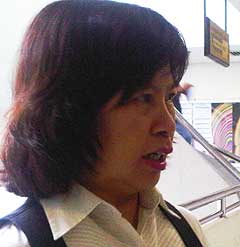 "When a parang is rusted (sic), the possibility is that it has not been used for some time," said senior chemist Dr Seah Lay Hong (
left
).
"When a parang is rusted (sic), the possibility is that it has not been used for some time," said senior chemist Dr Seah Lay Hong (
left
).
However, Seah, who is attached to the serology and DNA unit of the forensics department, National Chemistry Department said that she cannot say if the parang is old or new.
The chemist also told the court that DNA testing was conducted on the hilt of the parang, which is about two feet long, but no DNA profile was found.
She, however, testified that she did not conduct a fingerprint test.
"DNA is an exact science. There is no margin of error. If there is no profile then there is no profile," she said.
She also testified that the items submitted to her for testing were "preserved perfectly".
 Other exhibits handed over by investigating officer ASP Abdul Halim Ismail on May 3 and May 5 include a red blue and white Sisley T-shirt, a pair of blue and white floral-print shorts and hair samples all blood-stained, and swab sticks labelled Aminulrasyid Amzah.
The teenager was shot dead by police on Apr 26 during a police chase.
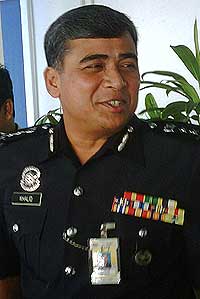
Immediately after, Selangor police chief Khalid Abu Bakar ( left ) told media that the driver, Aminulrasyid, was believed to be a criminal and that police had found a parang in the Proton Iswara he was driving.
His sister, who owns the Iswara, told the press that she has never seen the parang before.
Clothes tested not worn by deceased
Interestingly, the blood-stained T-shirt and shorts that were examined by Seah did not match the clothes the deceased was wearing in the post-mortem photos.
Asked by defence counsel MM Athimulan if she had received the clothes worn by the deceased in the post-mortem photos, Seah said: "No."
She had also testified that the results of DNA testing on blood stains on the T-shirt and shorts submitted to her were "inconclusive" as the DNA profiles were too weak.
 Later Dr Mohd Shukri Hassan from the toxicology section of the National Chemistry Department told the court that no traces of alcohol or drugs were found in Aminulrasyid's blood.
On May 10, corporal Jenain Subi, 48 ( left ), pleaded not guilty to causing the death of Aminulrasyid at Jalan Tarian 11/2 inSection 11, Shah Alam between 1.10am and 2am on April 26.
He was charged under Section 304 (a) of the Penal Code, which provides for jail up to 30 years and a fine, if convicted.
The trial will resume tomorrow with the testimonies of Aminulrasyid's sister, who owns the Iswara, her husband and father-in-law.


Are you sure you want to delete this comment?
This action cannot be undone.