




Whither Koreas? A Malaysian perspective
The joint military exercise between the United States and the Republic of Korea (South Korea) in the Yellow Sea is over without any unintended incidents as feared by many around the region.
The joint military exercise between the United States and the Republic of Korea (South Korea) in the Yellow Sea is over without any unintended incidents as feared by many around the region.
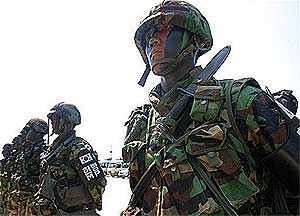 But, the political tension between the two Koreas seems to persist with no end in sight. Wither the two Koreas
?
But, the political tension between the two Koreas seems to persist with no end in sight. Wither the two Koreas
?
Malaysiakini interviewed Professor Lee Poh Ping via email to exchange perspectives with the scholarly observer of the strategic situation in the Asia-Pacific region.
Lee, formerly a Senior Research Fellow at UKM's Institute of Malaysian and International Studies (IKMAS), is now a Senior Research Fellow at UM's Institute of China Studies (ICS).
Malaysiakini : The joint US-ROK (South Korea) military exercise is now over without any unintended incidents. What did the region and even the world fear before that? Was the fear justified or justifiable?
Professor Lee Poh Ping : There is some justification in that one is not sure how North Korea will react for even a minor retaliation on its part can lead to the situation going out of control.
On the other hand, none of the involved states, China, US, South Korea and even North Korea really want a war. In a war, China will not only have massive North Korean refugees streaming across its border but will face a situation where US troops might reach the Yalu River.
Then to safeguard its security it might have to intervene with all the horrendous consequences for stability in Northeast Asia.
The last thing the US wants, despite the flexing of its muscles in the drill, is a war in the Korean Peninsula. It is stretched in Iraq and Afghanistan and also militarily involved in God knows where (Pakistan, Yemen, and so on).
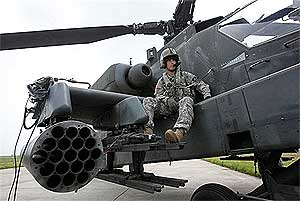 Not to mention, some Americans are eyeing Iran! A war in the Korean Peninsula is basically a land war where without doubt the Chinese will be the dominant party, though not in a maritime conflict where the US still holds sway.
Do not forget that even in the Korean War of the 1950s when the Chinese People's Liberation Army (PLA) was basically a group of guerilla fighters fighting a conventional war, not the professional army it has now become, the US had to threaten the use of nuclear weapons to get the Chinese to negotiate the armistice. I do not think the US will want to be forced into a similar situation.
South Korea, despite the war rhetoric of its new defence minister, will have the most to lose. Seoul will almost certainly be heavily attacked if not destroyed. Instead of its steady advance to full industrialisation and being a match for Japan, it will have to spend its energies rebuilding.
North Korea will almost certainly collapse in a war, unless propped up by Chinese intervention, and be occupied by the US and South Korea.
Both North Korea and China protested against the US-ROK drill in the Yellow Sea. What were their reasons? What are the similarities and differences in their reasons? Were North Korea and China justified in their respective protests?
I think there is some justification in the protests. The situation is already tense. Why heighten the tension? This leads the Chinese to believe that the US participation is directed at them; that the US wants to demonstrate to a rising China that it intends, and has the capacity, to remain the top dog in Northeast Asia. North Korea maybe a bit more paranoid but don't forget it has been subjected to a lot of American rhetoric on 'regime change'.
In your observation, why is North Korea always so bellicose or militaristic? Why it is so incessantly reclusive and unpredictable?
You have to understand that North Korea is an isolated and insecure state. It is, I think, the only East Asian state not recognised by the Americans. What is more, it sees itself as targeted by many Americans, as I said earlier, for regime change.
 The North Koreans do not think it is all rhetoric. After all, President Clinton (
left
) was on the verge of ordering a strike against North Korean nuclear facilities in 1994. President Bush grouped North Korea with Iraq and Iran as constituting the 'Axis of Evil'. The North Koreans saw the US attack Iraq afterwards.
The North Koreans do not think it is all rhetoric. After all, President Clinton (
left
) was on the verge of ordering a strike against North Korean nuclear facilities in 1994. President Bush grouped North Korea with Iraq and Iran as constituting the 'Axis of Evil'. The North Koreans saw the US attack Iraq afterwards.
Nevertheless,, the North Koreans are also themselves to blame in their refusal or inability to modernise their economy and their political system, and hence playing up the external threat.
From news reports, we know there are actually still voices for peace in South Korea even although an apparently larger segment of the Korean society reportedly demands "tougher responses" to North Korea. Why? Who are the South Koreans who still want to reconcile peacefully with North Korea after the recent sinking of Cheonan and bombardment of Yeonpyeong island?
These are from the opposition and from the younger generation of Koreans. Many are not convinced that the North Koreans are totally to blame.
For example, many question the conclusion of the international group investigating the Cheonan sinking, and the South Korean goverment, that it was due to North Korea. Among other things, they point to the length of time the government took to come to a conclusion.
They also point to a most glaring technical point, that the markings on the torpedo that indicated North Korean origins were too fresh looking - given the time the torpedo was under water and all the heat generated from the explosion.
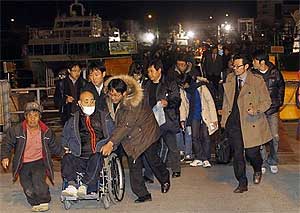 While they mourn the loss of four South Korean lives in Yeonpyeong island, they believe the North Koreans were not unprovoked. This was a disputed area (the 1953 armistice line did not cover the maritime border - it was unilaterally drawn by the Americans).
What were the South Koreans doing a live military exercise there? They also blame Lee Myung Bak for abandoning the 'Sunshine Policy' of previous administrations, thus generating hostility from the North Koreans.
Why does China seem to be unable or ineffective in ‘reining in' a close and seemingly friendly neighbor like North Korea? Are China and North Korea really allies with a black-and white treaty like the 1954 US-ROK Mutual Defense Treaty?
Both have signed a Sino-North Korean Friendship Treaty in 1961 where China will help defend the territorial integrity if North Korea is attacked. China is caught in a dilemma.
If it pushes too hard, it could result in a collapse of the North Korean state which they do not want for reasons stated previously. At the same time, if they do not, North Korea will continue its path to nuclearisation with its impact on Japan and South Korea.
Ultimately they might rather have a nuclear North Korea than a collapsed state. Still they think, outside action can help, particularly America's willingness to talk to the North Koreans.
What can the US, China, Japan and Russia do, singly or jointly, to ensure peace in the Korean Peninsula?
The key is the United States. If the US as stated previously is willing to talk directly to North Korea or best, recognise it, that will go a long way to getting North Korea out of isolation.
Japan in the long run can help with economic aid but for the present time it has run out of sticks (sanctions) it can use to hit North Korea. Russia can help guarantee the stability of the Korean Peninsula. The Chinese role has been mentioned.
Asean's secretary-general Surin Pitsuwan has issued a statement calling for all governments concerned (in the situation in the Korean Peninsula) to "exercise maximum self restraint" on the basis of Asean's Treaty of Amity And Cooperation (TAC). But, the Philippines and Thailand are also US' treaty allies and Singapore is also very close to the US in defence cooperation. How to make sense of this duality within Asean?
Some Asean states see no contradiction. To argue for the settlement of disputes peacefully does not mean you will not resort to force if you are attacked.
Both Koreas and the US are also signatories of TAC. Are they going to be restrained by what they have committed to TAC, which calls for peaceful settlement of differences and disputes? What can Asean do if they start a second Korean War?
I do not want to be cynical. History has shown when national interests are involved or threatened, treaties calling for peace are honoured in the breach. In the event of war, Asean cannot do much beyond making appeals.
Unlike in the case Cheonan's sinking when North Korea was condemned, India called, in an even-handed position, for both Koreas to return to negotiations for the maintenance of "peace and stability" in the aftermath of the Yeonpyeong's bombardment. What accounted for India's apparent shift or change of attitude?
A: I am not familiar with Indian policy. I will rather not comment.


Report this comment
Are you sure you want to delete this comment?
This action cannot be undone.