




Wong slams PM over 'obsession' with nuke power
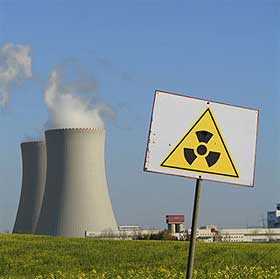
Selangor executive councillor Elizabeth Wong has criticised Prime Minister Najib Abdul Razak for his “obsession” with building two controversial nuclear power plants in Malaysia.
Selangor executive councillor Elizabeth Wong has criticised Prime Minister Najib abdul Razak for his “obsession” with building two controversial nuclear power plants in Malaysia.
“This will be an economic and environmental disaster. Najib wants to squander RM21.3 billion on a Cold War-era dream when we should be embracing the ‘solar century’,” said Wong, who is the state cabinet member in charge of environment.
 According to her, some of the top global solar power manufacturers such as Q-Cells and FirstSolar are based in Selangor and Kedah.
“We should build upon our strengths in clean energy rather than get trapped in a toxic dead end.”
The government has announced plans to build two nuclear power plants that will generate 1,000 megawatts each beginning 2021 as part of the overall long-term plan to increase energy supply.
Energy, Green Technology and Water Minister Peter Chin said on Sunday that the government would engage an international consultant to evaluate the location for the two plants.
Penang Chief Minister Lim Guan Eng declared on Monday that he would not allow a nuclear plant to be built in the state.
Wong ticked Najib off for his “confused priorities” and for being too slow to act on reducing Malaysia’s greenhouse gas emissions.
“Despite grand talk at the Copenhagen climate-change talks last year, where Najib committed to a conditional 40 percent cut in our greenhouse gas emissions by 2020, we haven’t seen any dynamic follow-up from the federal government,” she lamented.
Wong also expressed dissatisfaction with the Renewable Energy Bill which was tabled in Parliament last week.
 She said while the Bill incorporates a crucial Feed-in-Tariff mechanism, this will be funded through a 1 percent levy on electricity bills.
“Rather than burdening the rakyat with new levies, why aren’t we re-allocating the massive subsidies that independent power producers (IPPs) receive to instead help the renewable energy sector?”
The Feed-in-Tariff mechanism allows electricity generated from renewable energy by individuals and independent providers to be sold to electricity utility companies.
This will help boost renewable energy contribution from less than one percent of the total electricity generated in 2009 to about 11 percent in 2020.
Selangor, Penang ink Cancun pact
Meanwhile, Wong announced that Selangor has joined other regional and state governments in signing the Cancun pact to pledge greater efforts to reduce greenhouse gas emissions.
She said Penang has also inked the pact, making the two states the first Asian state governments to do so.
Signatories of the Cancun pact, which is part of the ‘Climate Leaders Summit’ in Mexico, vow to promote energy efficiency, encourage renewable energy generation and support sustainable transport system, among others.
According to Wong, state and regional governments have a crucial role to play in addressing climate change. The United Nations Development Programme estimates that up to 80 percent of the actions required to implement a global deal happen at the sub-national level of government.
“The Pakatan Rakyat government of Selangor is committed towards tackling pressing environmental issues such as climate change,” said Wong.
“Climate change will affect everything from our agriculture, the availability of water, the predictability and intensity of weather, our quality of life, and the integrity of our coastline.
“As a responsible government it is our duty to prepare our citizens and agencies to deal with these impacts, as well as to do whatever is within our power to address the causes of climate change.”


