


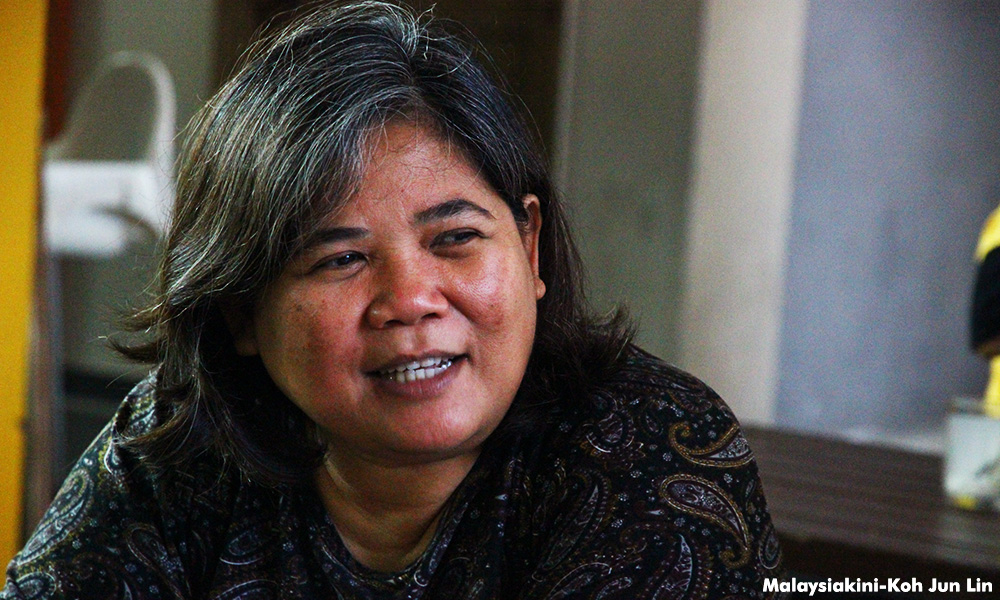

Engineer, activist, kampung rebel - Yati starts her 50th year anew
MALAYSIANS KINI Activist film-maker Norhayati Kaprawi is looking forward to marking her 50th birthday next year with a transition.
"I have been practising every day. Maybe next year I can release something.”
She flips out her phone to show Malaysiakini what she has been trying her hands on. Next stop on the Yati train? Visual animation.
Having shot, directed and produced five documentaries in the last six years, Yati is no stranger to the process of transition where scenes and shots are combined to form a story on the screen.
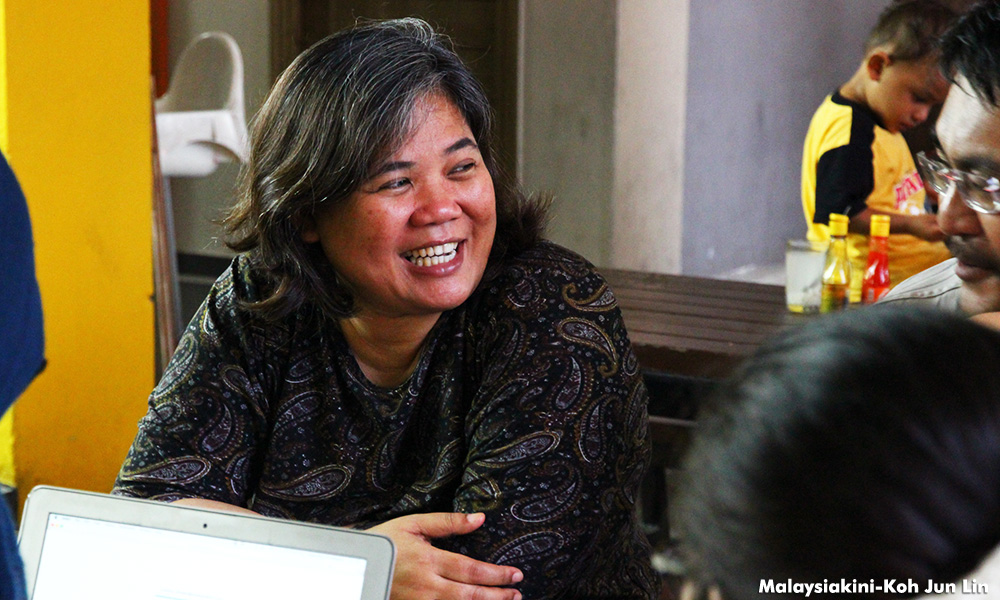
Yati’s own life story unfolds over a steaming bowl of Johor mee rebus at her favourite haunt - Aji Don Alley in Plaza Damas, Kuala Lumpur - as she sits down with us one afternoon during the monsoon.
Engineer to activist
Debuting in the film industry with ‘Mencari Kartika’, Yati’s treatment of the issues surrounding the whipping of the Pahang woman caught drinking beer won her accolades as a hard-hitting documentary-maker.
But not many know that the Batu Pahat native’s first love was engineering.
The only problem was, after 15 years in the industry, the UK-trained civil engineer fell in love with another and there was just too little time in a day to split between two lovers.
“I loved my job as an engineer but activism gives me more soul satisfaction.”
Her transition from the male-dominated field to tackling issues affecting Muslim women started with a message to a friend.
"I told my friend I would like to do volunteer work so she introduced me to (the late) Zaiton Kassim who was at the time, director of Awam (All Women's Action Society).
"Zaiton was also with Sisters in Islam (SIS). I started volunteering for SIS and soon I found myself working for them part-time, and then it became full-time.”
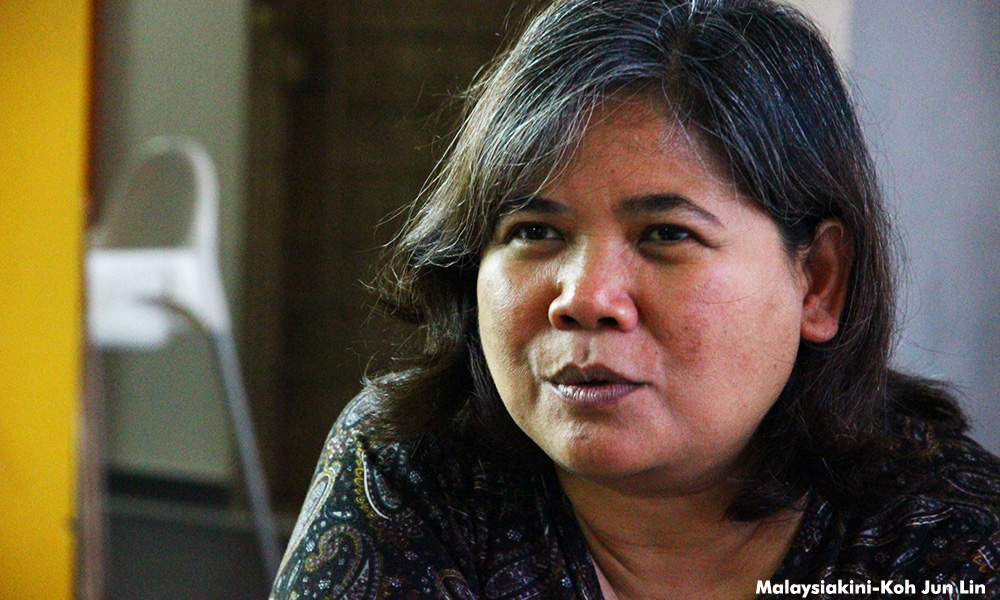
When Yati speaks, she speaks with her whole body. Her eyes widen, her hands gesticulate and she leans forward, fully engaged in the conversation, her curiosity permeable in the air.
It is akin to her approach to life - fully-immersed, always eager to learn and explore, always seeking for something more.
During Yati's time with SIS, a large part of her work involved organising forums and workshops for women and also on issues affecting Muslim women.
And while the workshops were successful, she would still be left with a lingering desire to reach further.
"If a workshop was attended by 30 to 100 people, that’s about it. Of course, we hope they would disseminate the information but I was thinking how we can do advocacy on a broader level.”
These questions were swirling in her head when she had the chance to meet award-winning Indonesian filmmaker Nia Dinata at a workshop in Kuala Lumpur.
NGO organiser to film-maker
Nia's films are known to tackle taboo topics like homosexuality, migrant workers, and polygamy. Nia’s invitation to Yati to join a film-making workshop in Jakarta changed her life.
 "In Jakarta, I met Ucu Agustin and Ismail Basbeth. Both of them kindly offered to teach me about documentary making," she says.
Both film directors ended up staying with Yati in Kuala Lumpur for a month and assisted her in chasing down Kartika – the subject of her first documentary – across three states.
Shooting in Kuala Lumpur, Cherating, and Kota Baru, Yati told the story of Kartika Sari Dewi Shukarno, the part-time model who became the first woman to be sentenced for whipping under the Pahang syariah law after being found guilty of consuming beer in public.
Although Kartika’s case received wide media coverage, Yati’s documentary captured the untold story behind her acceptance of the controversial punishment.
It was thanks to an earlier transition in her own life that Yati managed to venture into film-making.
On a work trip to Kedah at the age of 35, Yati found herself in a batik factory and the swirls of batik-making so fascinated her that she picked it up as a hobby for many years - until one day when a blank canvas was put in her face.
“When I was about 40, I used to hang out at an art gallery in Shah Alam. I have a friend who is an art lecturer at UiTM. One day he gave me a used canvas.”
And just like that, Yati became a painter.
Today, her work - mostly in colours as bold as the person she is - sells in places like the Petronas Gallery in KLCC for no small sum. This, in turn, helped fund her foray into film-making.
'Just do it'
Starting a new career or picking up new skills at a later age in life may be a challenge but Yati believes nothing is impossible if there is passion and interest in the subject matter.
“You don’t need to be an expert in something in order to do it. It is so easy to be overwhelmed by expectations and have that defeatist attitude.
“Don’t keep dreaming to be mega-mega,” she says, breaking into colloquial slang in her affable manner that puts people at ease.
"If you’re interested in something, just do it.”
The 'just-do-it' attitude has led her down an unconventional path in life, but one gets the impression that Yati has never been a big fan of convention anyway.
In most of her works, she tries to push alternative perspectives into mainstream discourse, asking for example, why Muslim women wear the hijab in ‘Aku Siapa’ (‘Who Am I’) and the role of Muslim women leaders in ‘Ulama Perempuan’ (Female Ulama).
Her views on Islam, which sway from the mainstream doctrine espoused by state bodies is both a product of her upbringing and her exploration of the religion while in Indonesia.
“Islam in Malaysia is not pleasant any more,” she says with a tinge of sadness in her voice.
The Malaysian perspective on Islam, Yati said, is unlike in Indonesia where different views are respected and even encouraged through public debates and discourse.
‘Ulama Perempuan’ came after her year as an Asian Public Intellectual fellow when she traversed the Java Island to meet men and women educated in traditional religious schools known as pesantren .
“I loved meeting the kiai-kiai (ustaz) in Indonesia. They are so knowledgeable but yet humble.
“They know the religion inside and out so they have the confidence to be open-minded and accept different views.
“We (Malaysians) become conservative because of our insecurity and lack of knowledge about religion.”
Kampung rebel
Like most Johorean Muslims of her generation, Yati completed six years of sekolah agama , something she credits for giving her a sound foundation in Islam.
 "We were taught all the basics but the emphasis was always more on ibadah (obedience, submission and devotion to Allah) and akhlak (morals).
“ Aurat was not an obsession. The problem now is when people become very harsh and judgemental.
"Just because I don't wear the tudung does not mean I'm ignorant.”
There is little doubt that Yati is a feminist and it was a man who pushed her in that direction.
Her father, she said, treated his 12 sons and daughters equally, inculcating in them belief in gender equality.
She also credits him for her seemingly unbreakable confidence. Indeed entering mid-life, Yati appears supremely comfortable in her own skin.
“He always told all of us we can do anything that we want in life.”
He had big dreams for his children, and all of his income as a rubber tapper went to sending his children to an English-medium school in town, eschewing the Malay school next door to home.
Her older brother is Deputy Transport Minister Abdul Aziz Kaprawi, while others are successful as civil servants, lecturers, teachers, and a graphic designer.
But Yati carries the title of the inimitable rebel of the dozen and her siblings get reminded of this from time to time.
"One time my brother went for Friday prayers and he heard the imam condemning me as a liberal Muslim during the sermon."
Yati said, at the time, she has also left her job at SIS to pursue film-making.
“These people - which planet do they think I came from? I orang kampung, orang Jawa .”
Kampung roots she may have, but there is little dispute that she is the oddball of the kampung.
True to form, Yati is unperturbed.
“It’s just that I have a different opinion.”
MALAYSIANS KINI is a series on Malaysians you should know about.
Previously featured:
Meet the 20-year-old who’s getting an award from Queen E
What if Hang Jebat never stood up to the sultan?
'Am I going to die?' - student journo reports from conflict zone frontlines
Snubbed by Masterchef, M'sian youth wins over refugees in Greece
The radicalisation of Mandeep Singh - from suits to streets
M’sia’s accidental Bob Dylan says he's no guitar warrior
How a bloody nose led youth on the road to Greenpeace
Razlan Rafii - Umno 'thug' or misunderstood modern man?
Saving Pekan Ampang, the small town in a big city
How the Malay indie publishing mafia sparked a reading renaissance
'Subversive' book club thrives in Shah Alam and beyond
Meet Syed Saddiq, your freedom of speech crusader
'It's not just punk rock, it's punk ideology'
Paramedic goes 'white to black' to lead medic team at Bersih 4


Report this comment
Are you sure you want to delete this comment?
This action cannot be undone.