



How did a PAS nominee end up heading a Chinese new village?
For nearly two weeks, Chinese-language media and the Chinese community in Negeri Sembilan have been asking how a PAS member - an Indian Muslim Malaysian - came to be appointed head of a Chinese new village in Jempol.
The controversy began on Oct 8, when Chinese-language newspapers first reported that a PAS nominee would be appointed village chief of Kampung Baru Mahsan.
The appointment quickly...
For nearly two weeks, Chinese-language media and the Chinese community in Negeri Sembilan have been asking how a PAS member - an Indian Muslim Malaysian - came to be appointed head of a Chinese new village in Jempol.
The controversy began on Oct 8, when Chinese-language newspapers first reported that a PAS nominee would be appointed village chief of Kampung Baru Mahsan.
The appointment quickly drew attention because Negeri Sembilan had never before had a PAS nominee heading a Chinese new village.
A few days later, Negeri Sembilan MCA chief Leaw Kok Chan said the problem stemmed from the Jempol district office mixing up Kampung Baru Mahsan with Kampung Seri Mahsan when processing the appointments.
According to Leaw, MCA's Chinese nominee was originally meant to head Kampung Baru Mahsan, while the nominee put forward by Serting assemblyperson Fairuz Isa was supposed to take charge of Kampung Seri Mahsan.
After discussions, the two nominees were switched back.
That should have settled the matter - except it soon emerged that the "Kampung Seri Mahsan" referred to in the MCA statement was not a Malay kampung. It, too, is a Chinese new village, with almost all its households being Chinese.
More precisely, Kampung Seri Mahsan falls under the category of a "Kampung Baru Rangkaian", or a Chinese new village brought into the wider new village administrative system. The Chinese community has long referred to it simply as "Seri Mahsan New Village".
A Housing and Local Government Ministry official also confirmed to Malaysiakini that Kampung Seri Mahsan is among Negeri Sembilan's 59 recognised Chinese new villages.
So while the PAS nominee was moved from Kampung Baru Mahsan to Kampung Seri Mahsan, the outcome remained the same: a PAS nominee would still be heading a Chinese new village.
What made the story more intriguing was what the incoming Kampung Seri Mahsan village chief, Rafi Manimaran Abdullah, told reporters on Oct 15.
His account of how the appointments were originally allocated did not entirely match MCA's public explanation.
"Initially, I was indeed assigned to Kampung Baru Mahsan, while they had Kampung Seri Mahsan.
"But when the controversy arose, we agreed to swap. I would take Kampung Seri Mahsan, and they would take Kampung Baru Mahsan," he said.
Malaysiakini visited Mahsan and spoke to former village chiefs, a local Gerakan leader, Rafi and Serting assemblyperson Fairuz.
What emerged was a story that involved more than two villages with confusingly similar names. It also revealed a more complicated process of grassroots political bargaining.
Separated by one road
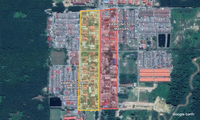
Kampung Baru Mahsan and Kampung Seri Mahsan sit on opposite sides of Jalan Bahau-Kemayan, a main road running through the area.
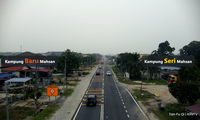
The two are similar in size, with roughly 50 to 60 households each. The traditional new village areas largely consist of two rows of houses, some of which have since been converted into shops and eateries.
Each village also has its own community hall. Kampung Seri Mahsan's is larger, with a covered basketball and badminton court beside it.
Administratively, they are two separate villages. On the ground, however, it is easy to see why outsiders might confuse them.
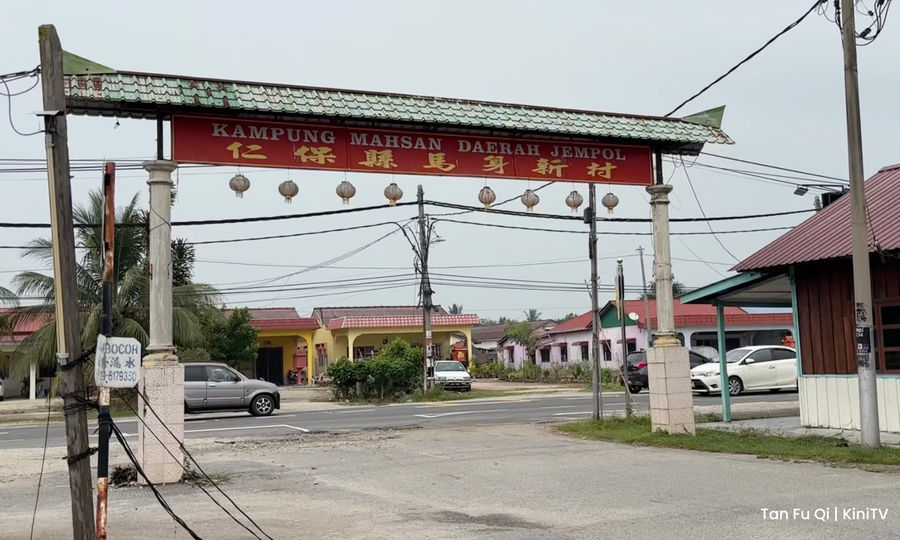
Inside Kampung Seri Mahsan, Malaysiakini found an entrance arch bearing the Chinese words "仁保县马身新村" (Mahsan New Village, Jempol district), while the Malay inscription reads "Kampung Mahsan Daerah Jempol".
Across the road, Kampung Baru Mahsan itself has no comparable entrance arch.
The community hall in Kampung Seri Mahsan presents the same ambiguity. Its Chinese sign still reads "马身民众会堂" (Mahsan Community Hall), while the Malay name identifies it as "Balai Raya Kampung Seri Mahsan".
The seemingly contradictory signage is tied to the villages' history.
Former Kampung Seri Mahsan village chief Poon Hoon Kong (below) told Malaysiakini there was originally only one Mahsan New Village, administered by a single village committee.
Around the late 1990s to 2000, he said, factional disputes within the local MCA led to the village being split in two to accommodate the rival groups.
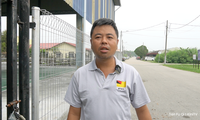
Kampung Seri Mahsan was subsequently created as a separate village, giving the area two MCA branches, two village committees and two village chiefs.
More than two decades later, the entrance arch at Kampung Seri Mahsan still bears the name "Mahsan New Village" - a visible remnant of that history.
The similar names may explain how an administrative mix-up could occur.
They do not, however, explain why a PAS nominee was on the list to head one of the two Chinese new villages in the first place.
How was the village chief list drawn up?
Jempol Gerakan division chief Phuan Er Cheng believes the problem began earlier, during negotiations over the appointments.
When Malaysiakini asked why MCA had later pushed for the two nominees to be switched if it was concerned about the controversy being prolonged, Phuan replied: "Because there was no consultation at the beginning."
"By the time the names had already been submitted, only then they tried to deal with it, the first step was already wrong," he said.
That account is closer, at least in terms of sequence, to Rafi's statement that he had initially been assigned Kampung Baru Mahsan.
But it still differs from MCA's explanation that the district office had merely mixed up an agreed arrangement.
Fairuz (below), who is also the state PAS commissioner, offered further insight into why the party had sought one of the village chief posts.
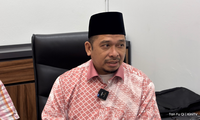
He said that even during the state election campaign, some Malay residents in the area had asked why, since Mahsan had two village committees, one could not be headed by a Chinese representative and the other by a Malay representative.
"There are now many residential areas there, and many Malays live in those residential areas.
"During the election campaign, they told me there are two village committees here. So if I became the assemblyperson, what would be wrong with having one Malay village chief?" he recalled.
Fairuz said he did not commit to the idea at the time, telling them they would revisit it after the election.
Rafi a suitable nominee
After PAS won the seat and became part of the state government, Fairuz said the village chief appointments were later discussed with BN.
He argued that Rafi was a suitable nominee because he could engage with Malay residents, represent the Indian community and was also willing to serve Chinese residents.
Taken together, these accounts suggest that PAS' entry into the Mahsan village chief list was not something that only happened after the district office allegedly made a mistake.
At the very least, the idea of having the two village committees headed by representatives of different communities had already surfaced during the election campaign.
What remains unclear is whether Rafi was originally allocated Kampung Baru Mahsan or Kampung Seri Mahsan. The accounts given by the different parties do not fully match.
Local concerns
A village chief receives a state government allowance of just RM900 a month, but the role in a new village is far from ceremonial.
Poon said residents often turn to the village chief over infrastructure issues, day-to-day community problems and even disputes between neighbours.
When community events require dealings with government agencies, the village chief is also often the first person called upon to coordinate matters, he added.

Former Kampung Baru Mahsan chief Wong Kong Fowi (above), 69, gave the example of the annual Yu Lan, or Hungry Ghost Festival.
When residents organised the event in the past, he said he would help with applications to the municipal council and liaise with the relevant authorities.
For many new village residents, therefore, the identity of the village chief is not some distant political party matter. It has a direct bearing on everyday life.
Yap Yong Fatt, 78, one of the villagers Malaysiakini spoke to, initially appeared unconcerned when asked whether having a PAS nominee as village chief would make a difference.
"I don’t think it will have much impact. Whoever becomes village chief, it will be the same," he said.
But when the conversation turned to the Hungry Ghost Festival, he admitted having reservations.
"I'm worried that when we hold our Hungry Ghost Festival prayers, there may be interference," the MCA member said.
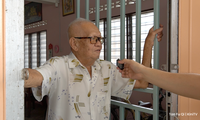
Yap (above) also said his command of Malay was limited, leaving him concerned about possible communication problems if he needed the new chief's help.
Another resident in his 60s, who declined to be named, raised the same concern.
He said both Mahsan villages had traditionally been headed by Chinese chiefs, which at least meant residents could communicate easily when they needed assistance.
"If something happens, I'm worried it will be troublesome to approach him because of the language barrier," he said.
Then there's the matter of the community hall.
Weddings, religious events and community functions may involve pork and alcohol, he said, and any future restrictions would affect long-standing local customs.
"If those are not allowed, it will be very troublesome. At weddings or deity celebrations, if pork suddenly cannot be served, that will be a problem," he said.
Can Rafi communicate with local Chinese?
Early Chinese-language reports described Rafi as being able to communicate in Malay, English, Tamil, Mandarin and Hakka.
But when Malaysiakini and Chinese-language reporters asked him directly, Rafi said he could not speak Mandarin.
However, he could speak Hakka, which he used to introduce himself and to tell the Chinese residents that they could approach him if they had any problems.

Rafi (above), 53, was born in Port Dickson and moved to Kampung Baru Ladang Jelebu when he was six.
He said he grew up with Chinese neighbours and friends, which was how he learnt Hakka. He later converted to Islam and has been a PAS member for close to 30 years.
He has lived in Mahsan for about two decades.
On the religious and cultural concerns raised by residents, Rafi stressed that he would not interfere with Chinese worship or customary practices.
Asked whether he could accept community events or celebrations involving pork and alcohol, he said yes.
"Because I know this is the home of the Chinese community," he said.
'No problem'
When asked by Malaysiakini whether pork and alcohol could still be present at Chinese events held in public spaces, Fairuz said "no problem".
He said he had attended Chinese funerals where pork was placed in front of him and had never regarded that as an issue.
"I’m not the one eating it," he said.

Fairuz said he understood concerns within the Chinese community that a PAS-linked village chief might mean restrictions on worship, dress or other aspects of daily life.
"I know the Chinese community is worried about things like not being allowed to pray, or not being allowed to wear shorts, and so on.
"But who am I to stop that? Who are we to stop that?"
He nevertheless stressed that public activities should still take into account the sensitivities of other communities.
"We have to preserve harmony together and be mindful of each other's sensitivities.
"If you want to hold something openly and it affects Malays or creates sensitivities, then you would have to seek permission first," he said.
For Fairuz, such issues could be resolved through discussion.
"There are two village chiefs, right? The two can sit down and discuss it. If someone says, 'We want to do this and this', then discuss it and settle the matter," he said.
Do surrounding residential areas fall under the village chief?
Both Fairuz and Rafi repeatedly pointed to the growing number of residential areas around Kampung Seri Mahsan, many of which have sizeable Malay populations.
This formed part of Fairuz's argument that the village chief appointment should not be viewed solely through the ethnic composition of the traditional Chinese new village.
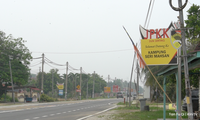
Malaysiakini, however, found that while these residential areas sit immediately next to Kampung Seri Mahsan, administratively they fall under the Jempol Municipal Council.
For local government matters, the formal authority remains the municipal council, while federal allocations specifically meant for Chinese new villages can only be spent on facilities within the new village itself.
The Kampung Seri Mahsan village chief might still provide community assistance to residents in the surrounding residential areas, but being able to serve them does not mean those areas administratively form part of Kampung Seri Mahsan.
The distinction also means that a growing Malay population around the new village does not, by itself, indicate that the official boundaries of the Chinese new village have changed.
PAS' past remarks on Chinese new villages
PAS' Maran MP Ismail Muttalib has, in Parliament, previously linked the history of Chinese new villages to the Malayan Communist Party.
Ismail (below) also asked whether the government should restructure Chinese new villages so that they become more ethnically mixed communities rather than continuing to be seen as associated with communism.

With a PAS nominee now set to lead a Chinese new village, those remarks have inevitably resurfaced.
When asked about this, Fairuz said the issue belonged in the past.
"That was the story from long ago. If you yourself come from a new village today, surely I'm not going to be angry with you.
"We should all be mindful of each other's sensitivities now," he added.
He noted that Chinese new villages today also received allocations from the federal government, and argued there was little point in repeatedly amplifying old and sensitive controversies.
"If we keep taking small issues and making them bigger, these sensitivities will continue forever. How long do we want that to go on?"
Instead, he said, communities should look for points on which they could talk, build relationships and live together.
From one to two
The two kampungs were once a single Chinese new village before local political disputes split them into two village committees more than two decades ago.
Today, the two village chief posts have again become part of political negotiations.

A grassroots position long dominated by Chinese parties and Chinese community leaders in Negeri Sembilan will now, for the first time, include a PAS nominee.
According to Chinese-language media reports, four other new village chief appointments in the state - Rasah, Rahang, Gemas and Ayer Kuning - had yet to be finalised at the time of reporting.
How those appointments are eventually settled may determine whether Kampung Seri Mahsan proves to be an isolated arrangement, or the first sign of a broader shift in the politics of Chinese new villages in Negeri Sembilan and possibly elsewhere.
Reported by Lee Way Loon, Khoo Shi Yuan and Tan Fu Qi


Political bargaining at the expense and not the benefit of the Rakyat. Why we need to vote carefully and only give our mandate parties which have integrity. Rakyat is not a bargaining chip for PAS or BN
Speaks volume of the competency of local council Their own villages they dont know
All verbal promises are thrown out as we so often see.
Report this comment
Are you sure you want to delete this comment?
This action cannot be undone.