



Penang Forum's alternative transport plan will increase congestion, says state
The Penang government has poured cold water on the alternative transport master plan proposed by NGOs, saying it is impractical and will increase road congestion.
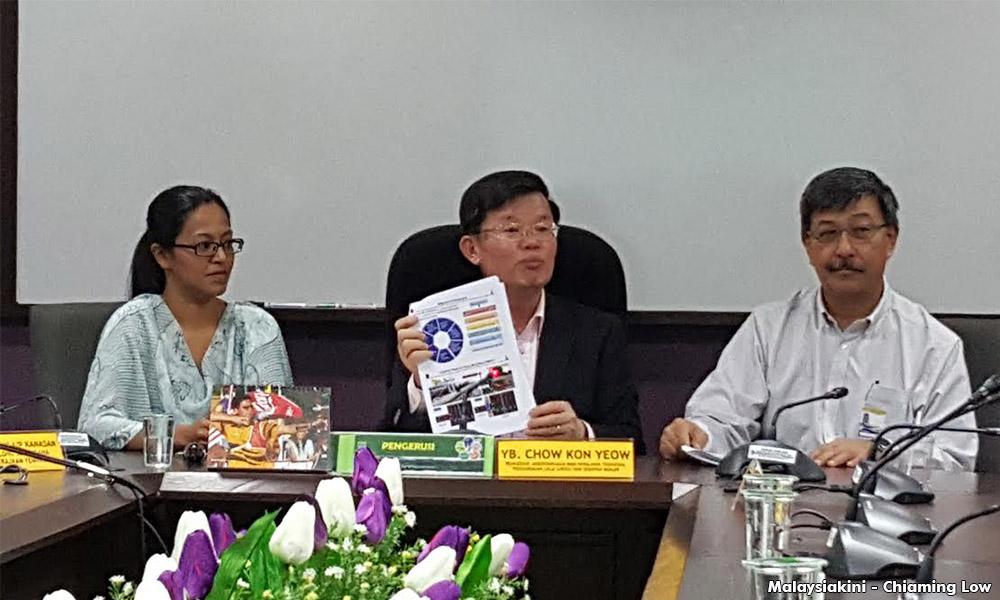
Penang executive councillor Chow Kon Yeow said the at-grade tram system that Penang Forum mooted in its “better, cheaper, faster” master plan may only solve "a little bit of transport issues".
"But even then it would only probably cater to 40 percent public transport mode share, the 60 percent of private cars will still be stuck on Penang island, and everywhere you go,” Chow said at a press conference today.
The Penang government has poured cold water on the alternative transport master plan proposed by NGOs, saying it is impractical and will increase road congestion.
Penang executive councillor Chow Kon Yeow said the at-grade tram system that Penang Forum mooted in its “better, cheaper, faster” master plan may only solve "a little bit of transport issues".
"But even then it would only probably cater to 40 percent public transport mode share, the 60 percent of private cars will still be stuck on Penang island, and everywhere you go,” Chow said at a press conference today.
He said the trams proposed would contribute to traffic congestion because they would not have a "dedicated corridor".
"If you get stuck in a tram, will you still travel on it? We would understand if it is on a tourist belt, but as a transit, is it feasible as a transport solution?” he said.
Chow, who is Penang DAP chief, added that Penang Forum had not suggested a sustainable funding model for its alternative transport master plan, and had instead left the matter to the state.
“But we (as the state government) have to cater to a funding model that looks into the sustainability of the system,” said Chow.
Penang Forum had mooted its alternative plan because it believed the state's plan is expensive and lacks integration and sustainability.
Its alternative plan comprises trams and Bus Rapid Transit (BRT) instead of Light Transit Vehicles, saying it preferred to “move people instead of cars”.
Meanwhile, Penang Transport Master Plan (PTMP) project delivery partner SRS Consortium project director, Szeto Wai Loong, said the cost of the first phase of the PTMPT is still unknown.
He was responding to Penang Forum’s claim that the PTMP’s cost has escalated from the initial RM27 billion to RM46 billion.
“PTMP as it stands today is different from that in the request for proposal submission; it is an apple versus orange comparison,” Szeto told the press conference.
“Additional TMP components were added subsequently, after discussions and workshops with the state agencies and stakeholders, prior to the state executive council’s endorsement.
“The actual cost of the TMP phase one will only be known after completion of tender award."


Are you sure you want to delete this comment?
This action cannot be undone.