


Your KiniGuide to 1MDB class action suit
KINIGUIDE Salor assemblyperson Husam Musa and lawyer Matthias Chang have filed a class action suit against some of those implicated in the US Department of Justice’s court filing on 1MDB.
In the lawsuit, they claim to be Malaysian citizens acting on behalf of all Malaysians. All of them, except for a select few.
How can two people sue on behalf of almost an entire country, and what is the lawsuit all about?
In this edition of KiniGuide, we take a look at class action suits and how Husam and Chang’s suit fits into the picture.
What is a class action suit?
Class action suits are simply civil lawsuits with one key difference - the plaintiffs.
In the complaint of a class action suit, the plaintiffs would claim to represent a class of people who had been supposedly aggrieved by the defendants, thus seeking the court’s intervention to provide a suitable remedy.
Should the court decide in the plaintiff’s favour, then everyone in a similar predicament (that is, the same ‘class’) is entitled to a claim on the award.
However, if the plaintiffs lose the case, they alone would have to bear the costs awarded by the court.
Under Malaysian law, class action suits are known as ‘representative action’ suits, and are provided for under Order 15, Rule 12 of the Rules of Court 2012.
What constitutes a ‘class’ in a class action suit?
This varies greatly, depending on the case. It may be shareholders against their company’s directors, or prisoners against the conditions of their incarceration.
More commonly, class action suits are also invoked by consumers who are unhappy with their purchases, such as accusing a company of false advertising, or failing to meet safety standards and putting them in danger.
In Malaysia, representative action suits have been used by the indigenous peoples to protect their native customary land, but with limited success.
Residents of Kampung Broga had also used a representative suit to challenge a bid to build an incinerator in Semenyih, Selangor, before the government cancelled the project.
More recently, former minister Zaid Ibrahim, who was in charge of law, filed a representative suit against Prime Minister Najib Abdul Razak, claiming to be acting on behalf of all Malaysians and taxpayers.
Who exactly are involved in Husam and Chang’s suit?
Husam and Chang (photo) are the only two plaintiffs in the suit. And as stated earlier, they are claiming to act for a class of people.
 According to their court filing, the duo says they represent the intended beneficiaries of the state investment fund 1MDB, namely the citizenry of Malaysia.
“Plaintiffs’ claims are typical of class members’ claims, as all members of the class were similarly affected by defendants’ wrongful conduct in violation of law that is complained of herein,” the document reads.
Excluded from the class are the officers and directors of 1MDB and their associates, including family members, representatives, agents, and so on...
KINIGUIDE Salor assemblyperson Husam Musa and lawyer Matthias Chang have filed a class action suit against some of those implicated in the US Department of Justice’s court filing on 1MDB.
In the lawsuit, they claim to be Malaysian citizens acting on behalf of all Malaysians. All of them, except for a select few.
How can two people sue on behalf of almost an entire country, and what is the lawsuit all about?
In this edition of KiniGuide, we take a look at class action suits and how Husam and Chang’s suit fits into the picture.
What is a class action suit?
Class action suits are simply civil lawsuits with one key difference - the plaintiffs.
In the complaint of a class action suit, the plaintiffs would claim to represent a class of people who had been supposedly aggrieved by the defendants, thus seeking the court’s intervention to provide a suitable remedy.
Should the court decide in the plaintiff’s favour, then everyone in a similar predicament (that is, the same ‘class’) is entitled to a claim on the award.
However, if the plaintiffs lose the case, they alone would bear the costs awarded by the court.
Under Malaysian law, class action suits are known as ‘representative action’ suits, and are provided under Order 15, Rule 12 of the Rules of Court 2012.
What constitutes a ‘class’ in a class action suit?
This has varied greatly, depending on the case. It may be shareholders against their company’s directors, or prisoners against the conditions of their incarceration.
More commonly, class action suits have also been invoked by consumers who are unhappy with their purchases, such as accusing a company of false advertising, or failing to meet safety standards and putting them in danger.
In Malaysia, representative action suits have been used by the indigenous peoples to protect their native customary land, but with limited success.
Residents of Kampung Broga had also used a representative suit to challenge a bid to build an incinerator in Semenyih, Selangor, before the government cancelled the project.
More recently, former de facto law minister Zaid Ibrahim filed a representative suit against Prime Minister Najib Abdul Razak, claiming to be acting on behalf of all Malaysians and taxpayers.
Who exactly are involved in Husam and Chang’s suit?
Husam and Chang (photo) are the only two plaintiffs in the suit, but as stated earlier, they are claiming to act for a class of people.
 According to their court filing, the duo says they represent the intended beneficiaries of the state investment fund 1MDB, namely the citizenry of Malaysia.
“Plaintiffs’ claims are typical of class members’ claims, as all members of the class were similarly affected by defendants’ wrongful conduct in violation of law that is complained of herein,” the document reads.
Excluded from the class are the officers and directors of 1MDB and their associates, including family members, representatives, agents, and so on.
What about the defendants?
There are eight of them in total, centred around the film production and distribution company Red Granite Pictures Inc.
These include Red Granite itself, its chairperson Riza Aziz and vice-chairperson Christopher Joey McFarland, and Riza’s asset management agent Metropolis IX Capital Advisors LLC, in which defendant Debra Whelan Johnson is alleged to be its sole member.
Riza’s associate, tycoon Low Taek Jho (Jho Low), is also named as a defendant.
The other two defendants are investment bank Goldman Sachs and its former banker, Timothy Leissner.
What are the allegations?
The allegations made in the 32-page complaint are based heavily on the money trail, as alleged by the US Department of Justice in its court filing on 1MDB last month, as well as news reports.
In the document, Husam and Chang accused Riza, Low, McFarland, and Johnson of violating the US Racketeer Influenced and Corrupt Organisations Act 1961-1968 (Rico), by allegedly knowingly using the proceeds of illegal activity.
The four defendants are also accused of misrepresenting funds supposedly stolen from 1MDB as their own despite knowing that the plaintiffs and class members have a stake in it, while Leissner is accused of accepting the fund in the form of kickbacks disguised as commissions.
All eight defendants are also accused of using the misappropriated funds in a way that denied them to the plaintiffs, without any benefit to the plaintiffs and without returning the funds.
The eight are also accused of negligently receiving property stolen from the plaintiffs.
In addition, the plaintiffs accuse them of violating a Californian law against receiving or concealing stolen property, which thereby entitles the plaintiffs to triple the amount of the damages caused.
What do the defendants have to say?
According to a report by The Hollywood Reporter, Red Granite declined to comment.
Goldman Sachs was quoted saying it “received no proceeds of the offerings. We intend to vigorously contest plaintiffs' misguided decision to include the firm as a defendant”.
What do Husam and Chang want from the suit?
In one word - damages. They demand to be paid actual and punitive damages for the alleged wrongdoing, as well as legal costs. The plaintiffs also demand any wrongfully gained profits to be returned.
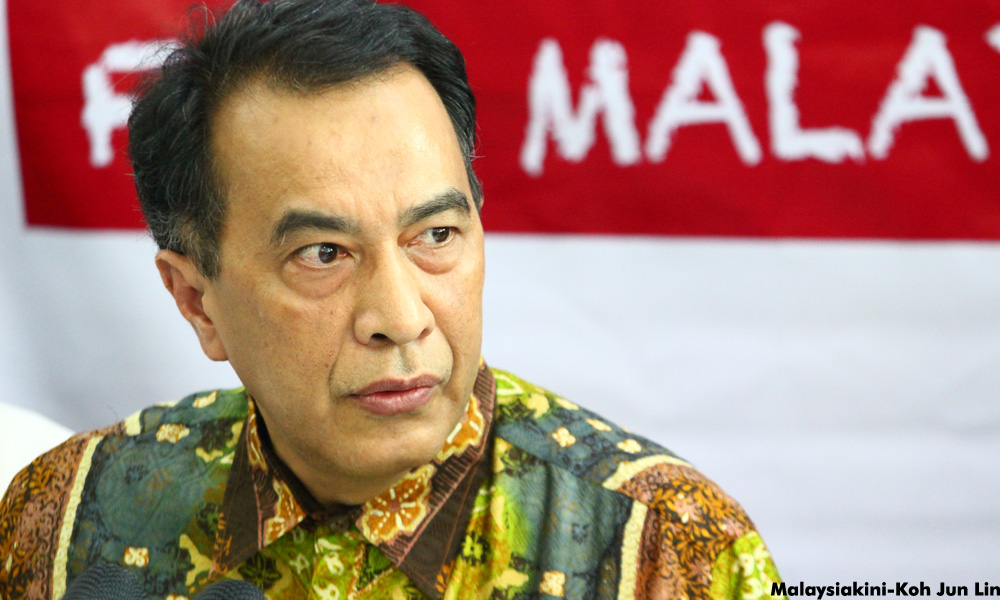 According to Husam (photo) at a press conference on Tuesday, the damages awarded by court would be held in a trust, and he is open to suggestions on what to do with it.
Is that it? Money?
According to lawyer and former Balik Pulau MP Yusmadi Yusoff, who has studied the document but is not involved in the suit, the most valuable aspect of the suit would be the replies the defendants would file in court.
This is because the defendants are required to respond to the suit, and once they do, these filings would become a part of the court’s records and are available to the public.
These court documents would be seen as being more authoritative than media reports and denials that had been issued in the past.
“Apart from the civil application (by the US Department of Justice), we only have media statements denying here and there,” said Yusmadi.
“We don’t have answers and details from the Attorney-General’s Chambers besides (the fact) that the case is closed. We don’t have a detailed answer from Bank Negara; what more, the new Bank Negara governor also said they have closed all the actions; they said all the necessary actions have been taken and yet it was not explained what actions had been taken.
“We have also seen the reshuffling of the Malaysian Anti-Corruption Commission leadership, which to this day has not given any positive answer regarding the 1MDB case.
“So, I think through this class action, I hope Malaysians would be given an opportunity to get to know… what actually happened. What is more important to me is what is the evidence. So I hope all these things will be brought to court,” Yusmadi told Malaysiakini.
Would Husam and Chang win? What are the obstacles?
According to Yusmadi, it is too early to tell. Some of the obstacles include finding and serving a notice to the defendants.
Another, is that the defendants may question whether Husam and Chang have locus standi to act as plaintiffs in the case.
What about legal fees?
According to Chang, the lawyers involved had volunteered their services.
However, in a typical class action suit in the US where the plaintiff has won, the plaintiff’s legal fees are usually assessed by the court and deducted as a percentage from the damages awarded.
According to a study of class action suits that were settled in US federal courts between 2006 and 2007, the average fee is 25 percent of the sum awarded, with larger settlements associated with lower percentages for legal fees.
This instalment of KiniGuide is prepared by Koh Jun Lin.


Report this comment
Are you sure you want to delete this comment?
This action cannot be undone.