




Kg Medan clashes were organised attacks, claims researcher
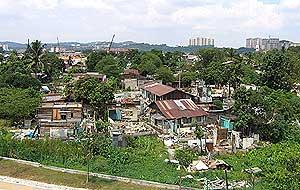
The squatter settlement of Kampung Medan in Petaling Jaya Selatan (PJS) was unknown to many until March 8, 2001, when some of its residents were caught up in the worst violence since the racial riots of May 1969.
The squatter settlement of Kampung Medan in Petaling Jaya Selatan (PJS) was unknown to many until March 8, 2001, when some of its residents were caught up in the worst violence since the racial riots of May 1969.
While the memory of those turbulent times may have diminished, a researcher has been looking into the 'real' reasons for the clashes that left six dead and scores injured over the space of two weeks in and around Kampung Medan.
 S Nagarajan said in his doctoral thesis that the bloody episode involved "organised attacks on Tamils...and (were not the result of) spontaneous group or gang fights, as projected by the media and the authorities".
"The causes of the violence are more complex than the simple explanation that poor people are prone to fight among themselves over limited resources," he said.
"Based on the findings of this study, two points need to be emphasised - there were no gang or group clashes, and ethnic violence did not occur within these squatter settlements."
He said eyewitness accounts point instead to organised attacks by "armed groups" of men who were not from the area, but whose origin and motives have yet to be established.
(Two ministers - and later the police - had hinted at the involvement of external groups at the time of the attacks.)
Nagarajan, who received his doctorate from Universiti Malaya last month, said the initial focus of his research was to explore the situation of displaced plantation workers who had became urban squatters in PJS.
However, in the midst of his research, violence broke out in the area which has one of the country's biggest concentrations of squatter settlements including Kampung Medan, he said in thesis entitled 'A community in transition: Tamil displacement in Malaysia'.
Circumstances unclear
 Nagarajan said his main conclusions were borne out in part by police statistics released on March 10, 2001.
"This is further confirmed by noting the number of seriously injured victims warded in the Universiti Malaya Medical Centre as at March 13. Of the 29 victims, 22 were Tamils and three were Malay.
"The other four were a Bangladeshi, a Chinese, an Indonesian and a Pakistani...Of the six killed, five were Tamils and one an Indonesian. The circumstances and place where the Indonesian was attacked are not clear."
He said that, if indeed "group or gang clashes" had taken place, "such a disproportionate casualty figure is illogical, more so when the Tamils in the vicinity had been stereotyped as violent ruthless gangsters".
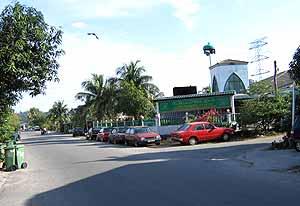
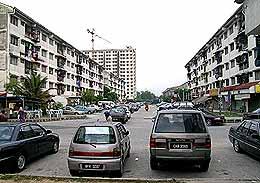
Nagarajan said most of the victims had been attacked while travelling alone or in two's, mainly along the main access roads of the adjacent housing estates. Those moving in groups of more than five were left alone.
"In all these circumstances, the unsuspecting victims were attacked when they were on their way to their places of employment, returning home after work, on casual outings or were going to buy food in nearby restaurants and hawker stalls," he noted.
"The other victims were outsiders who were not aware of the attacks and were visiting relatives in the squatter settlements or using routes in the taman (housing estates) as short-cuts to return home after work."
Reconstructing the events based on victims' testimony, he said the attacks eventually involved a certain degree of planning.
 "While the first incident on March 8 appeared to be unplanned and fuelled by rumours, as explained by government leaders, subsequent acts of violence, especially on March 10, were evidently not spontaneous," he said.
"The victims' testimonies indicates groups of armed (men) were travelling on motorcycles and in cars in the taman and attacking Tamils at random throughout the day.
"There was little doubt among residents and victims that an outside group was involved in perpetrating the violence. Its motive, political links and the extent of its involvement are not clear."
Harmony among squatters
Nagarajan refuted the general perception that the attacks had taken place within Kampung Medan, which is only one of some 16 squatter settlements in PJS.
"Eight of the very seriously injured victims lived in the squatter settlements, but had been attacked elsewhere," he said.
Contrary to the image of the squatter settlements being places of violence, they had a history of harmony even in the mixed-race settlements, he said.
During the crisis, Malay residents in Kampung Dato' Harun and Kampung Ketapang, had also helped their Tamil neighbours by doing their grocery shopping for them.
 'In Kampung Penaga, Malay residents escorted their Tamil neighbours to the shop whenever they wanted to buy provisions during the week of violence," he revealed.
He said the harmony in the squatter areas had been built over the many years that Malays and Indian Malaysians - the main groups - had been living there.
Nagarajan argued that the situation was unlike that of May 13, 1969, when the Chinese Malaysian community had been blamed for the socio-economic predicament of Malays.
The differences in Kampung Medan, he said, were that Malays owned shops and stalls in the area.
"In the squatter settlements, Malay and Tamil residents are of similar economic status and face poor living conditions. There is little basis for them to be envious of the other," he added.


Are you sure you want to delete this comment?
This action cannot be undone.