




Penang groups: It's not stupid to protest
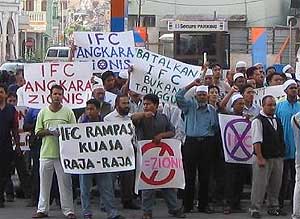
Leaders of several protest groups who reportedly attempted to storm Cititel Penang, the venue of a public forum on constitutional supremacy on Sunday, have denied being aggressive and threatening.
Leaders of several protest groups who reportedly attempted to storm Cititel Penang, the venue of a public forum on constitutional supremacy on Sunday, have denied being aggressive and threatening.
 Mohd Azmi Abdul Hamid (right), president of Teras, a Malay empowerment movement, said he was unaware of an organised protest.
"I heard talks about a protest but didn't know that it was going to be an organised demonstration.
"The point is, people protested because the petition (by Article 11) is being done under the guise of constitutional rights when it is basically about apostasy and conversion, the two most important and sensitive issues for us Muslims.
"This, I think, is being dishonest," he said when contacted today.
Article 11 is a coalition of civil society organisations currently on a roadshow asking Malaysians to reclaim their constitutional rights. Penang was the third stop before heading to Kuching and Perak.
Made up of women's groups, faith-based bodies, the Bar Council and human rights organisations, the coalition has reportedly collected over 18,000 signatures with plans to meet Prime Minister Abdullah Ahmad Badawi soon.
In defending the protest against the public forum on the conflict between syariah and civil jurisdiction, Mohd Azmi said it was a "natural reaction to attempts to discuss Islam by conducting roadshows all over the country".
"It's not stupid to protest but it's stupid to comment without listening to what people have to say," he said, taking a jibe at Minister in the Prime Minister's Department Mohd Nazri Abdul Aziz who was quoted by Bernama describing the protest as wrong and stupid.
"He's not fit to be a minister if he doesn't understand what the people want."
Muslim dissatisfaction
He said he had gone to the forum to express the dissatisfaction of serious Muslims and end the discussion which he feels is a threat to the Islamic way of life.
"The police asked me to help disperse the crowd, so I informed them that the forum has been halted and they should leave. I believe the protesters have legitimate reasons to be heard," he said, adding there were about 200 people including bystanders.
 "This is a very highly sensitive issue for both sides who strongly believe in it but this (roadshow) is not the way to handle the matter," he said, referring to Article 11's narration of human tragedies arising from the exercise of the freedom of religion as seen in the cases of S Shamala, M Moorthy, Kamariah Ali, Nyonya Tahir and Lina Joy.
"Religious issues should be handled with care especially in Malaysia. Islam is being kicked like a ball everywhere and everyone wants to have a say on it.
"Of course people will get a bit upset when Islam is treated this way. Please remember, the patience of Muslims within this context is wearing very thin."
He accused Article 11 of "just playing around" with issues of apostasy and conversion by using constitutional arguments.
"If you have your point of view, then channel it properly to the highest level. If it's about non-Muslims rights, they are represented by political parties in the Cabinet.
"This is where their rights should be discussed, not by holding roadshows because there is already a platform for them to resolve these issues themselves."
Mohd Azmi also noted that non-Muslims' rights were already widely recognised compared to other countries especially in the West.
"In general, the space for religious practice and rituals provided here is greater than other countries such as in Europe which prohibits any celebration other than Christian festivals."
Contentious points
In reiterating support for constitutional supremacy, he said that the point of contention was entrenched in Article 11(4) relating to apostasy and conversion to Islam.
"In Islam, we don't force people to convert but upon conversion Islamic principles do not allow them to leave. We are firm on that otherwise the act of conversion will become a mockery. The requirement imposed on Muslims must be respected."
Noting the western-bias of human rights arguments, he said it is impossible to accept them wholesale.
"Similarly, the syariah system cannot be undermined by civil court but we need to find a way out of this, perhaps through a constitutional court involving experts on Islam.
"Why do we only want the British legal system and not allow Muslims to have the syariah system because we have our own tradition and needs."
 He suggested that Mohd Nazri should offer himself as a mediator instead of making remarks unfit of a government minister.
Jamaah Islah Malaysia Penang head Rashid Hasnol who was among the protesters on Sunday said that the crowd refused to disperse until the forum was scrapped, which happened about 10.15am.
"The police cooperated with us and even joined us during the bacaan doa (prayer recital). They then gave us 10 minutes to disperse," he recounted Sunday's event when contacted.
"We were certainly not unruly. All was well under control although the chanting may have been a bit loud but no threatening words were uttered."
Asked why recycled posters were used from last year's protests against the formation of a proposed interfaith commission (IFC), which has since been shelved, he said protesters had been briefed on the link to Article 11(4).
"The Muslims' understanding (of that provision) is not the same as non-Muslims. Whatever it is, I think this should be amicably sorted out.
"We, the Muslim NGOs in Penang, have been working together with (social reform movement) Aliran, the local organisers. I know these people and this relationship should not be jeopardised.
"As a next step, issues related to religion must be tackled in a slightly different manner than common matters."
He also chided Mohd Nazri for his "stupid" remarks about the protest.
Selective action
In a brief statement e-mailed to malaysiakini , former Malaysian Bar president Param Cumaraswamy asked the Inspector-General of Police to explain the Penang police's inaction.
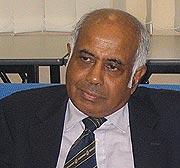 He called for an immediate investigate on why the Penang police had failed to firmly act against the demonstrators "who disrupted a legally constituted assembly held indoors".
"These demonstrators obviously had no police permit to gather hence their action must necessarily be illegal from the beginning to the end.
"Instead, the police gave into the demands of these lawbreakers and ordered the organisers of the lawful assembly to call off their assembly abruptly."
In previous occasions, he said, even peaceful demonstrators without police permit were called upon to disperse, failure upon which they were arrested and detained.
"Why was not similar action taken in this case? Why this selectivism? What was so special about these demonstrators?"
He said that by failing to take firm action, the police had sent wrong signals to support the law of the jungle.


Are you sure you want to delete this comment?
This action cannot be undone.