




Apcet II suit: Chua sticks to his guns
Lawyers for the defendants in the 'Apcet II' civil suit tried to sow doubt on a claim that the police were negligent in their duty when an Umno Youth-led mob stormed the international conference on East Timor 10 years ago.
Lawyers for the defendants in the 'Apcet II' civil suit tried to sow doubt on a claim that the police were negligent in their duty when an Umno Youth-led mob stormed the international conference on East Timor 10 years ago.
The RM83 million suit, filed by 33 human rights activists and journalists against the government and three top police officers then, resumed at the Kuala Lumpur High Court this morning with the cross-examination of Tian Chua, 43, the fourth witness for the plaintiffs.
On Nov 9, 1996, over 100 people - including 10 journalists - were arrested on the opening day of the Second Asia Pacific Conference on East Timor (Apcet II), which was held to discuss human rights abuses in East Timor and its struggle for independence from Indonesia.
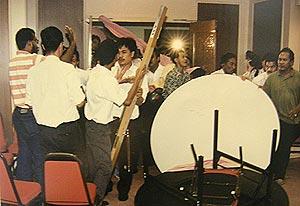
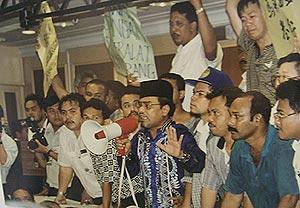 As the conference was about to begin, 400 members from the Umno Youth-led Barisan Bertindak Rakyat Malaysia, or Malaysia's People's Action Front, broke down the doors to he conference halls, threw chairs and verbally and physically abused the participants.
Police then moved in to arrest the participants who were detained between one and six days, while 40 foreign participants were deported. The activists filed their suit to claim damages for wrongful detention and police negligence in discharging statutory duties to disperse the mob.
Cross-examined by federal counsel Morhaji Selamat today, Chua - then a member of the Apcet II organising committee and now Parti Keadilan Rakyat (PKR) information chief - was asked a series of questions as to what the police had done after the mob stormed into the hall.
As Chua agreed that the police had asked members of the mob to disperse, Morhaji asked: "So it's not true that, as you said in your witness statement, the police made no attempts to disperse them?"
 Chua clarified that his statement was in reference to the police making no attempt to disperse about a dozen remaining members of the mob who had refused to comply with the warning to disperse and who were still in the hall.
Upon further questioning over the phrase in Chua's claim that the police "had done nothing", the witness explained that he meant the police "did not take action or disturb anyone".
 At this juncture, Justice Wan Adnan Muhammad sought clarification from Morhaji as to what he was trying to establish after a lengthy cross-examination.
"The witness has said the police did not take sides with any party (the mob or conference participants) and he agreed the police had asked the mob to disperse, so what he meant here perhaps is the police should have taken action against others who had failed to disperse," Wan Adnan told Morhaji.
"There have been agreed facts that the police came ... and only a dozen members of the mob refused to leave the hall. The question here now is why the police did not ask the remaining mob members to leave."
Morhaji said the attempt was to establish that immediate action had been taken by the police - that there wasn't negligence as claimed by the plaintiffs - and that the police had dispersed the participants in accordance with the Police Act.
'No opportunity'
Earlier this morning, Morhaji asked Chua - who was tasked to oversee security at the conference - why he had failed to contact the police as soon as he realised there was a mob on the way.
"I agree that was my task, but I did not have the opportunity to contact the police," Chua replied.
The federal counsel suggested the resultant chaos was due to Chua's failure in contacting the police immediately.
It was however rebutted by Chua who said the staff of the hotel - where Apcet II was being held - had seen the mob and could have called the police.
Morhaji persisted, suggesting again that Chua had failed in his responsibility.
"I concede I failed in protecting the security (of participants) because the mob was too powerful," replied Chua.
However, he disagreed that his inability to stop the angry mob was a reflection of his failure to protect the safety of local and foreign participants.
The hearing continues tomorrow with cross-examination of Chua.
Morhaji appeared with senior federal counsel Iznan Ishak, while the plaintiffs were represented by M Moganambal, Ang Hean Leng and Abdul Rashid Ismail today.
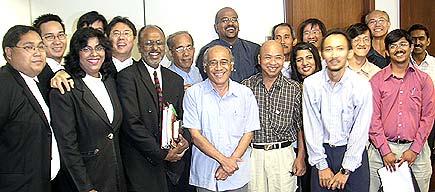
Among the high-profile plaintiffs are Malaysian Trades Union Congress president Syed Shahir Syed Mohammad, PKR deputy president Dr Syed Husin Ali, vice-president R Sivarasa, Parti Sosialis Malaysia pro-tem president Dr Nasir Hashim and New Era College principal Dr Kua Kia Soong.
Online daily malaysiakini chief executive officer Premesh Chandran and editor-in-chief Steven Gan, both then journalists at The Sun , are also among the plaintiffs.
The plaintiffs have named the government, then Inspector General of Police Abdul Rahim Mohd Noor and two senior police officers - then Kuala Lumpur chief police officer Ismail Che Rose and then Dang Wangi OCPD Zainal Abidin Ali - as respondents.


Report this comment
Are you sure you want to delete this comment?
This action cannot be undone.