




Modern-day slavery: Who's to blame?
It has been 50 years since Malaysia gained her independence. In another 13, the government hopes to achieve its target to become a fully developed nation.
It has been 50 years since Malaysia gained her independence. In another 13, the government hopes to achieve its target to become a fully developed nation.
The nation as a whole has largely been economically viable, politically stable and socially mature for it to achieve higher standards of living for its citizens.
As such it has come as a shock to many malaysiakini readers to discover that there are some segments of our society still being shackled and not allowed to be as free as their fellow citizens.
 Malaysiakini
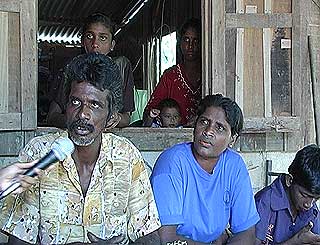
has been carrying a series of special reports about bonded labourers in this country, specifically the
plight
of M Avadiar and his 11-member family who had recently found freedom by escaping from the clutches of their ruthless owner-cum-employer.
Malaysiakini
has been carrying a series of special reports about bonded labourers in this country, specifically the
plight
of M Avadiar and his 11-member family who had recently found freedom by escaping from the clutches of their ruthless owner-cum-employer.
The Avadiar family is just one of many caught in this conundrum. There are others still being held in a tight leash by contractors who force them to work long hours and at cheap pay at plantations throughout the country.
In this final part of the bonded slavery series, malaysiakini speaks to a politician, a political commentator and an academic as to why we still have bonded labourers in our midst.
The most common feedback received after the publication of the Avadiar family story on Wednesday was as to why MIC has not done anything to help these people.
Blaming the labourers
With that in mind, malaysiakini spoke to a local MIC leader from the same areas where the Avadiar family was held as bonded slaves - at Kampung Serampang Indah in Jempol, Negeri Sembilan.
And his response was to immediately shift the blame on the bonded slaves themselves.
"I will surely blame these workers. Most of them have drinking problems and they are happy to be where they are, in the condition they are," said M Palani, a MIC youth leader from Jempol.
He said that the MIC - the sole party to represent the Indian community in the ruling Barisan Nasional coalition - is doing its bit to help these people caught in bonded slavery.
"We have various programmes where we visit these people, talk to them and help them out," he said.
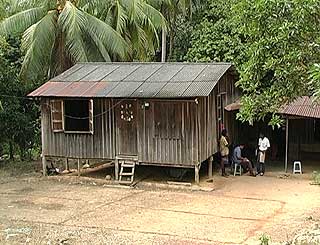 "However our problem is that once we save these people from one contractor, they will end up with another contractor," he said.
"Also, when we approach them after hearing about their plight, they will say everything is fine in front of their employer."
When asked if the party has spoken to these contractors who deal in buying the families and then slog them off at plantations, Palani said that the contractors have responded by saying they were ready to release the workers and their family members if they were paid for them.
"It is very frustrating. I realise that buying people as being done by the contractors is very embarrassing but we can't change a thing unless these affected workers themselves want a change," he said.
Creating awareness
 However S Nagarajan, a research director at the Malaysian Tamil Education, Research and Development Foundation said that the best way to resolve this problem was by creating awareness among the affected people of their rights.
He said these people should be educated so that they would know how to get the relevant government agencies to act on specific cases.
"I doubt the government would do much on its own to resolve the problem... perhaps the MIC and civil society groups can do their part in these areas," he told malaysiakini.
He was surprised that bonded slavery was still continuing in 21st century Malaysia.
"This is reminiscence of the exploitation and brutal treatment of labourers from the 1830's to 1910 under the indentured labour recruitment system used by the European planters in colonial Malaya," he added.
He said that the present bonded labour problem could be traced to the old plantation system, which enslaved the minds of people living with its confines.
"The majority of Indian labourers had led isolated lives in these plantations for generations. They were easily abused and exploited by the plantation owners and labour contractors.
"But with better communication and transport facilities in the post-independence period, plantation communities became more exposed to the outside world," he added.
He felt that the only way for the modern bonded slaves to break free would be by them becoming more aware of their rights, labour laws and employment opportunities in other sectors of the economy.
Fault lies with the authorities
Former academician Prof P Ramasamy said the solution to the bonded slavery problem lied in the lack of legal enforcement by the authorities.
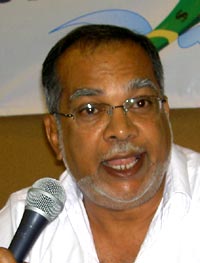 "You can move in the direction of solution by enforcing labour and other laws, the labour department doing its work, officials being not corrupted, the unions looking into the matter, NGOs doing their share, the role of the opposition and others," he told
malaysiakini
.
"You can move in the direction of solution by enforcing labour and other laws, the labour department doing its work, officials being not corrupted, the unions looking into the matter, NGOs doing their share, the role of the opposition and others," he told
malaysiakini
.
However, he said that at present it looks as though the government has little or no political will in addressing the problem.
He added that there was a loophole being abused by the plantation owners in hiring and then abusing these workers.
"Under the contract system, the principal employers use sub-contractors to employ, manage and pay the labour force. By extricating from any kind of labour responsibility, the principal employers do not assume the responsibility for the well-being of labour," he said.
"So the responsibility passes on contractors who might not be legally required to pay proper wages to labour. In this way, the principal employers cut down the costs associated with hiring and firing labour," he added.
In Avadiar's case, although he and his family were working in Felda and NUPW-owned plantations, these two organisations have no responsibility over the plight of the workers as they use contractors to hire workers.
Media uninterested
Ramasamy said that although workers were theoretically employed on the basis of contracts, but in actual practice, workers were bonded to employers, not legally, but by the use of threats, intimidation, bribing labour officials, use of alcohol and the practice of pitting workers against each other.
"Thus, under these conditions of employment, workers are hardly in a position to rebel or resist, but become accustomed to the condition of dependence.
"Wages are hardly paid, but in lieu rations are given, often at extreme prices, and the bonding of labour takes place because workers invariably become indebted to employers.
"So, under these circumstances, with the lack of inspection, workers cannot extricate themselves from employers. These kinds of employment system normally operates in the interior, mainly in plantations, where employers use the most primitive and inhuman methods to keep their labour force," he added.
He said that the only way to solve this problem was by exposing them.
"However, mainstream media do not consider such problems as one of priority. Government agencies should be involved in addressing the problem. Heavy fines and jail sentences could act as deterrent," he said.

Wednesday: Escape from slavery
Thursday: Contractor denies supplying slave labour


Report this comment
Are you sure you want to delete this comment?
This action cannot be undone.