




Rafidah says trade talks with US can continue
Malaysia today said it can continue discussing a free trade agreement with the United States even if, as is likely, both sides miss a crucial deadline to forge the deal.
Malaysia today said it can continue discussing a free trade agreement with the United States even if, as is likely, both sides miss a crucial deadline to forge the deal.
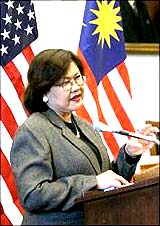 Trade Minister Rafidah Aziz said she spoken to her counterpart, US Trade Representative Susan Schwab, and been told the talks could continue despite the July 1 expiry of President George W Bush's fast-track Trade Promotion Authority (TPA).
"(Schwab) told me, even if they don't get their TPA, it does not matter. The negotiations can still go on," Rafidah told reporters.
However, "when the negotiations are finished, at that time, then they would need a TPA in order to implement it (the FTA)," she added.
The FTA needs to be agreed by the end of March to give Congress the requisite three months to consider the accord before the expiry of the TPA, which allows speedier approval of trade deals.
It is feared that a now Democrat-controlled Congress may not renew TPA.
No formal talks have been scheduled after negotiations bogged down in February over 58 unresolved issues following a fifth round of talks.
Steve Norton, a spokesman for Schwab, Friday said it was "improbable" the deal would be completed under the current TPA.
He said the Malaysian cabinet remained locked in debate about crucial provisions of the deal including government procurement rules, which favour the nation's majority ethnic Malays and indigenous groups, or bumiputra.
No compromises
Rafidah reiterated that the government would not be moved on its bumiputra policies nor on liberalising the country's financial services sector.
"There are things that we cannot compromise on ... like the bumiputra agenda, government sovereign rights and procurement, and things like the financial sector, where we have our own financial market masterplan," she said.
The minister said sticking points in discussions also include agreement on trade and investment facilitation, customs procedures and standards on intellectual property rights.
She insisted a deal could still be worked out excluding these areas.
"Putting aside these areas, where we cannot touch or agree upon, there are many other areas where it makes sense for us to negotiate to come up with a satisfactory result," Rafidah said.


Report this comment
Are you sure you want to delete this comment?
This action cannot be undone.