




Why PAS-Umno talks are good for Pakatan
The recent revelation that PAS leaders have been having talks with Umno, including discussing the possibility of forming the state governments in Selangor and Perak, have disturbed many within PAS, within Pakatan, amongst voters who supported PAS in the recent general election and among the larger public.
But instead of being concerned, we think Pakatan supporters should be rejoicing because there are some very good consequences from these talks.
The recent revelation that PAS leaders have been having talks with Umno, including discussing the possibility of forming the state governments in Selangor and Perak, have disturbed many within PAS, within Pakatan, amongst voters who supported PAS in the recent general election and among the larger public.
But instead of being concerned, we think Pakatan supporters should be rejoicing because there are some very good consequences from these talks.
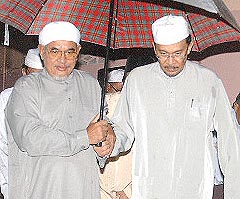 The first positive consequence is that it is a wake-up call for de facto PKR leader Anwar Ibrahim. In some ways, this forces him to do some in-house maintenance instead of focusing relentlessly on trying to topple the BN government.
Granted, Anwar may have other things on his mind at the moment but the highlighting of the fragility of the Pakatan Rakyat coalition will inevitably force him and other Pakatan leaders to ensure that they are all on the same page, in as far as working together to form the next government.
We have argued in the past that PAS feels uneasy playing second or even third fiddle within the Pakatan coalition and it is incumbent upon Anwar to ensure that they are still very much equal partners within the coalition.
The second positive consequence is that it puts PAS leaders who are trying to push for greater cooperation with Umno under the public spotlight and under tremendous pressure, both from the PAS grassroots as well as from other Pakatan leaders and members.
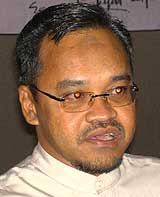 The information revealed by various sources has shown that two PAS leaders in particular, Mustafa Ali and Nasharuddin Mat Isa (
left
), were the most keen in working with and cooperating with Umno.
The information revealed by various sources has shown that two PAS leaders in particular, Mustafa Ali and Nasharuddin Mat Isa (
left
), were the most keen in working with and cooperating with Umno.
As a result, both of them have been the recipients of a PAS grassroots backlash. Some are even saying that Nasharuddin, formerly seen as one of the younger modernist progressives within PAS, is now fighting for his political survival.
 Indeed, Husam Musa (
right
), a rival to Nasharuddin in the sense of projecting himself as a national, progressive leader within PAS and a strong objector to these PAS-Umno talks, is well poised to challenge Nasharuddin.
Indeed, Husam Musa (
right
), a rival to Nasharuddin in the sense of projecting himself as a national, progressive leader within PAS and a strong objector to these PAS-Umno talks, is well poised to challenge Nasharuddin.
The fact that there has been such a backlash among PAS members at the thought of working with Umno is a clear reminder to the PAS leadership that while the offers of government positions and possibly even money are tempting, they will not likely survive the repercussions from within.
Hudud a political bluff
The third positive consequence is that the non-Malay component parties within the BN, already under pressure from within after a dismal electoral performance, find themselves under even greater scrutiny as Umno seemed to have by-passed them altogether in these talks with PAS.
This might be just the sort of move which will give parties such as MCA, MIC and Gerakan the push to be more assertive against Umno.
Perhaps, Anwar and Pakatan might be able to use these talks as ammunition to gain the support of parties in Sabah and Sarawak, which until now, has not been forthcoming with the exception of SAPP.
The though of greater Malay-Muslim cooperation between Umno and PAS certainly does not sit well with the non-Muslim bumiputera parties in Sabah and Sarawak and while an Umno-PAS merger is far from likely, the promise of a more 'balanced' approach towards religious issues might just be another carrot that Anwar can dangle before some of the parties and MPs from East Malaysia.
PAS has come down firmly against any sort of formal cooperation with Umno and reiterated their support for Pakatan. But inevitably, there has been some damage done to PAS, especially in regard to the recent gains it has made among the non-Malay community in the urban, ethnically-mixed areas.
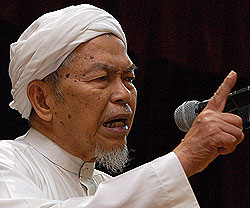 While Nik Aziz's call for the implementation of hudud as a necessary precondition for PAS and Umno to merge was obviously a political bluff that he never expected Umno to fulfill, it nevertheless rattled some Pakatan leaders and members of the non-Malay community.
The political circumstances in the country are still favourable to Pakatan though. The damage done by PAS can easily be rectified. Pakatan leaders can point to the fact that PAS-controlled Kedah has not made any moves to introduce hudud and that PAS leaders in Selangor and Perak have not tried to push for the implementation of policies that are 'Islamic' in nature.
Furthermore, Karpal Singh is the only DAP leader that has come out to publicly criticise PAS over these talks. The other DAP leaders have wisely kept their distance from Karpal, assuming that PAS will ride this tide and remain committed to Pakatan.
On PAS' part, they can show their commitment to Anwar and Pakatan by throwing their full support behind Anwar in the upcoming Permatang Pauh by-election. All this leads us to conclude that the PAS-Umno talks, initially seen as a bad thing for Pakatan, is actually quite a good thing. Umno scores another own goal. Again.
ONG KIAN MING is a PhD candidate in political science at Duke University and OON YEOH is a writer and new media analyst. You can listen to both of them discuss this topic in their Realpolitik podcast .


Report this comment
Are you sure you want to delete this comment?
This action cannot be undone.