




Q&A: 'We were treated like criminals'
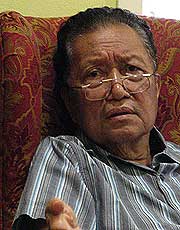
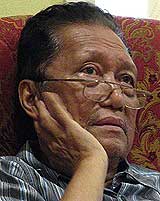
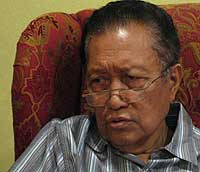
Former Supreme Court judge Azmi Kamaruddin was in a daze when he was suspended and was treated like a criminal during the days that followed.
Former Supreme Court judge Azmi Kamaruddin was in a daze when he was suspended and was treated like a criminal during the days that followed.
According to the 75 year-old retiree, plainclothes policemen were monitoring their actions and their phones were tapped when the judiciary crisis took place in 1988.
In Part I of an exclusive interview with Malaysiakini , the father of four vividly recalls the urgency when convening the hearing on a Saturday that changed his life forever.
Azmi, who spends his time tending his garden in Ampang and orchard in Hulu Langat, recollects the events leading up to his suspension and the treatment he received from Hamid Omar, the new head of the judiciary after Salleh Abas was sacked.
Can you please recollect events that led to the judiciary crisis of 1988?
Azmi: It's quite a long story. It was a Saturday, I remember and in those days, we did not have any sitting unless an emergency case crops up. So that Saturday I went to Bangsar to chair a very important meeting for the Malaysian Association of the Blind (MAB). I was then the president. It is my usual practice, I told my secretary whenever I am in a meeting, I should not be disturbed. She would know where I could be reached.
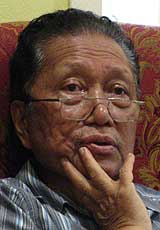 On that fateful day, while I was chairing the meeting, somebody from MAB said somebody wanted to speak to me urgently. I was flabbergasted because I told my secretary that I did not want to be disturbed. So I refused to accept the phone call (laughs). Some members urged me to go and accept the call because at that time Salleh was already suspended so people were expecting something to happen.
I felt ashamed of myself when the members urged me to take the call and I got to the phone and on the other end it was Wan Hamzah (Mohamed Salleh). He told me, "Azmi, you have to come back now because there is a very important case before the Federal Court." So I asked who called for the meeting because acting Chief Justice Hamid (Omar) did not call for the hearing. Under Section 9 of the Judicature Act, only he can convene a meeting of the Federal Court.
Wan Hamzah said we are sitting under one of the exceptions to Section 9 where the Lord President is incapacitated or unable to act. So I asked who is the chairman in the absence of the Lord President and he said, "Tan Sri Wan Suleiman (Pawanteh) the most senior judge would be the chairman of the coram under the law."
So I said ‘alright’ and as I went to take my seat, in my mind I was not happy. So I decided not to go. I was thinking, what the hell is this fellow doing on a Saturday, we never sat on a Saturday and I wanted to finish the meeting which was an important job for the blind. Everybody was looking at me and I was feeling guilty already but we carried on.
Then there was a second call apparently from Wan Hamzah and again the members urged me to go. So I went back and there was Wan Hamzah sounding very urgent and he said, "Azmi you must come back. We want to have five judges sitting, it’s a very important application by Salleh through his counsel Raja Aziz (Addruse) and his colleagues." This time I left because I could not stand the looks of the MAB committee members who looked at me as though I am a criminal (laughs).
I left instantly, went to the courts and they were waiting for me, all four of them in an empty chamber, they were all appropriately robed. So I went back to my chamber and robed myself suitably and then came back. At that time, Wan Suleiman and Eusoffe (Abdoolcader) were more or less chiding the chief registrar who later became Chief Judge of Malaya Haidar Mohd Nor. I did not know what it was about so I asked what happened? They said he refused to unlock the empty chamber (laughs) and hid the seal of the court without which we cannot issue our order.
At that time, you all knew Haidar was hiding the seal?
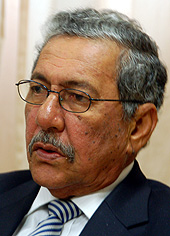 I was informed by either Wan Suleiman or Eusoffe but anyway four of them looked very unhappy. And Haidar (
right
) was standing there like a
tikus
(mouse) more or less speechless. Poor chap. He must have been ordered by Hamid to hide the seal and lock all the courts. So he didn’t know what to do, he left quietly. Anyway, he produced the seal and he didn’t lock us up there (laughs). I presume for his services rendered he became chief judge (laughs). That’s the lighter side of the story.
I was informed by either Wan Suleiman or Eusoffe but anyway four of them looked very unhappy. And Haidar (
right
) was standing there like a
tikus
(mouse) more or less speechless. Poor chap. He must have been ordered by Hamid to hide the seal and lock all the courts. So he didn’t know what to do, he left quietly. Anyway, he produced the seal and he didn’t lock us up there (laughs). I presume for his services rendered he became chief judge (laughs). That’s the lighter side of the story.
So we all troop up. I was then busy looking at Section 9 (of the Judicature Act), before it was amended later on. They amended it to negative our power of sitting. They wanted to show we were sitting illegally but they can amend it a hundred times, the law is the law only when it’s invoked. So they ask me if I was satisfied that Section 9 allows us to convene a meeting, and I said, "Yes I am. We have the power to sit. You are the most senior so under the Act you have all the power of the Lord President."
So we went up. I was number three in seniority. Wan Suleiman sat as chairman, as number three I sat on his left. On his right was George Seah who was second most senior. Fourth judge in seniority was Eusoffe who sat on the right. We are very strict about our seating arrangement you know? (Laughs).
So we sat there and Salleh wasn’t there, only his lawyers were there. Raja Aziz (Addruse) started off as usual, addressing us in the proper manner and said this application is very urgent so they have no time to serve it to the respondents which are the members of the tribunal to hear Salleh’s case.
He explained to us the background of the application and with the affidavit and I was reading it profusely while I was there so I could see the urgency of the matter because they are going to proceed and according to Raja Aziz, if Salleh was to appear for one minute, that is the end of this application to the Federal Court to challenge the constitutionality of the tribunal, because some of them were much junior to him and should not be sitting there in judgment of this case because he is the Lord President.
I remember Raja Aziz saying there are no difficulties in getting judges from the Commonwealth because that is still allowed in the constitution. You can get them from anywhere. The CJs there can be persuaded to come and chair the meeting. The objection against Hamid was because he was an interested party. If Salleh was to be removed, he will enjoy the benefit of it and be appointed to that position. For that reason alone, he should not be a chairman or even a member of the tribunal. It’s against the rule of law. An interested party should not be a judge in this own course. It’s very basic in law. We learn this in first year law (laughs).
I agreed with Raja Aziz. They referred to the Singapore judge who was only a member of the appeal court, not the highest court. He should not be sitting in judgment of the Lord President of Malaysia. Another member who is the Speaker of our Parliament who is also from Kedah (laughs). He is my good friend and that’s the bitter part of it. There they were sitting as if they did not know any law. I couldn’t accept it and he’s the member of the legislature. How can he be sitting in a case where the head of the judiciary is involved, this comes under separation of powers.
The worse is (former judge) Abdul Aziz Mohamed Zain but then he resigned and became a lawyer so at time of being appointed as a panel he is a member of the Bar, no longer a member of the judiciary even if he can be counted as a member of the judiciary, he is much junior than Salleh. I said, "Doesn’t this come under the doctrine of necessity because who else is going to sit (in the tribunal)?"
 According to their (the lawyer's) information, Tun Suffian was willing to sit, he was still alive. At that time Tun Azmi was still living and apparently he intimated to lawyers he was willing to sit. Our CJ of Borneo at that time - so at least three were available to take the place of these people who we thought should be disqualified.
So as a result, all of us were unanimous in granting that ex-parte order which says that until the application of Salleh is properly heard, the tribunal should not proceed with these key members whose qualifications are being challenged. That’s all that we said. We made the necessary order and we adjourned the matter in 20 minutes or at the most, half an hour. It was very straightforward and simple - we’ve been doing it for years, you know. That was the story of that day.
I quickly rejoined the MAB meeting but I was informed by my secretary that they have all dispersed. So that was the end of it. I went home. Then came Sunday, it was splashed in the Sunday paper about what we did. Everybody - I didn’t know if they were happy or not, I don’t know - but I knew (then premier) Dr Mahathir (Mohamad) was flabbergasted (laughs). So he must be ordering around to do something. He must have called Hamid so they must all be shivering in their pants.
I can only assume they must be shivering because by Monday we were suspended. It was a very fast job by Hamid, Abu Talib Othman and the chief secretary to the cabinet Sallehuddin (Mohamed) - the three principle advisors to the government. Whenever there is a law involved, these three positions will be advising the PM or the Agong. They are very important people. Abu Talib has been keeping quiet until today like a mouse despite me urging him to do things. So these people are still alive until today.
That’s why I’m supporting the idea of having a commission of inquiry before they die, all Malaysians are entitled to know from these three gentleman what actually happened in 1988. Should one of them die tomorrow then we are short of one witness, it won’t be complete. Mahathir is still alive and kicking. These four are star witnesses if you want to know the truth in 1988. If we do not want to know the truth, you pray they will die quickly (laughs). But for us majority of Malaysians, we want to know because Malaysians have suffered for the last 20 years through this unprecedented attack on the judiciary in May 1988.
How did you receive notice about your suspension?
Yes, it was a letter. We went to our office and we got the letter and it started with immediate effect.
What were the reasons given?
There were no reasons.
The letter just stated you were suspended?
Yes. We met with each other in the office and we were flabbergasted. We didn’t believe it because we thought, even if we have made a mistake, the normal procedure in court is for the other side to make an application to set the ex-parte order aside. That is the normal procedure instead of sacking or suspending the judges (laughs).
From then on, there was no rule of law, it was the rule of the jungle being applied. No matter how much you are against a particular judge, you should exhaust all your legal remedies before you decide to shoot us or court martial us (laughs). We should have an opportunity to be heard.
What was your reaction when Salleh was suspended?
My own reaction was that, I didn’t know whether the allegations against him were true or not so I am one of those who said even the judge must be under the law. I never believed that judges were above the law. Nobody should be above the law, that’s my stand since I joined the judiciary because I believe in it. Even if I do something criminal, I should be charged and answer for my actions.
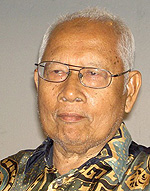 So the fact Salleh (
right
) was taken, I took a literal stand. So when I sat that Saturday, it was not because I believed he was innocent. Whether he was innocent or guilty, that is to be decided later on. It was only a preliminary question of law. Whether he should appear before a tribunal where the majority are not qualified, was the issue before me, as far as I’m concerned. To my mind at that time, that was the only issue that I had to decide, other than that, I should not decide, it’s too premature. Nobody knows what’s happening.
So the fact Salleh (
right
) was taken, I took a literal stand. So when I sat that Saturday, it was not because I believed he was innocent. Whether he was innocent or guilty, that is to be decided later on. It was only a preliminary question of law. Whether he should appear before a tribunal where the majority are not qualified, was the issue before me, as far as I’m concerned. To my mind at that time, that was the only issue that I had to decide, other than that, I should not decide, it’s too premature. Nobody knows what’s happening.
In fact, Salleh’s affidavit did not mention anything else except that he is not happy with the tribunal because to him it was not done according to law and it is as simple as that. And I agreed not because he is Lord President, my former boss but because that is what the law says. I’m a slave to the law irrespective of the persons appearing before us.
What happened after your suspension?
After we were suspended we were of course in a daze. We couldn’t believe it. As far as I was concerned, I was dreaming. Since then I was treated - and others too - like criminals. We come to our house, the police will be there, not in uniform and they would take down the car number. I’m not blaming them, they are just doing their work. My phone was tapped, I couldn’t say anything confidential.
Five of us would still go to court because we were informed that we have not been dismissed, we continued to be paid as usual. I had a feeling that Hamid hoped we did not go to court but we were of the same mind that if we were being paid, we should go to court and our office. Whether we hear cases or not, at least we can dispose of writing judgments before we are finally finished off (laughs).
So we went to our courts but Hamid was really harsh on us. I heard he did the same to others - he wouldn’t allow our secretaries to attend to us, he would not allow the office boy to switch the air conditioning on so it was very childish because we understand that he did not want to see us. People said he hated us. I don’t think he hated us, I think he was scared of us that whenever he saw our faces he knew he was not in the right, he was in the wrong.
 So he wouldn’t want to see us. Whenever he saw us, he could see his guilt which bothers his conscience. Anyway, I was obstinate and the others too, we went to court as usual. I switched on my air cond, my lights. I make my own coffee, it doesn’t matter. This is not my first time. In my house I make my own coffee and tea, why not? When I was in London, I cooked my own food to save money so it’s nothing. So if you talk about difficulty, it was not difficult at all to me. I’ve gone through worse than that. I still had my driver. Luckily, Hamid did not take away our driver (laughs). He forgot about it I think.
I did not believe what happened was real, it couldn’t be true. By that time I had served the judiciary all my professional life as I started as a magistrate, DPP, legal advisor. Everywhere I went I got a bintang (medal). Even after we were suspended, it was on the occasion of Sultan of Kelantan’s birthday, all of us were awarded one of the highest awards in Kelantan. So we didn’t think what we did was wrong.
When Salleh was sacked, we straightaway said it was wrong because of the ex-parte application. The same members of the tribunal found Salleh guilty in absentia because he refused to appear. Under the law if he was to appear, he couldn’t challenge whatever he submitted himself to the tribunal, it is important under this type of cases.
If you are challenging the tribunal, you should not appear. You should not submit yourself because once you submit, that’s the end. You cannot complain anymore. Salleh must have been properly advised not to appear. So he did not appear and the tribunal met and found him guilty a few days later and dismissed him.
During the first day, the AG was there conducting the case on behalf of the government but he was another blighter. He behaved like he was the prosecutor prosecuting us when under the law, his duty in the tribunal was only to guide them. But he went all out to make sure we were (found) guilty.
So our first chairman was Hashim (Yeop Sani) but he was so upset that he had to do this dirty job for somebody that he couldn’t carry on before the tribunal actually started, he went to the hospital. He was having health problems, he couldn’t talk, eventually he died. Poor chap. Whatever you want to say about Hashim, although he was ambitious, he’s religious. For religious people, they can’t do this sort of things. Whatever your religion may be, you have to be merciful. You cannot punish somebody who is not guilty of anything.
The next senior judge Edgar Joseph heard the case and we were all not very happy with the way he and the others treated us. The first thing, he made the order that no member of the press should attend. On the first day, there was a big crowd of journalists wanting to report outside but they were asked to leave. Our lawyers objected vehemently asking under what law are you excluding the journalists because the press is a very important part of democracy. The public should know what happened here.
So one of the judges said that under one law, they have the power to exclude the press in order to protect the judges who were being tried. But then we were telling Edgar, "that law is suppose to protect us, if we want it we’ll apply to you." Here we are saying, "We want the press, we don’t want to be protected by this law." We are entitled to it, that if we have a privilege, but I don’t want the privilege. It is not an obligation.
All five of us wanted the press to report everything. Good or bad, never mind. I was a bit disappointed with Edgar. He was a very good lawyer in Seremban, he was hardworking. As a judge he was in Penang for a very long time, he could not get on well with Eusoffe Abdoolcader for some reason or another. He blamed Eusoffe for reversing his decision in Penang (laugh).
At the end, he found two guilty - Wan Suleiman and Seah. And the tribunal dismissed them. Three of us - myself, Eusoffe and Wan Hamzah were found not guilty. Not that we are ungrateful to the tribunal but it was a very funny decision because we instructed our lawyers that we want to have the same defence. In short, "Please prepare our defence in such a way that either all of us are acquitted or all are convicted" and our lawyers did that.
How on earth did they come up with a judgment saying two guilty, three not guilty? Until today I’m still flabbergasted. If you read Edgar’s judgment, you’ll see it is a funny judgment. We were under the impression that he received instructions from somewhere to dismiss only two and not to dismiss the three for fear that the judiciary might collapse (laughs). After they got the people to go up (the judiciary), they don’t need us anymore. This was a temporary measure.
We accept it but then we were not happy with the treatment given to Wan Suleiman and Seah. The reason given was because they adjourned their case in Kota Baru to come to Kuala Lumpur to hear the application. I mean magistrates right up to the Federal Court have been postponing cases with the consent of the lawyers. They were hearing criminal appeals and most of them were drug pushers and they were all under the death penalty.
I was told by Wan Suleiman and Seah that when they told them they wanted to go back to KL, they were all very happy because they have an extra lease of life. Otherwise, they would’ve been hanged (laughs). Even if it was wrong, there was no injustice to the accused.
Did you have any inkling that Hamid was being pressured by the executive to do certain things at that time?
I am one of them, I felt he should not have accepted the appointment as the tribunal chairman. We were surprised. By right he shouldn’t because he should be looking after our courts. We were joking among ourselves that the Kedah gangsters are getting together (laughs). Hamid is actually from Perlis but he never claimed he was from there. He always said he was from Kedah. So from the tribunal, three are "Kedah gangsters" (Hamid, Zahir and Abu Talib).
What were the reaction of other judges during that time?
 We were resigned to be dismissed. All five of us. We knew that from the moment we were suspended, we thought we would be dismissed. That’s fine. After three months, the results came out. If we were dismissed, at least we could start our new lives. People would come to us and ask us for our opinions,
boleh hiduplah
(we can live) but not luxurious I suppose, but we can survive. With the knowledge we had at that time, the public would benefit.
We were resigned to be dismissed. All five of us. We knew that from the moment we were suspended, we thought we would be dismissed. That’s fine. After three months, the results came out. If we were dismissed, at least we could start our new lives. People would come to us and ask us for our opinions,
boleh hiduplah
(we can live) but not luxurious I suppose, but we can survive. With the knowledge we had at that time, the public would benefit.
Did it cross your mind to resign as a judge after the suspension and the reinstatement?
No. The trouble with me is that I wanted to fight. I wanted to restore the judiciary. So I wanted to be there, I didn’t know what I could do but at least be a pain in the neck for the new Lord Pesident (Hamid) which actually happened. As a result, I was never put in the coram to hear important cases where the rule of law or basic principles of law were being argued because they wanted to ignore all these things.
The trouble with law is that once you compromise, you keep on compromising. You cannot go back and forget about your compromise. That’s why you should never break the law because if you break it once, you’ll break it again. I could have resigned but I wouldn’t because I thought maybe this was God’s way of asking me to do this job (laughs). We humans are like that. Finally we think of God.
Next: Azmi Kamaruddin talks about his life after 1988, former PM Dr Mahathir Mohamad and the ex-gratia payment received.


Report this comment
Are you sure you want to delete this comment?
This action cannot be undone.