




Bouquets, brickbats for yoga fatwa
Some Muslims, according to an unofficial SMS poll conducted by Malaysiakini , are not amused by the National Fatwa Council’s religious edict last weekend against the practice of yoga, a hugely popular form of physical exercise.
Some Muslims, according to an unofficial SMS poll conducted by Malaysiakini , are not amused by the National Fatwa Council’s religious edict last weekend against the practice of yoga, a hugely popular form of physical exercise.
The council in its deliberations begrudgingly agreed that the ‘asanas’ (physical exercises) was Islamic, unlike the chanting of mantras and meditation - the other two aspects being deemed unIslamic.
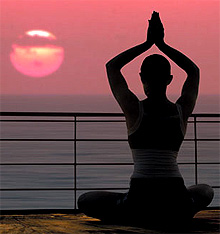 However, the council fears that even indulging in the ‘asanas’, despite its claimed benefits to health and peace of mind, could gradually lure Muslims into the other two aspects of yoga.
Instead of yoga, the council recommended that Muslims turn to the power of prayers for good health and peace of mind.
The council also argued that one other Muslim nation – Eqypt – has imposed a fatwa against yoga. The only other country which has a fatwa against yoga is neighbouring Singapore.
Many critics, Muslims and non-Muslims alike, point out that the National Fatwa Council, by pouring cold water on meditation, raises searching questions about its credibility.
“We don’t want some mad mullahs taking over the National Fatwa Council,” went one text message from a participant, who like the others was also privy in confidence to the text messages from the others as they responded.
The consensus is that the fatwa is likely to be observed more often in the breach since it isn’t legally binding on Muslims despite carrying the great weight of religious authority.
One retired senior journalist in Kuala Lumpur, who is now into consultancy and advisory work in the media, begs to disagree.
“There’s no danger whatsoever of a backlash by Muslims against fatwas. That’s because, as Muslims, they respect fatwas,” said the senior hack from Sarawak, who was in the minority of two in the poll. “At least, they have a clear conscience on the do’s and don’ts.”
15 selected SMS respondents
The senior journalist was one of 15 selected respondents, 12 Muslims and three non-Muslims, across both sides of the South China Sea.
They came from a wide cross-section of society, male and female, and included senior journalists, university students, members of NGOs, a highly successful broker, a leading direct distributor, a retired senior civil servant, the owner of a restaurant chain in Kota Kinabalu, senior politicians and members of voluntary bodies.
One of the 15 polled hadn’t responded by the time the others responded and the poll was closed.
They were asked for their thoughts on the fatwa against yoga and whether they personally knew of any Muslim turning to Hinduism as a result of practicing yoga.
Ramli Ibrahim, a leading exponent of Indian classical dancing, it was pointed out, was not a Hindu or a fallen Muslim despite criticism against him by the mainstream Malay media.
The only other pro-fatwa respondent even conceded in an exchange of text messages that the fatwa does not bode well for the government’s inculcation of creative and critical thinking skills in the schools to encourage a new generation of Malaysians to embrace the lifelong pursuit of science and technology.
“To be seen to go against the fatwa, especially openly, will open up new issues that would only mess up things unnecessarily,” said the respondent.
Why cite S’pore to justify fatwa?
Some other Muslim respondents to the poll:
“I disagree that it is not moronification. In fact, it is. Is it really true that Egypt has a fatwa against yoga? Why only one Muslim country? Singapore is not Muslim. So why cite Singapore to justify the fatwa?”
“It (the fatwa against yoga) is primitive. In Hyderabad (India), an ulama passed a ruling that Muslims cannot fix false teeth. Only the goats’ upper front teeth allowed. He forgot goats don’t have front upper teeth. It is one hard gum. The more primitive the society, the more primitive the fatwa.”
The non-Muslim respondents who are against the fatwa wondered whether some Malaysians are allowed to think for themselves and decide on their own whether something is good or bad for them.
“Don’t people have choices?” asked one respondent. “Isn’t it telling that they could only point at Egypt to justify the fatwa against yoga? Singapore is not a Muslim country. So, why cite Singapore as an example?
“What about Brunei and Indonesia, our other neighbours? Did PAS welcome the fatwa against yoga?”
A respondent wondered why the Muslims must always be kept away from the others. “One mufti somewhere even issued a fatwa once against kongsiraya,” he noted. “This is all getting too much. The tipping point will come sooner or later.”
VIDEOS
Fatwa and control, Part 1
l 5 minFatwa and control, Part 2 l 10 min


Report this comment
Are you sure you want to delete this comment?
This action cannot be undone.