




Custodial deaths: Focus on permanent solutions
Playing the race card and tarnishing the country's image would not help find permanent solutions to the problem of custodial deaths, said Malaysian Indian Youth Development Foundation (MIYDF) chairperson SA Vigneswaran.
Playing the race card and tarnishing the country's image would not help find permanent solutions to the problem of custodial deaths, said Malaysian Indian Youth Development Foundation (MIYDF) chairperson SA Vigneswaran.
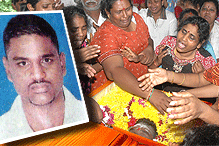 Describing the death of Kugan Ananthan, 22, as nothing short of a tragedy, he also noted that it was shocking and disheartening to see how the issue was being used by certain quarters to push forward their respective agendas.
Without naming these quarters, the former MIC Youth chief said numerous versions were given according to what these irresponsible actors would like the rest of the world to believe of Malaysia.
"Every Malaysian has got to remember that a man died in this tragedy. A man was allegedly killed by police officers in a police station.
"This is no time to tarnish the image of Malaysia in international forums or to play up the race card but rather to find permanent solutions to stop this recurring tragedy," he said in a statement today.
'Everyone has a role to play'
Pinpointing the ruling government, he said, would also not solve the issue at hand.
"Everyone has a part to play, including the opposition, in finding solutions to this problem as this was an issue concerning the police force," he added.
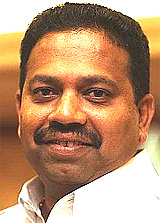 Vigneswaran also pointed out that Kugan's death was not an indication of the gulf between the government and the Indian community because it’s not just the Indians who were outraged
by the incident.
"The whole country, Malays, Indians and Chinese were stunned that this sort of thing could still happen. We have laws and standards that have been regulated to safeguard the welfare of detainees.
"Why then does custodial violence still exist? While there have been substantial hue and cry over the problem of police brutality, scant attention has been given to the causes.
"We must look at the causes of such inhumane act by the police, and not just the effects," he said, calling for a prompt, transparent and impartial investigation into the latest case.
Training, ethics education
Vigneswaran, who is a lawyer by training, also listed six points as to why such incidents happen and how to prevent them. These are:
1. Generational structure
The very structure of policing (exposure to unsavoury characters, forgetting what they have learned in police training school, clannishness and misguided approaches to crime control) provides plenty of opportunities to get sucked into the entrenched patterns of deviant police conduct that have been passed down through generations. The paramilitary culture of the police through generations promotes aggression.
2. Training of police officers
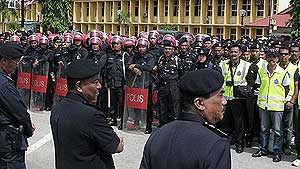 Training modules must emphasise on non-discrimination and prevention of force in the interrogation process. The limits in the use of discretionary powers and its discharge must be instilled in the minds of every police officer. They must be orientated into seeing every detainee beyond race, gender and sexual prejudices.
Training should be broadened to include skills that exceed the physical and technical aspects of the job. Officers should be trained in areas of abnormal human behaviour, contemporary social problems, and the democratic process.
Training in these areas would redefine the officer's role from that of a ‘letter-of-law’ enforcer to front-line crisis expert, who through the use of human relations skills can better serve his/her community.
3. Police Ethics education
Since the discretion of police officers is difficult to minimise, reforms should not attempt to usurp the autonomy of officers. Instead, the reforms should focus on ‘police ethics education’. Officers should be given intense on-going sensitivity training so that their decision-making will consistently be in the best interest of the community. Police departments must do a better job of pre-employment screening. They must also do a better job of tracking problem indicators among their officers.
4. Archaic investigative methods
The use of violence during interrogation must be banned completely. The immature perception of force and duress can extract evidence must be shifted to new methods of investigation. Criminology and forensic science have come up with innovative ways to solve crime and to obtain evidence and confessions without any use of force.
5. Deterrent sentencing
Police officers found guilty of such use of violence during interrogation must be sentenced in accordance with the criminal laws of the country. If a police officer has caused the death of a
detainee, the punishment for murder should be meted out. Bringing the offenders to justice not only deters them from repeating their crimes but also makes it clear to others that such inhumane acts will not be tolerated.
6. Police watchdog
Clearly, the lack of independent bodies to act as a credible check and balance on law enforcement agencies is a factor in the continued abuse of power. Enforcement agencies do not feel pressured or obligated to account seriously for their actions to a neutral third party. At the same time, victims and their families are also reluctant to take action against their violators in the absence of independent parties to the dispute. We need an independent external police body to oversee complaints on police misconduct and a code of practice relating to the arrest and detention of persons, which could provide for an independent custody officer responsible for the welfare and custody of every detainee.
With positive tackling, Vigneswaran expressed hope that a full stop could be put to cases of police brutality.
"In a postmodern era, we cannot afford to revert to actions of a pre-modern era, one marked by authoritarian aggression. The role of government and its agents is to carry out duties in ways that exemplify fairness, justice, and equity," he said.
"Kugan's fate shall not be cremated with his cremation but should become the catalyst for change to end deaths in police detention.
"May this case not remain merely a statistic but become an agenda for debate in the coming Parliament session," he added.


