




Pro-active, not pro-Chinese policy needed
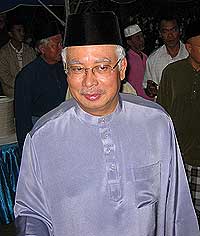
There now seems to be a concerted effort on the part of the Chinese media in Malaysia to polish the image of Najib Abdul Razak as the incoming prime minister.
There now seems to be a concerted effort on the part of the Chinese media in Malaysia to polish the image of Najib Abdul Razak as the incoming prime minister.
Last Sunday, Sin Chew Daily reported on its front-page that it was Najib’s desire to create a Malaysia for all, and that various opportunities would be made available to all Malaysians regardless of race.
My question is: why should this clichéd statement be the most important news item for the biggest Chinese daily in the country? More than five decades into merdeka, is the public not tired of the same old rhetoric uttered by successive Umno leaders while nothing substantive has come out of it?
On the same day, online news media gave prominent coverage to the remarks by Dr Mahathir Mohamad that the political turmoil in Perak was the result of “rash” decisions by the Barisan Nasional, and because “they did not follow the law, now there are all sorts of problems”.
Quite simply, Mahathir’s criticism of the political coup in Perak was more newsworthy than Najib’s dull speech. I can only guess there must be some tacit understanding between Sin Chew and the highest echelon within Umno to sell the prime minister-in-waiting to the Chinese community.
 I am no fan of Mahathir, and ill at ease with his authoritarian streak and Machiavellian view of politics. But I do not dismiss a man’s word if it rings true, our ideological differences notwithstanding.
Weaken public trust
Meanwhile, Chong Tien Siong, the editor-in-chief of Nanyang Siang Pau, said in a current affairs programme recently that the Chinese community should give Najib time and opportunity to “prove himself”, because “he is pro-Chinese”.
I was flabbergasted, for two reasons. First, that Najib vowed to “bathe the keris in Chinese blood” back in the eventful 1987, when he was Umno youth chief. Second, and more important, I am thoroughly shocked that Chong, being one of the most experienced journalists in Malaysia, still holds on to the false belief that a Chinese-friendly leader would be beneficial to the community, despite all the profound political changes that the nation has gone through over the last decade. It would seem that Chong had been kept in a time-capsule for years and was only recently brought back to life, his mindset still locked in the 1980s!
We are not strange to the seemingly “liberal” and “pro-Chinese” language by Umno. Ever since Mahathir unveiled his Bangsa Malaysia vision in 1991, a host of Umno leaders have at one time or another expressed similar views, but they all came to naught, ending up as cheap and empty propaganda to win the Chinese vote. Worse, grassroots Umno leaders, or even those in the top leadership, continue to play the race card or sensentionalise public issues to gain political mileage or to cover up their own policy failings. All this only serves to weaken public trust in the Malay party.
In the past few years especially, non-Malays were time and again provoked by the irresponsible statements made by Umno-ultras, while those BN coalition partners stood idly by, some even running away from politics.
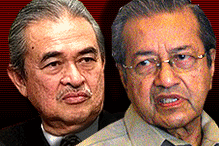 Moreover, Umno’s insatiable greed and the lackluster leadership of Abdullah Ahmad Badawi only aggravated the plight of the working class Malays. The vision that Mahathir set out looked increasingly remote and paltry, and it all culminated into the political tsunami in March last year, when the people organized themselves to fight back against the omni-potent state making use of the respite from Mahathir’s autocratic rule.
Now the public has tasted the people power, and is more passionate about the freedoms of association and speech. Against this backdrop, who would be interested to know what has Najib got on his agenda to “take care of” other ethnic groups if he cannot commit himself to fair play, good governance, clean politics, respect for human rights etc..?
When Mahathir assumed the highest political office in 1981, the Chinese community, wary of his “Malay-ultra” past, quietly asked, “How would he treat the Chinese?” This collective anxiety was so pervasive that Mahathir had to work doubly hard to convince a very important constituency of his multi-racialism.
Valuable lesson
Just when the Chinese thought Mahathir had transformed himself into a benevolent leader for all, a deep and hurtful sense of betrayal set in when the man branded the Chinese community “communists” at the height of the reformasi movement. Mahathir was desperate to win back the Malay vote, and the non-Malays again became expendable.
The excessiveness of Umno dominance took a severe toll on Malaysia in all aspects, and it has taken one generation for the Malaysian public to learn a very valuable lesson: no perfect, benevolent or strong leader can sustain the nation if his/her administration is not buttressed by a powerful check-and-balance mechanism.
I am quite certain that, on the eve of Najib’s taking over the country, the general public, especially the Chinese community that has experienced the dawn of democracy after years of repressive rule, is more anxious to know if the next prime minister has the will to thoroughly shake up the ailing system, even consigning it to history if necessary, rather than the illusive hope that he might just happen to be “pro-Chinese”.
Malaysians must no longer pin their hopes on an “enlightened” leader, although this in itself is a legitimate expectation. Instead, the time has come for us to continue the struggle for greater democratic space backed by distributive justice. And the media should only give a leader prominent coverage if and when he/she comes up with concrete plans to overhaul the political system, and to initiate reforms on the police, the judiciary, the electoral process, the economy and so on.
As for the empty rhetoric on racial harmony, it can remain shelved until and unless real efforts are made to that effect. It is always the substance, not the form, that wins the day.


Are you sure you want to delete this comment?
This action cannot be undone.