




The holy twist
The visit by Pope Benedict XVI to Israel this week was among the most delicate missions undertaken by the Vatican. Not only does the trip mark the second official papal visit to the Jewish state, it is also highly significant for the simple fact that the Pope is himself of German origin.
Joseph Alois Ratzinger, as the catholic pontiff was originally known, hails from Bavaria, Germany, and enrolled in the Hitler Youth in 1941, albeit reluctantly.
The visit by Pope Benedict XVI to Israel this week was among the most delicate missions undertaken by the Vatican. Not only does the trip mark the second official papal visit to the Jewish state, it is also highly significant for the simple fact that the Pope is himself of German origin.
Joseph Alois Ratzinger, as the catholic pontiff was originally known, hails from Bavaria, Germany, and enrolled in the Hitler Youth in 1941, albeit reluctantly.
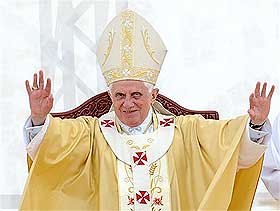 To be fair, the compulsory membership does not necessarily indicate his anti-Semitism, but His Holiness' chequered career as theologian and then as Catholic bishop is characterised by conservatism nonetheless. Many are still wary he may someday reverse all the liberal reforms in the Catholic Church since Vatican II.
And he did confront the dark history of his native land by shaking the hands of several Holocaust survivors, promising to remember the genocide and those who died.
The Pope did not dwell on the historical issue. With Benjamin Netanyahu, the hard-line prime minister of Israel, beside him, Benedict XVI openly urged the Jewish leaders to grant the Palestinians a homeland of their own in which they could live in peace and ‘within secure and internationally recognised borders'.
Regrettably, the Pope did not touch on the human rights violations by the Israeli authorities against Palestinian civilians.
A thousand dead
The Public Committee Against Torture in Israeli (PCATI), a Jerusalem-based group that monitors human rights practices in the Jewish state, maintains that torture and ill-treatment during interrogation continue to exist in Israel, including exploitation of a detainee's family members for the purpose of forcing him/her to divulge more information or to confess to terrorist activities.
A PCATI report on human rights violations, released in April 2008, identified a genuine form of psychological torture that could be far more severe than physical abuse, with long-term effects on the detainee because of the pain, emotional stress and suffering that his/her family members have gone through.
That the Israeli authorities have time and again used forced against women and children is no secret. During two Israeli military operations in the Gaza Strip in May and October 2004, at least 44 children were killed among other civilians.
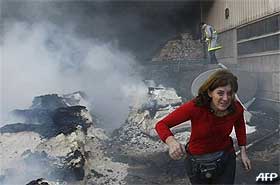 Early this year, as many as one thousand Palestinians lost their lives during the Israeli military assault on the Gaza Strip, code-named Operation Cast Lead.
So great were the atrocities that Haaretz, an Israeli daily, was compelled to report of dead babies, mothers weeping on their children's graves, and ‘a gun aimed at a child and bombed out mosques', and ‘these are a few examples of the images Israeli Defense Forces soldiers design these days to print on shirts they order to mark the end of training, or of field duty'.
Meanwhile, the UN's Office for the Coordination of Humanitarian Affairs fears that as many as 60,000 Palestinians living in Occupied Jerusalem could see their homes demolished and they themselves evicted because the Jewish authorities do not consider these settlements legal.
The real reason could be that Tel Aviv hopes to cleanse the Holy City of Palestinians so that more Jewish settlers may move in.
Despite the mounting evidence of Israeli oppression against the Palestinians, the developed world chooses to look away. The European Union regards the measures taken by the Israeli government as among ‘the most acute challenges', euphemistically admitting that they border on gross human rights violations.
Obsessive demand
In March this year, Omar al-Bashir, the Sudanese president, was charged with Darfur war crimes and crimes against humanity after an arrest warrant was issued on him by the International Criminal Court (ICC).
While Khartoum's crucial role in the genocide is not in dispute, the failure by the ICC to even consider a similar move against Tel Aviv is greeted with cynicism and sarcasm the world over, especially in Muslim countries.
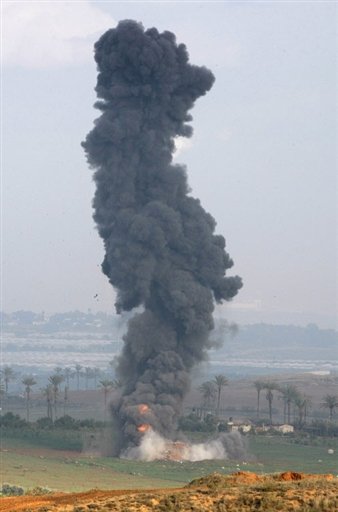 Granted, Hamas is equally guilty of persecution and violence against its opponents, but this in itself does not make it permissible for the Israelis to resort to high-handedness or even oppression in dealing with the Palestinians.
I often wonder if the obsession of the Jewish leaders with demands for others, and those of German origin in particular, to express remorse over the Holocaust is manipulative in nature.
Put simply: are they using the blood of the victims who died in the Nazi concentration camps to absolve themselves of their own crimes against the Palestinians today? Is it a conscious move to stop the world from closely examining the actions of Israel towards the Palestinian people?
Most importantly, is it the reason why Ratzinger, the German Pope, refrained from condemning the human rights violations that are going on in the Holy Land, even as he talked extensively about the painful, universal lessons of the European Jewish Holocaust?


