




Straits of Malacca tests Sino-US relations
One issue that tops the agenda in both Washington and Beijing in regard to Southeast Asia is the Straits of Malacca, which is geo-strategically important to all major powers around the globe.
Historically, Chinese mariners visited the South China Sea far earlier than their western counterparts.
In China, Admiral Cheng Ho would not have been elevated to the status of a semi-god if not for the fact that he single-handedly established cordial relations between the Ming Court and among the various sultanates, as his mighty armada of vessels plied the Straits of Malacca time and time again.
One issue that tops the agenda in both Washington and Beijing in regard to Southeast Asia is the Straits of Malacca, which is geo-strategically important to all major powers around the globe.
Historically, Chinese mariners visited the South China Sea far earlier than their western counterparts.
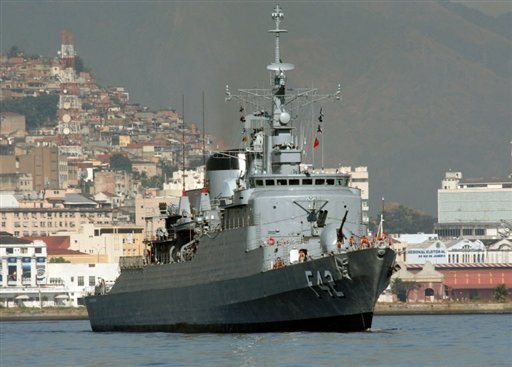 In China, Admiral Cheng Ho would not have been elevated to the status of a semi-god if not for the fact that he single-handedly established cordial relations between the Ming Court and among the various sultanates, as his mighty armada of vessels plied the Straits of Malacca time and time again.
Thanks to this vital sea lane, the influence of imperial China extended far beyond the region to reach West Asia and East Africa.
This particular chapter in Sino-Southeast Asia history continues to shape the world view of the Chinese populace to a considerable extent.
Like it or not, more and more Chinese people begin to see their country as having a rightful and legitimate role to play in all matters pertaining to the Straits of Malacca, all because the Chinese had set foot on this part of the world ahead of western imperialists, and contributed significantly to its peace and security through trade centuries ago.
Beijing is now eager to regain the sort of influence that the Ming Dynasty once had in Southeast Asia. Acutely aware of the paramount importance of soft power, the Chinese leadership has been going on the charm offensive to win the hearts and minds of Southeast Asian peoples.
Cultural offensive
Cultural Cheng Ho, for one, symbolises a conscious effort on the part of the Chinese government to revive the historical memories of Southeast Asian nations of the Admiral being a force for good.
Stories of Cheng Ho, a Chinese Muslim, building mosques and promoting Islamic teachings in the region are repeatedly told. (http://www.chengho.org/museum/index.html)
Cultivating close ties with Southeast Asia is key to China's economic development as it may bring about a secure and peaceful environment.
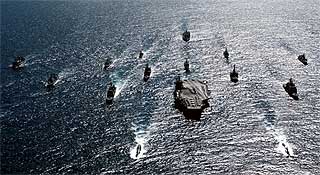 Still, uppermost in the mind of the Chinese leaders, despite all the talk about good neighbourliness, is how best to ensure Beijing's strategic advantages in the Straits of Malacca, as it is a major sea route for China to gain access to the Indian Ocean.
This is all the more so as, for in the foreseeable future, China will remain dependent on the Straits for transportation of goods, raw materials and natural resources.
More significantly, China is now the second largest energy consumer in the world after the United States.
Superpower tussle
In 2008, the country imported nearly 160 million tons of crude oil, or 46% of its total consumption.
Meanwhile, the US' oil import in the same year was three times larger, and the two most powerful countries' high dependency on foreign sources for this commodity is an issue that must be addressed rationally.
The growing energy needs of both China and the US have caused tremendous anxiety between them, sometimes rather unnecessarily.
During the Bush administration, Washington made various attempts to acquire greater control over the Straits of Malacca, especially in the wake of the September 11 attacks.
In 2004, US officials proposed the Regional Maritime Security Initiative*, under which the Americans would carry out military interdiction of vessels suspected of carrying terrorists.
The move raised eyebrows from Beijing to Jakarta, and Chinese leaders were heartened when the Malaysian and Indonesian governments resolutely opposed it. (http://www.globalsecurity.org/military/ops/rmsi.htm)
For China, an initiative as such was immediately interpreted as an attempt to control the sea lane. After all, shipment of oil from the Persian Gulf and Africa to China must remain free of deliberate sabotage or blockage, failing which the Beijing government will not be able to sustain the economic expansion, which is crucial to the survival of the communist regime.
Deep mistrust
Meanwhile, the proactive diplomacy demonstrated by Chinese leaders in Southeast Asia over the past few years is perceived in Washington to be as a rational choice to cash in on the declining popularity of the US following a series of diplomatic blunders by President Bush.
The energy aspect came to the fore when Robert Zoellick, former US deputy secretary of state, stated* openly that Beijing was taking action to "lock up" energy resources around the world and in pursuing a mercantilist strategy in energy security.
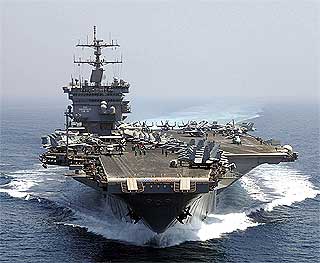 The mutual distrust about the other side's intention remains too strong to be overcome, and rounds of dialogues on energy and security at various levels between Beijing and Washington have done little to assuage the anxiety.
This has prompted Aaron L. Friedberg, an analyst at the National Bureau of Asian Research, to express his concern* that China's ambitious pursuit of energy resources could deflect the US and become "one aspect of an intensifying struggle for mastery in Asia and on the wider world stage".
While it is inconceivable that China and the US would go to war over the Straits of Malacca, the tension between the two powers must be addressed by bringing in the concerns of all the littoral states, ie. Indonesia, Malaysia and Singapore.
Keeping the Straits open to international navigation in accordance with the United Nations Convention on the Law of the Sea is hence a useful way to minimize dispute and conflict.
President Barrack Obama promises new diplomacy, while his Chinese counterpart Hu Jintao adheres to the pursuit of China's peaceful ascension as a political and economic giant.
Still, it is always prudent for one to hear their words and watch their deeds, especially when it comes to the importance of the Straits of Malacca.


