




Obama's moment of embarrassment
To describe it as a diplomatic blunder would be too trifling for a serious matter like this. In fact, it was a PR disaster for Barack Obama on an international scale. I mean, the president's deep bow to the Japanese emperor during a recent visit to Tokyo.
To describe it as a diplomatic blunder would be too trifling for a serious matter like this. In fact, it was a PR disaster for Barack Obama on an international scale. I mean, the president's deep bow to the Japanese emperor during a recent visit to Tokyo.
Conservative commentators in the United States have been asking if the most powerful man on earth has disgraced himself and the country that he leads by greeting Emperor Akihito with a nearly 90-degree bow, a sign of deepest respect and reverence in Japanese culture that is usually reserved for the most senior person in a company or society.
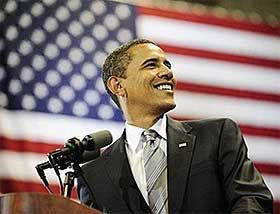 White House aides justified it by saying the president was merely honouring Japan's head of state, but it is the kind of image that simply does not sit well with many Americans, given that Obama is the elected representative holding the highest office. Some have gone as far as to accuse him of "grovelling" to the emperor.
To those who still remember Pearl Harbour, it was Akihito's father, Emperor Hirohito, who ordered the surprise attack that prompted the US into war against the Axis powers.
The loss of more than 2,000 lives in the ambush by an Asian country has since been seared into the American psyche, with President Franklin D Roosevelt calling it "a date which will live in infamy".
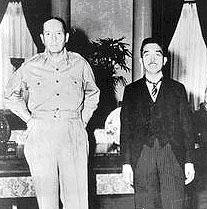
Hirohito died in 1989, and no charges were brought against him throughout his life for the war crimes that he had committed in the 1930s and 1940s. When Allied leaders sought to include him in the Tokyo Trials, General Douglas MacArthur ( below, with Hirohito ) blocked the effort by arguing that a monarchical Japan would be easier to control.
 Akihito did as emperor take some initiative to repair the image of Japan as an unrepentant militarist state. In 1990, just one year after he ascended to the throne, the emperor made use of a visit to Seoul to express his 'regrets' over Japan's colonial rule on the Korean Peninsula.
He said: "There was a brief period in this century an unfortunate past between our two countries... this is truly regrettable and it will never happen again... when I think about the sufferings of the people in your country... I cannot help but feel immense sorrow."
Similarly, during his visit to Bangkok several years ago, he stated that "we (the Japanese) will not forget the various kinds of suffering that your country went through during World War II... the Japanese people will remember this part of the history, and endeavour to ensure the peace and prosperity in Southeast Asia".
These were both bold and unequivocal statements, albeit by Japanese standards. They nevertheless fell far short of an official apology in comparison to the forthrightness of the Germans. Worse, the mainstream press in Japan chose to omit them, opting to highlight the overwhelming welcome of Akihito by the hosts.
Rubbing salt into the wounds of East Asians
From politicians to the emperor, Japan's wishy-washy attitude towards WWII is for all to see. Moreover, Japanese textbooks have been criticised for downplaying the extent of Japan's war crimes.
While it is true that Japan did make up for its war crimes by establishing private consolation funds for comfort women used as sex slaves throughout the Pacific War, it remains pretty much as 'private', with money coming from the private sectors but no official recognition has ever given by the Japanese state.
Tokyo has consistently denied government role in the recruitment of sex slaves into the Japanese army, in spite of ample historical evidence to the contrary.
This aside, many governments, including Thailand, China and Malaysia, already relinquished their claim to Japanese reparations at the inter-governmental level, giving Japan a pretext to argue that all historical issues have been 'resolved'.
In the case of China, the Official Development Assistance was adopted by the Japanese as a form of 'compensation' .
 This to a large extent explains why the Malaysian authorities care nothing about the issue and prefer to attract Japanese investment, while the Chinese government hardly lends help to ordinary citizens fight their cases in Japanese courts.
Most insulting to the Asians (and less to the Americans or the Europeans), many Japanese politicians continue to pay respects to war criminals twice a year during the spring and autumn ceremonies at the controversial Yasukini Shrine.
All this remains a thorn in the side in Japan's foreign relations with many of the regional countries, a reason why one never sees any East Asian leaders bowing to the emperor.
To its credit, the Japanese court - as far as I understand - never requests a protocol as such from a foreign head of state, for the Japanese know full well this somewhat feudalistic practice is not compatible with the modern notions of democracy and equality.
While Washington secured a very good deal through a series of unequal treaties with Tokyo, ranging from the occupation of the Okinawa Islands to defence arrangements, the former victims of Japanese militarism continue to languish in pain and stigma.
It is therefore not surprising that Obama's careless bow to Akihito angered not only the Americans, but some Koreans also. A Korean parliamentarian issued a statement in New York telling the US president to apologise for 'having rubbed salt into the wound of East Asian peoples'.
It would seem that Obama needs a bit of WWII history for his future visits to Asia.


