




The meaning of the spring festival
Spring Festival, popularly known as Chinese New Year in Malaysia, is the most important event in the Chinese lunar calendar. In China, ‘chun yun’, which literally means “spring transportation”, is a unique yearly phenomenon that sees the largest number of humans in transit. According to the China Daily, 2.54 billion journeys are expected to be made across China during the festive season in the coming days.
While Article 15 of the International Covenant on Economic, Social and Cultural Rights recognises one’s right to participation in cultural life, not all who celebrate the Lunar New Year are able to go home for family reunions this year.
Spring Festival, popularly known as Chinese New Year in Malaysia, is the most important event in the Chinese lunar calendar. In China, ‘chun yun’, which literally means “spring transportation”, is a unique yearly phenomenon that sees the largest number of humans in transit. According to the China Daily, 2.54 billion journeys are expected to be made across China during the festive season in the coming days.
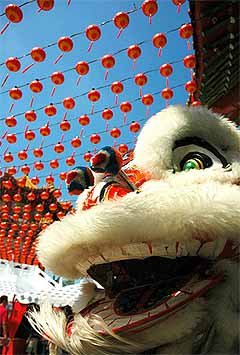 While Article 15 of the International Covenant on Economic, Social and Cultural Rights recognises one’s right to participation in cultural life, not all who celebrate the Lunar New Year are able to go home for family reunions this year.
Last month, four Vietnamese activists were convicted of ‘activities subverting the people’s administration’, and are now behind bars. Like the Chinese-speaking world, the Lunar New Year, or ‘Tet’, best epitomises Vietnam’s cultural identity.
Feng Zhenghu is a Chinese dissident currently stranded at the Narita Airport in Tokyo. He has, over the past year, made various attempts to re-enter China, to no avail. Out of sight, out of mind. In keeping him abroad, the Chinese government simply hopes he will someday become irrelevant.
Last Christmas, a court in Beijing slapped Liu Xiaobo, a prominent cyberdissident, with an 11-year jail term, although his ‘crime’ was nothing more than drafting Charter 08 that calls for legal, political as well as constitutional reform in China.
Since the Charter was published on 10 December 2008 – the 60th anniversary of the adoption of the Universal Declaration of Human Rights, of which China is a signatory – more than 70 signatories have been summoned or interrogated by the Chinese authorities. Some fear Liu’s conviction of ‘inciting the subversion of state power’ might have chilling effects across the country.
Many had hoped the zealous quest for economic goals by the Chinese state would at least be followed by some form of political reform, but Liu’s case only indicates that the Chinese leadership remains united as ever on China’s future direction, least likely to be distracted by the constant calls for political change from all sides. If democratisation is ever on the agenda, the ruling Chinese Communist Party (CCP) will only pursue it on its own terms.
Chinese leaders are acutely aware of the pressing need to deliver economic growth in the furtherance of market reform in order to survive the formidable and at times hostile challenges. They must also nip all social/ethnic conflicts in the bud or at least keep them in check, hence the emphasis on creating a ‘harmonious society’ that has almost become an article of faith.
Outside interference will not be taken kindly
This aside, assertive nationalism is now a dominant force as more and more Chinese grow up believing in the sanctity of national sovereignty and territorial integrity. Outside interference will not be taken kindly.
Early last year, a group of nationalistic writers came out with a book, entitled Unhappy China , praising the tremendous achievements of the Chinese state but also calling for a tougher stance vis à vis the West and Japan. It became an instant bestseller.
In terms of foreign policy, the CCP is pragmatic enough to acknowledge the diverse interests and concerns of the international community, reiterating time and again its non-interference in the domestic affairs of other sovereign nations. China is also at pains to assure neighbouring countries of its peaceful development through the prosper-thy-neighbour policy, embodied in the Asean-China Free Trade Agreement that took effect last month.
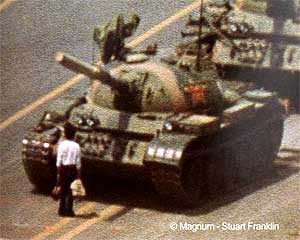 As for the Chinese intelligentsia, the CCP clearly learned from the painful and bloody lesson of the 1989 Tiananmen Uprising. Jiang Ze Min, the former CCP General Secretary, attributed the unrest that culminated in bloodshed to instigation by university teachers and scholars, and readily took measures to safeguard the interests of the intellectual circle in the aftermath.
Today, Chinese scholars enjoy far better state benefits and higher social status than they could have dreamed of 20 years ago, with many co-opted into being a core component of the state bureaucracy. This explains to a large extent why the burden of democracy is being borne by the “non-mainstream” intellectuals such as Liu and his colleagues.
In fact, Liu is anything but radical, for what he has been advocating is a gradual transition from one-party dictatorship to democratic rule through constitutional reform, rather than a form of people power that could send Chinese society into irreversible chaos. He was among the very few who had urged the frantic student leaders to preserve the movement and protect innocent lives from being lost by withdrawing from Tiananmen Square on the eve of the crackdown in 1989, only to be accused by others of cowardice and kowtowing to the CCP.
So why has the Chinese leadership been obstinate in handing down the harsh sentence on the moderate dissident?
Transitions
This can partly be explained in the growing confidence of the CCP following the economic achievements over the years, the success of the Beijing Olympics, and the recently concluded pompous celebrations to mark the 60th anniversary of the founding of the People’s Republic. The party leadership knows it now enjoys perhaps the strongest backing of the Chinese people since the catastrophic Cultural Revolution.
But it was the internal challenges that really compelled Beijing to teach the Charter 08 signatories a lesson.
Every year, tens of thousands of sporadic, small-scale conflicts take place between law enforcement officials and those who have been forced off their lands, farms or jobs thanks to agricultural or economic restructuring, while the riots in Tibet and Xinjiang in the past two years have put a great strain on the Chinese government.
In the urban areas, the relentless rise in property prices has made many quietly angry. Recently, advice by the authorities prompted many broadcasters to halt the airing of a popular TV sitcom Wo Ju (Snail Abode), for it depicted the cramped and expensive living conditions of the urbanites.
Most important of all, the CCP is preoccupied with yet another smooth transition come 2012, with the current leadership of Hu Jintao and Wen Jiabao preparing to give way to the fifth generation of leaders made up of two party princelings: Xi Jinping and Bo Xilai, as well as Li Keqiang.
Therefore, any softening of the existing leaders towards dissidents would invariably be seen as rocking the boat and deviating from the consensus that places stability above all else, exposing any divisions in the highest echelons to the public. The harsh sentence reflects a deeper worry that the Charter 08 movement might someday give shape to broader currents of public discontent.
The Chinese government can afford to disregard international criticism too. The recent financial crisis has called into question the Anglo-Saxon model of capitalism and shrunk the national coffers of many western countries, giving China a golden opportunity to demonstrate its leadership in the form of financial aid and technological assistance – with no strings attached of course.
Furthermore, the disastrous consequences of the 2003 War on Iraq dealt a severe blow to the legitimacy of the United States and Britain, and the Chinese leaders were quick to seize the invasion as western hypocrisy par excellence.
As Evan S. Medeiros of RAND Corporation observes in China’s International Behaviou r, China clearly perceives international resentment and alienation fostered by the US intervention in Iraq as having undermined US economic power, military strength and international legitimacy.
Like it or not, the Chinese people are now more cynical than ever, often defending the country’s path of development by reminding their detractors of the US’ ‘neo-colonialist’ project in the Middle East. And Li Mingjiang of the S. Rajaratnam School of International Studies, Singapore, went as far as to claim that China had ‘won the Iraq War’.
Ironically, there are also those who had lent their full support to the War on Iraq, but now find themselves dancing to the Chinese tune just to ‘stay relevant’.
Beijing Solution
Leading economist Donald H. Straszheim foresees that ‘diverse interests’ will continue to trump individual freedom in China. With the country assuming world leadership, this guiding principle may gain greater credence among other developing countries. Will the world hear more of a Beijing Solution than of the Washington Consensus, which is now discredited anyway?
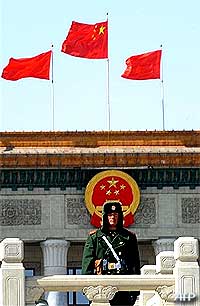 But what does this Beijing Solution entail, really?
Xu Zhiyuan, a young and incisive Chinese writer, cannot be more succinct: ‘China seems to have created a unique model of development, one that discards democracy, human rights and the rule of law in pursuit of economic prosperity.’
This new sentiment, as Xu sees it, is so ubiquitous that he was surprised to notice even the Egyptians were interested to know how they could sustain high economic growth while maintaining political authoritarianism.
Would Malaysia, where the ruling elite is constantly on a look out to finish off its political challengers and turn the country into a quasi-dictatorship, find the Beijing Solution an attractive option?
More importantly, would Malaysians in general be happy to let the powers-that-be take full charge of their lives if economic prosperity could be assured, just like Singapore?
These are the questions over which every earnest seeker after democratic change in Malaysia must ponder.
One greatest teaching of Mencius, an ancient philosopher, is on virtuous governance, that all rulers must administer nations with benevolence, and correct themselves with righteousness.
Wishful thinking it may be, I do sincerely hope all political prisoners would be set free and return home to join their loved ones. When else would be the best occasion to show justice and compassion if not the Spring Festival?
JOSH HONG studied politics at London Metropolitan University and the School of Oriental and African Studies, University of London. A keen watcher of domestic and international politics, he longs for a day when Malaysians will learn and master the art of self-mockery, and enjoy life to the full in spite of politicians.


Are you sure you want to delete this comment?
This action cannot be undone.