




Caesar and God
It has been more than a decade since Goh Keat Peng, the former executive secretary of the Christian Federation Malaysia, bucked the religious trend in the country and bravely joined the reformasi movement.
It has been more than a decade since Goh Keat Peng, the former executive secretary of the Christian Federation Malaysia, bucked the religious trend in the country and bravely joined the reformasi movement.
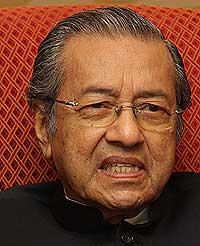 And he did so to openly register his disgust at the corrupt regime of Mahathir Mohamad
(left)
, most evidenced by the erosion of the Malaysian judiciary.
And he did so to openly register his disgust at the corrupt regime of Mahathir Mohamad
(left)
, most evidenced by the erosion of the Malaysian judiciary.
While the movement itself waxed and waned until the sudden surge in the wake of the political tsunami in March 2008, Goh remained steadfast and went through thick and thin with those who cried for a more just, equitable and transparent Malaysia.
Even as Pakatan Rakyat comes closer to realising the dream of national power, Goh still stays behind the scenes most of the times, making his voice of conscience heard only when it is necessary.
All this does tell the man apart from other opportunists, PR and Barisan Nasional alike.
Goh was once accused by "mainstream" church leaders of "mixing politics and religion", but those who criticised him were conveniently oblivious to the fact that BN leaders and ministers were (and still are) often invited for Christmas celebrations or even to officiate Christian conferences.
Some years ago, Christians gathered at Wisma MCA in Kuala Lumpur to "pray for the nation". Were they also not "politicising religion"?
Had it been proposed by, let's say DAP, would they have responded similarly?
No amount of words can refute that Malaysian churches relish in rubbing shoulders with the ruling coalition. Having Ng Yen Yen or Bernard Giluk Dompok - two prominent Christian politicians - to grace Christian events used to be something "politically correct".
Thank goodness opposition politicians of Christian faith such as Nga Khor Ming, Ngeh Koo Ham and Teresa Kok (a Catholic), have also become "not so sensitive" now that Pakatan Rakyat is in power in several states.
Sadly, it is a home truth that many still refuse to acknowledge even today, or maybe they are too embarrassed to do so.
‘Special grants'
 When Goh expressed his serious concerns over the "special grants" of RM1.75 million to four churches, announced on the eve of polling day in Sibu early this month, a church leader retorted by branding him as "arrogant" and
"speaking wildly"
.
When Goh expressed his serious concerns over the "special grants" of RM1.75 million to four churches, announced on the eve of polling day in Sibu early this month, a church leader retorted by branding him as "arrogant" and
"speaking wildly"
.
I had expected a response of this kind; what I did not foresee is the language employed by the church leader concerned. What did he mean when he chastised Goh for being "arrogant" and "speaking wildly"? I find no acrimony or jealousy in Goh's writing, but genuine concerns as a fellow Christian.
His words are measured and humble, even too mild, which perhaps reflect his deep sense of sadness at an opportunity lost for showing the Christian church to be the light and the salt.
I gather the church leader was furious because Goh's message had hit a nerve. After all, one hardly sees churches worked up over social injustices, especially the plight of the indigenous peoples in Sarawak.
Contrary to what many believe, the timing was indeed under the control of the churches because our Election Offences Act makes it clear that no allocations shall be made during electoral campaign.
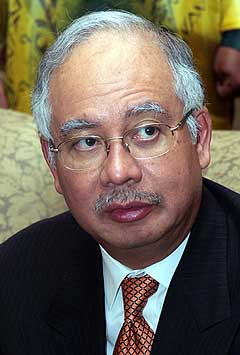 Instead of taking the money and thanking the government, the recipient churches could have told Najib Abdul Razak
(left)
this: "Any reasonable and legitimate allocation is welcome, but please refrain from doing it during election because it is against the law, or we may cause you to stumble. The grants may be made after the by-election though."
Instead of taking the money and thanking the government, the recipient churches could have told Najib Abdul Razak
(left)
this: "Any reasonable and legitimate allocation is welcome, but please refrain from doing it during election because it is against the law, or we may cause you to stumble. The grants may be made after the by-election though."
If the prime minister was indeed upright, he would appreciate the advice and respect the church leaders.
If the prime minister was indeed fair-minded, he would honour the promise and proceed with the grants even after BN had lost.
Was it that difficult?
In my recent sharing with young students at Seminari Theologi Malaysia, I encouraged the members of the audience - many of whom are potential future church leaders - to be bold enough to take a stance on issues that concern social justice.
I could see they were seriously pondering on the meanings of politics as a vocation, and were increasingly disillusioned with the way mainstream churches take to it.
These potential future church leaders are no longer satisfied with the model reminder to "pray for rulers and for all who have authority", or the repetitive advice of "fulfilling one's civic duty to vote as a citizen".
What they desire is a message that is truly non-partisan, wise, honest and yet closely in sync with the current political developments.
Opposition politics comes in many forms, and the anti-slavery, civil rights and anti-apartheid movements spring to mind. Yet there should be nothing frightening about it.
I would go a step further by stating that Jesus Christ was a dissident par excellence, for his life on earth revolved around the constant struggle against the unjust political and religious establishments of his time.
Herod hunted for him, while the Jewish leaders saw him as a threat to their authority. They both wanted him dead lest he subvert the hierarchy of power.
In other words, hanging on to the coattails of politicians was never an option for Jesus, whose "subversiveness" has inspired tens of millions to rise up against corruption and injustice.
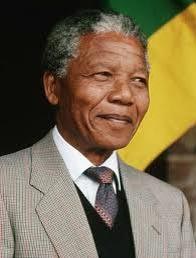 In much of Latin America, Jesus is seen as a revolutionary; in South Africa, he is as a black like Nelson Mandela
(left)
.
In much of Latin America, Jesus is seen as a revolutionary; in South Africa, he is as a black like Nelson Mandela
(left)
.
If might and power were the symbol of justice and righteousness, I suppose Jesus would not have come as a baby in a manger, but as a Caesar ready to rule the earth.
This does not mean the church must always be on the opposite side of the authorities. Far from it.
What Christian leaders in Malaysia need to learn is how to speak out wisely but boldly against oppression and abuse of power committed by either PR or BN, while giving credit where it is due.
The role of the church is not to seek political favour, but to act as a voice of conscience and reason, even at the risk of irking the powers-that-be.
Quite clearly, this dispute over church allocations in Sibu shows that while many do fear God, they fear Caesar even more.
One only has to confess to the former for forgiveness, but may pay with one's liberty and vested interests if the latter is offended.
However, is it not the Bible that teaches that one must be prepared to lose the whole world in order to gain the abundant life that one earnestly desires?
JOSH HONG studied politics at London Metropolitan University and the School of Oriental and African Studies, University of London. A keen watcher of domestic and international politics, he longs for a day when Malaysians will learn and master the art of self-mockery, and enjoy life to the full in spite of politicians.


